Best Soldering Station for Mobile Repairing: A Buyer's Guide
17 November 2026 · LightspeedTools team
Short answer: The best soldering station for mobile repairing is a cartridge-style station that takes C210 tips (with C115 for the finest work and C245 for heavier joints). These stations heat in seconds, recover temperature instantly when the tip touches a ground plane, and let you work at lower temperatures, which protects pads and nearby parts. A T12 station is a solid mid-range choice, while a classic 936-type station suits wires, connectors and general bench jobs.
This guide explains what actually makes a soldering station good for phone boards, compares the main station types, and helps you match a station to the work your shop does.
What makes a soldering station good for phone repair
Phone boards are dense, multi-layer and full of ground planes that pull heat away from the tip. A station that looks fine on a wire can struggle on a phone board. These are the features that matter.
- Heat recovery. When the tip touches a large copper area, its temperature drops. A good station puts that heat back almost instantly. Poor recovery tempts technicians to turn the temperature up, which is how pads lift.
- Heater close to the tip. In cartridge tips (C210, C115, C245, T12), the heater and sensor sit inside the tip itself. That gives faster response and more accurate temperature at the point of contact than a separate heater and sleeve.
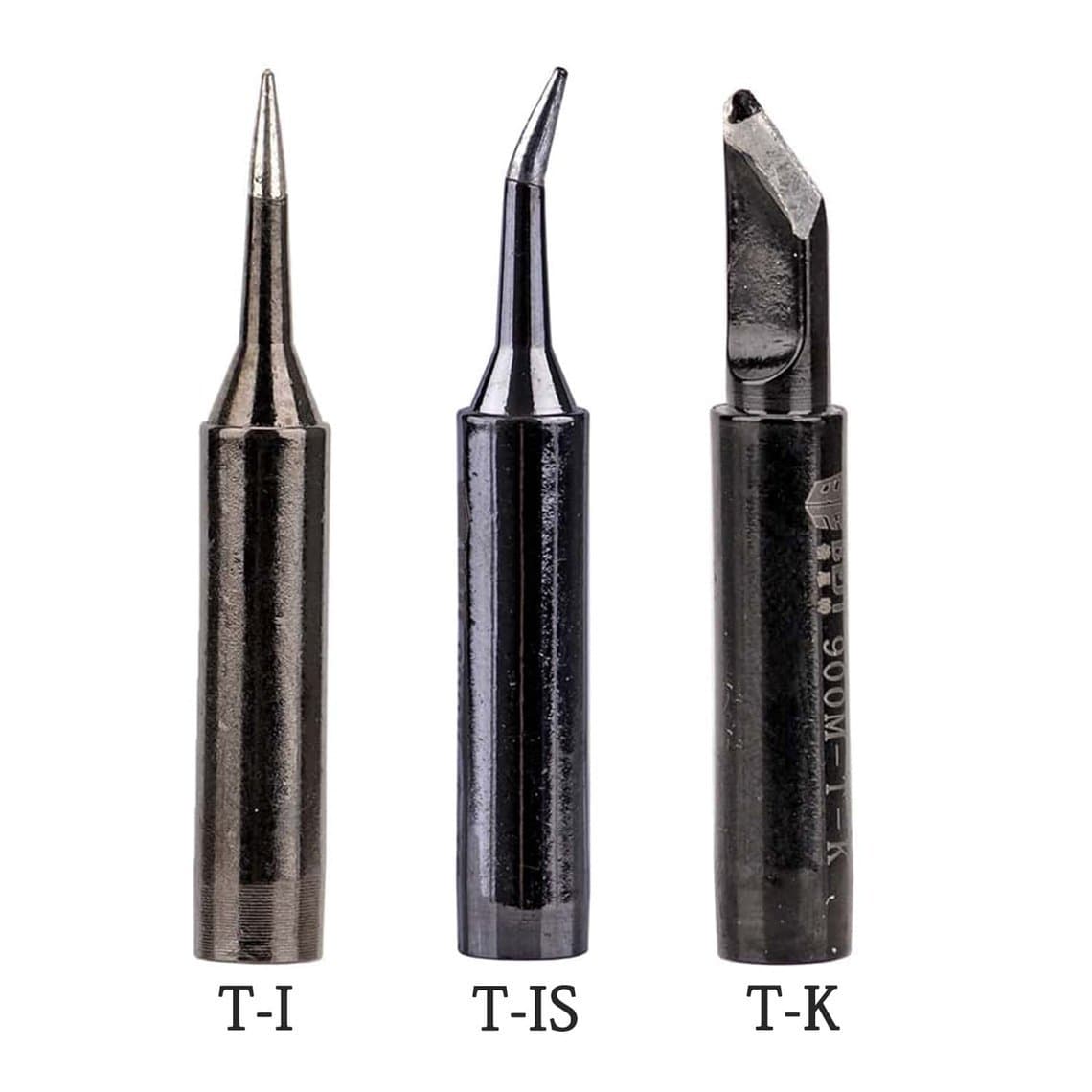
- Fine tip range. You need very fine conical, knife and bent tips for small passives and connector pins, plus a broader tip for shields and ground pads. Tips must be easy to buy in volume.
- Fast heat-up and sleep mode. A handle that heats in a few seconds and sleeps when placed in the stand saves tip life and keeps the bench safer.
- ESD safety. The tip should be grounded and the station built for anti-static work, so it does not damage sensitive ICs.
- Stable, readable display. Set temperature and actual temperature should both be clear, with presets for quick switching.
The main station types compared
| Station type | How it heats | Best for | Limits |
|---|---|---|---|
| C210 / C115 cartridge | Heater and sensor built into a small tip cartridge | Phone board work: passives, connectors, jumper wires, fine pins | Tips are a running cost; small tips are not for heavy joints |
| C245 cartridge | Larger integrated cartridge | Shields, ground pads, charge-port lugs, larger joints | Too large for micro-component work |
| T12 cartridge | Integrated heater in a longer tip | Mid-range shops doing connectors, ports and general board work | Longer handle and tip, less precise than C210 for micro work |
| 936-type analog | Separate ceramic heater with a slip-on tip | Wires, battery tabs, training, general bench work | Slower heat-up and recovery; less suited to dense boards |
Station options by shop level
Starter: general repair and training
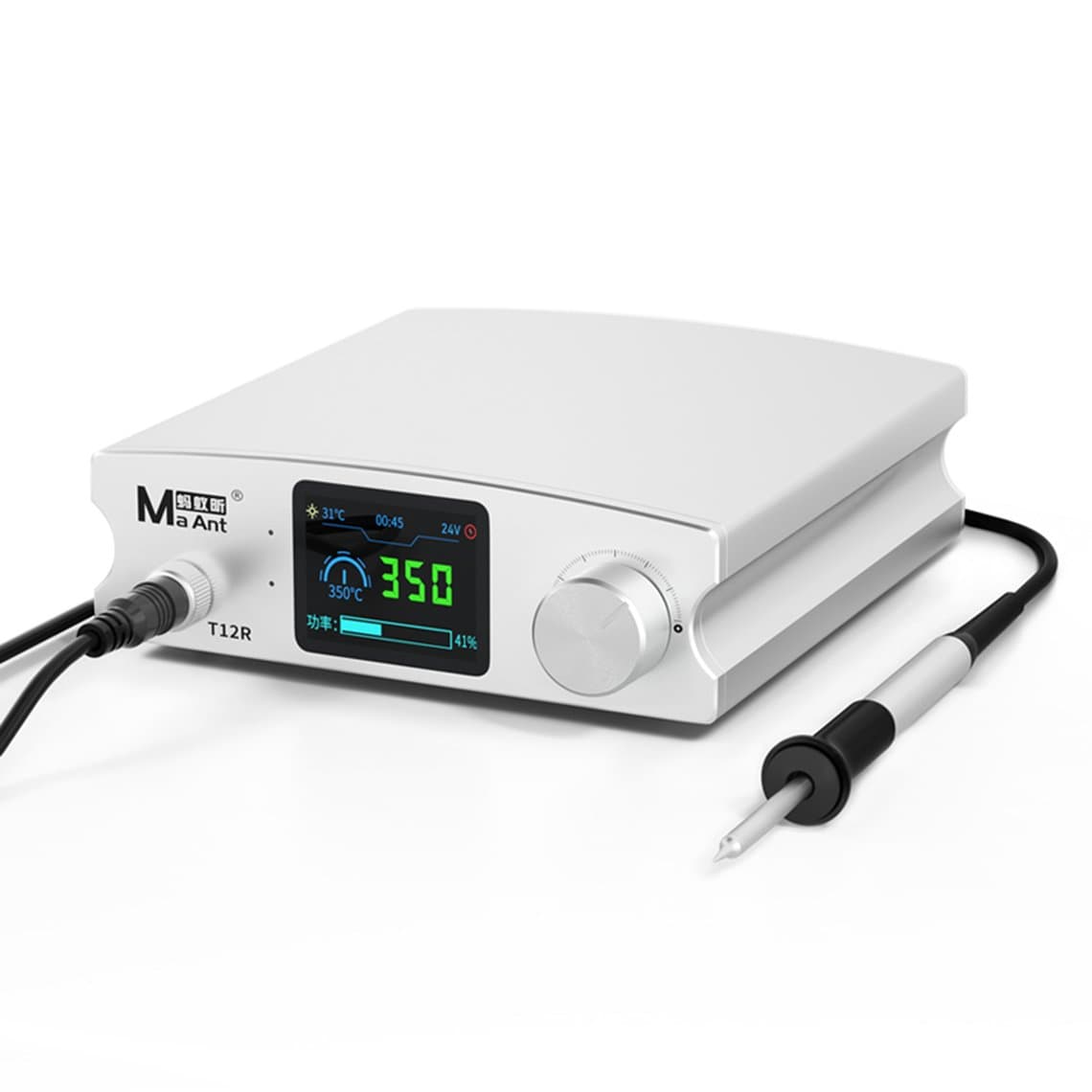
If your shop mainly swaps screens and batteries and only solders the occasional wire or connector, a T12 station is the most practical start. The Maant T12R 75W smart soldering station heats quickly, includes three tips and handles ports and connectors well. The Sugon T16 precision station for T12 tips is another T12-based option with precise temperature control.
Many shops also keep a 936-type station at a second bench for wires and rough jobs. If you run one, keep spare lead-free 936 replacement tips on hand, since a corroded tip makes even simple joints hard.
Pro: board-level repair
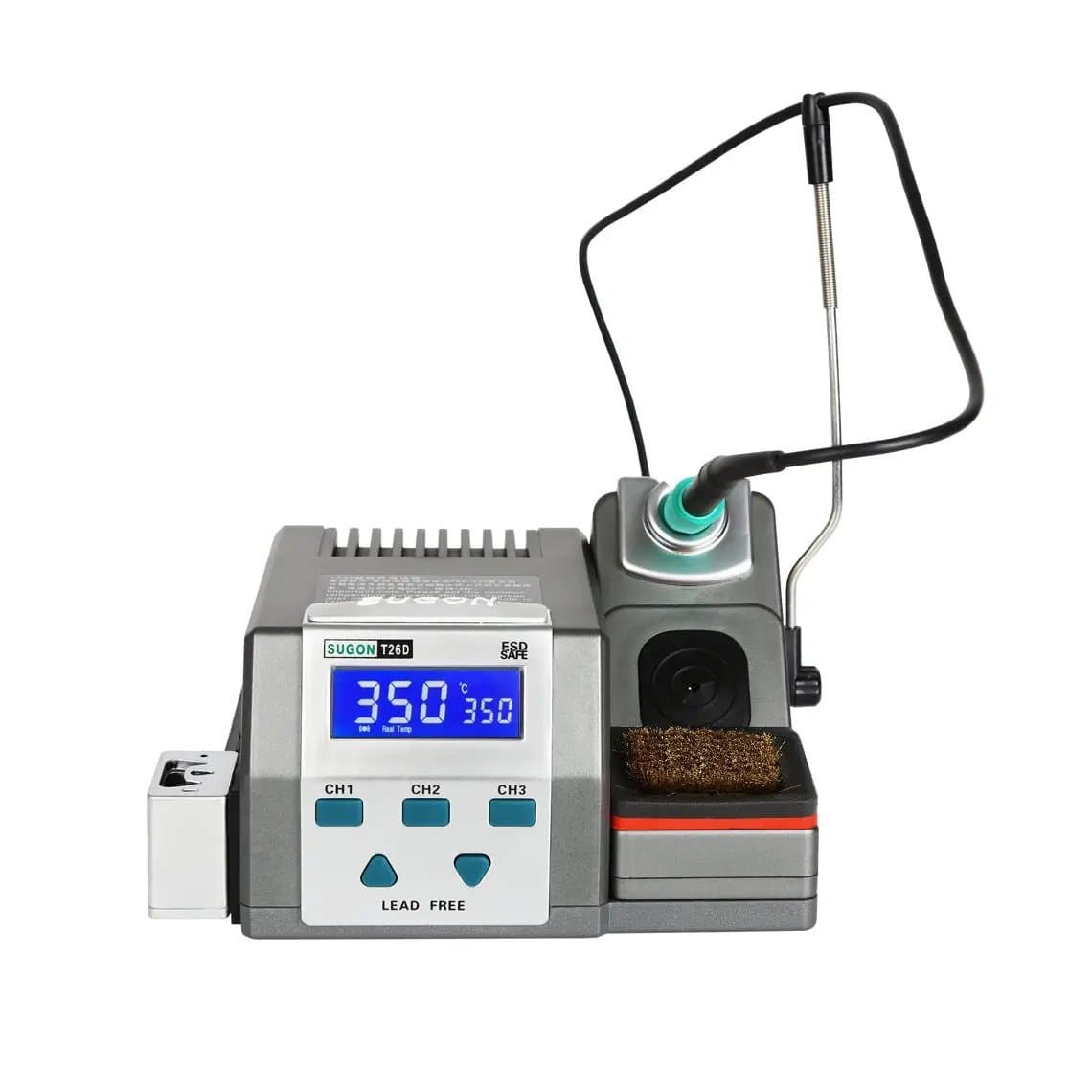
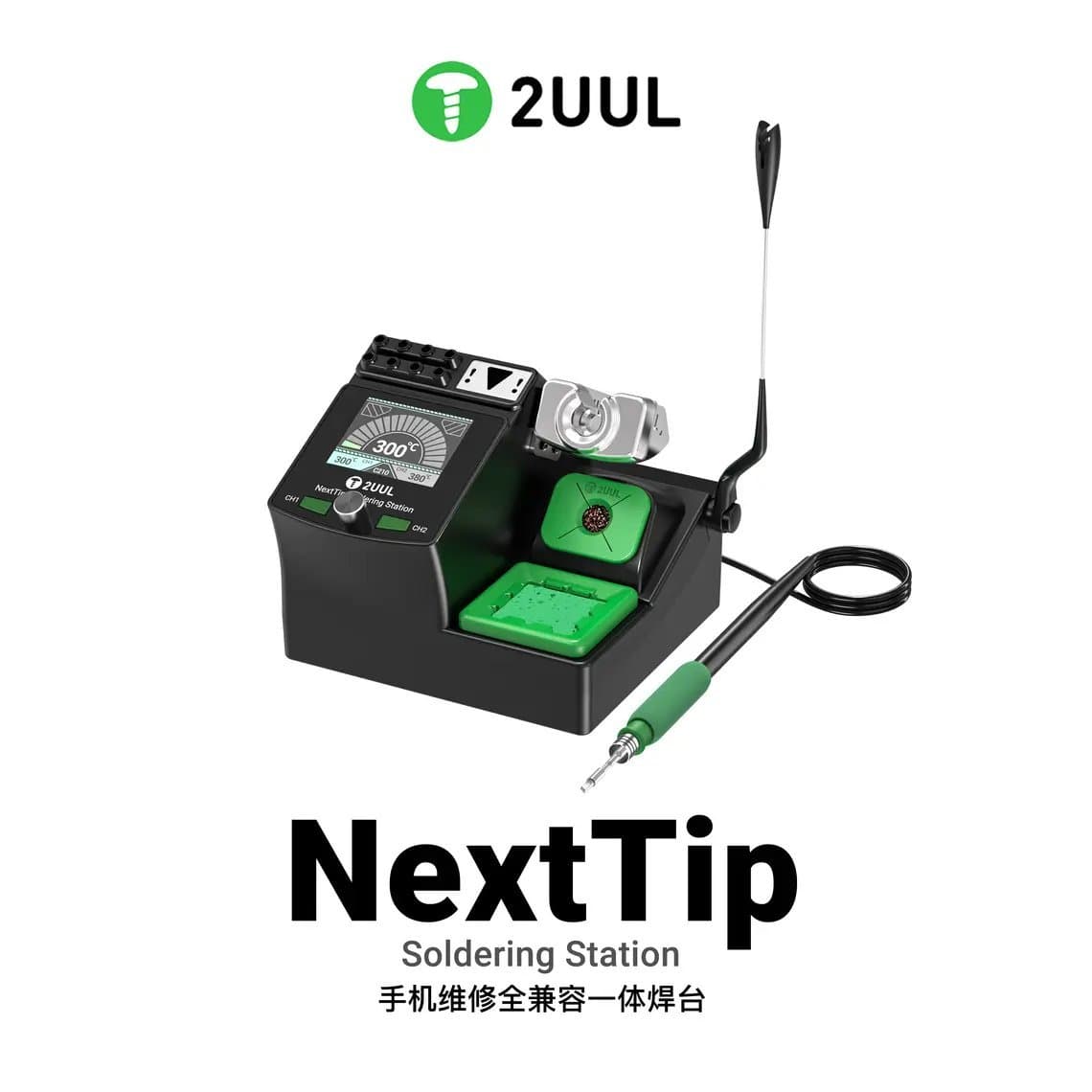
For charge-port ICs, backlight circuits, filter caps, jumper wires and connector replacement, a C210-compatible station is the standard tool. The Sugon T26D precision station for C210 tips is a widely used choice for phone boards. If you want one station that can switch handles between tip sizes, the 2UUL NT210 NextTip station supports C210, C115 and C245 tips, so a single unit covers fine work and heavier joints.
Compare all options in our soldering stations category.
Busy shops: one station per technician
When several technicians share a bench, the station becomes a bottleneck. Give every board technician their own C210 station and keep a shared T12 or 936 station for general jobs. Standardising on one tip system means tips are interchangeable across benches and easier to reorder.
Choosing the right tips
The tip matters as much as the station. A great station with a worn or wrong tip will still make poor joints. Browse the full range of soldering tips by cartridge type.
| Tip shape | Use it for |
|---|---|
| Fine conical or needle | Small passives, test points, fine jumper wires |
| Knife (K) | Dragging connector pins, removing excess solder, wide pads |
| Bent or curved fine tip | Reaching under shields and around tall parts |
| Ball or bevel | Tinning pads and holding a solder bead for controlled heat transfer |
| Large chisel (C245 / T12) | Ground pads, shields, charge-port lugs |
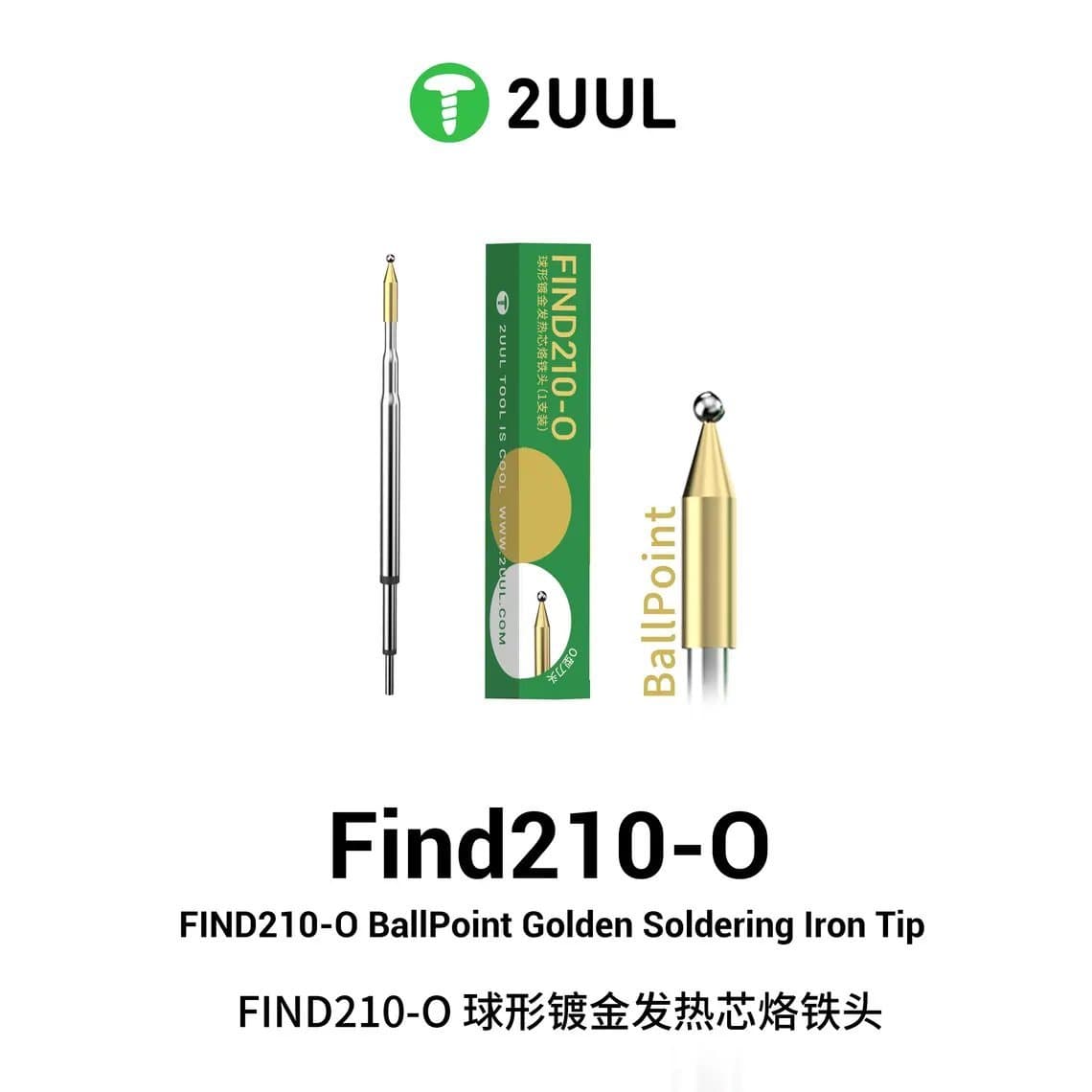
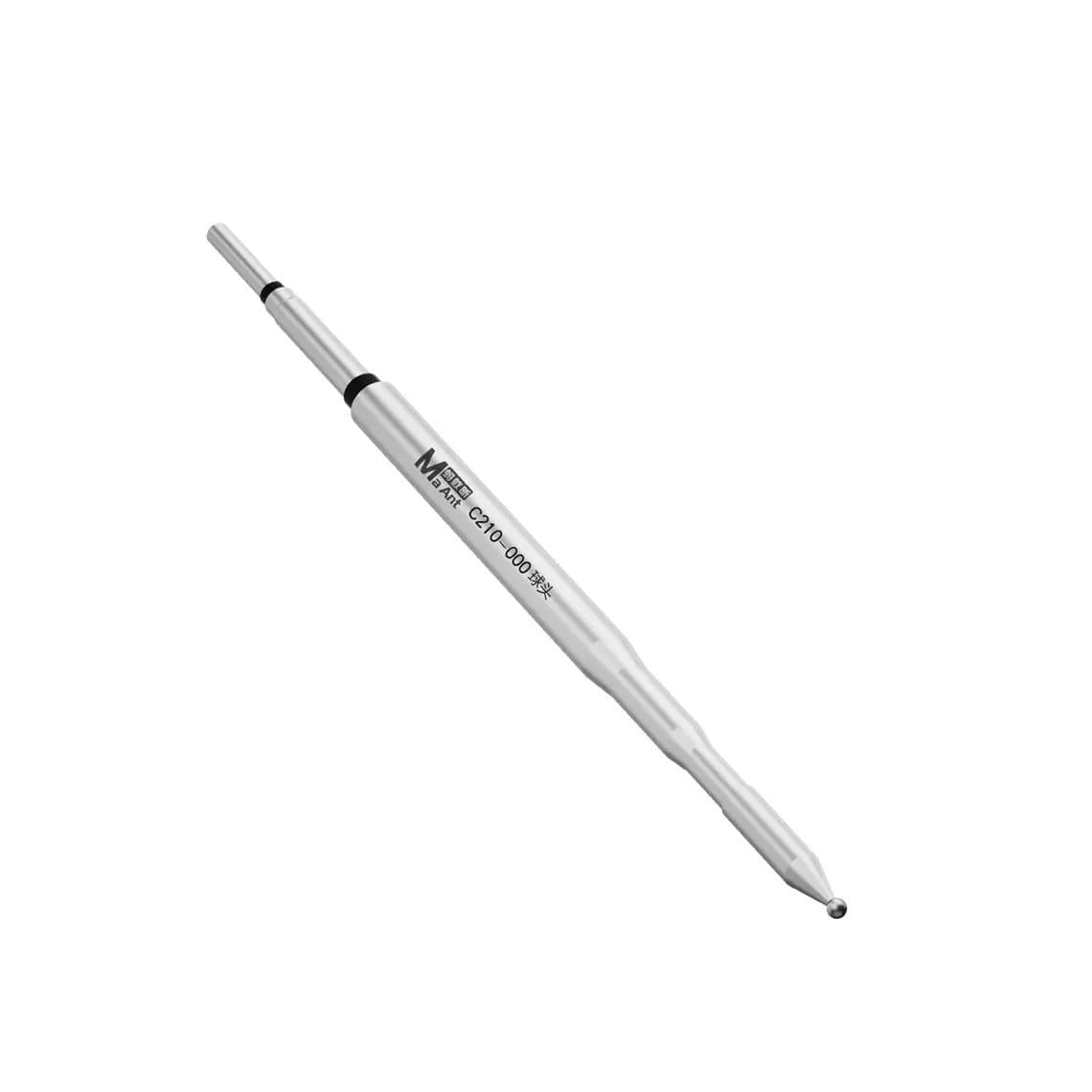
For C210 stations, AiXun C210 soldering iron tips cover the common shapes. The 2UUL FIND210-O ballpoint tip and the MaAnt C210-000 ball head tip are useful for pad tinning and steady heat transfer. For heavier joints, AiXun C245 series tips fit stations that take the larger cartridge. T12 users can add Relife T12-XS tips for finer work.
Always check that the tip matches your station's cartridge type and handle. C210, C115, C245 and T12 tips are not interchangeable with each other.
Temperature: lower is usually better
With a fast-recovery cartridge station, you rarely need extreme settings. Many technicians work lead-free solder somewhere around 320 to 370 °C and leaded solder lower, adjusting for tip size and the thermal mass of the joint. Low-temperature solder paste for IC work needs less again. The rule is simple: use the lowest temperature that gives a clean, fast joint with flux.
If you find yourself turning the station up to get solder to flow, check these first:
- Is the tip clean and tinned?
- Is the tip too small for the joint?
- Have you added fresh flux?
- Does the joint connect to a large ground plane that needs preheat?
What technicians get wrong
- Buying the station and ignoring tips. Budget for spare tips from day one. A station is only as good as its tip.
- Running too hot. High heat oxidises tips quickly and lifts pads. Fix contact and flux before you raise the temperature.
- Cleaning only on a wet sponge. A brass wool cleaner removes oxide with less thermal shock. Always leave a fresh layer of solder on the tip before parking it.
- Using a fine tip on a ground pad. A tiny tip cannot deliver enough heat to a large copper area. Switch to a larger tip instead of dwelling longer.
- Mixing tip systems across benches. Standardise on one or two cartridge types to keep stock simple.
- Skipping the microscope. Fine soldering needs magnification. See our microscopes for stereo and digital options.
Safety notes: ESD, fumes and heat
- ESD: use an anti-static station with a grounded tip, and work on a grounded mat with a wrist strap.
- Fumes: flux smoke irritates eyes and airways. Place a fume extractor close to the joint at every soldering bench.
- Heat: always return the handle to its stand, use sleep mode, and keep the iron away from batteries and flex cables. Disconnect the battery before soldering on a board.
- Lead: if you use leaded solder, wash your hands after work and keep food and drink off the bench.
Questions
Which soldering station is best for mobile repairing?
For board-level phone repair, a station that takes C210 cartridge tips is the mainstream choice because it heats fast, recovers instantly and works well at lower temperatures. A T12 station is a capable mid-range option. A 936-type station is fine for wires and connectors but is not ideal for dense phone boards.
What is the difference between C210 and C245 tips?
Both are cartridge tips with the heater built in. C210 tips are small and suited to fine work on phone boards. C245 tips are larger and deliver more heat, which suits shields, ground pads and bigger joints. They fit different handles and are not interchangeable.
What temperature should I use for phone board soldering?
Use the lowest temperature that gives a clean joint quickly. Many technicians run lead-free solder in the region of 320 to 370 °C and leaded solder lower, adjusting for tip size and joint mass. Good flux and the right tip matter more than a high setting.
Is a T12 soldering station good enough for phone repair?
Yes, for connectors, charge ports and general board work. T12 tips have an integrated heater, so heat-up and recovery are good. For the smallest components and dense areas, a C210 or C115 station gives finer control and a shorter, lighter handle.
Find the right station for your bench in our soldering stations range and stock up on matching soldering tips. Repair shops can open a wholesale account, where wholesale prices unlock after $500 of purchases, and reorder tips and stations fast with quick order by SKU or CSV upload.