Reballing Platform Guide: CPU and Middle-Frame Platforms Explained
17 November 2026 · LightspeedTools team
Short answer: A reballing platform is a fixture that holds a chip or an iPhone middle frame firmly in place and locks the stencil in exact alignment over it, so solder paste can be applied and reflowed into even balls. CPU platforms hold individual chips such as phone processors; middle-frame platforms hold the interposer that joins the two halves of a stacked iPhone board. Both make reballing faster and more repeatable than holding a loose stencil by hand.
Reballing is one of the core board-level skills: remove a BGA chip or separate a stacked board, clean the pads, put new solder balls on, and refit it. The quality of those new balls decides whether the job works. A reballing platform is the tool that takes most of the guesswork out of that step. This guide explains what a platform is, the difference between CPU and middle-frame platforms, model-specific versus multi-model designs, a typical workflow, heat control and how to look after the tool.
Reballing platform vs loose stencil
A loose stencil is a thin, laser-cut sheet with holes that match a chip's ball pattern. You hold or tape it over the chip, spread paste, and heat. It works, and many technicians learn this way, but it has weak points: the stencil can shift, lift or warp under heat, and the chip can move underneath it. The result is bridged balls, missing balls or uneven heights. We cover stencil types in our guide to universal, 3D and magnetic BGA stencils.
A platform adds a base that holds the part and a locating system (pins, a recessed pocket, magnets or a clamp) that puts the stencil in the same position every time. The stencil sits flat, the chip cannot slide, and both hands are free for paste and hot air.
| Loose stencil | Reballing platform | |
|---|---|---|
| Alignment | By eye, each time | Set by pins, pocket or magnets |
| Holding the part | Tape, tweezers or fingers | Fixed in the base |
| Stencil warp under heat | More likely | Reduced, as the stencil is held flat |
| Repeatability | Depends on the technician | More consistent results |
| Cost and coverage | Cheap, wide coverage | Higher cost, covers listed chips or models |
CPU reballing platforms
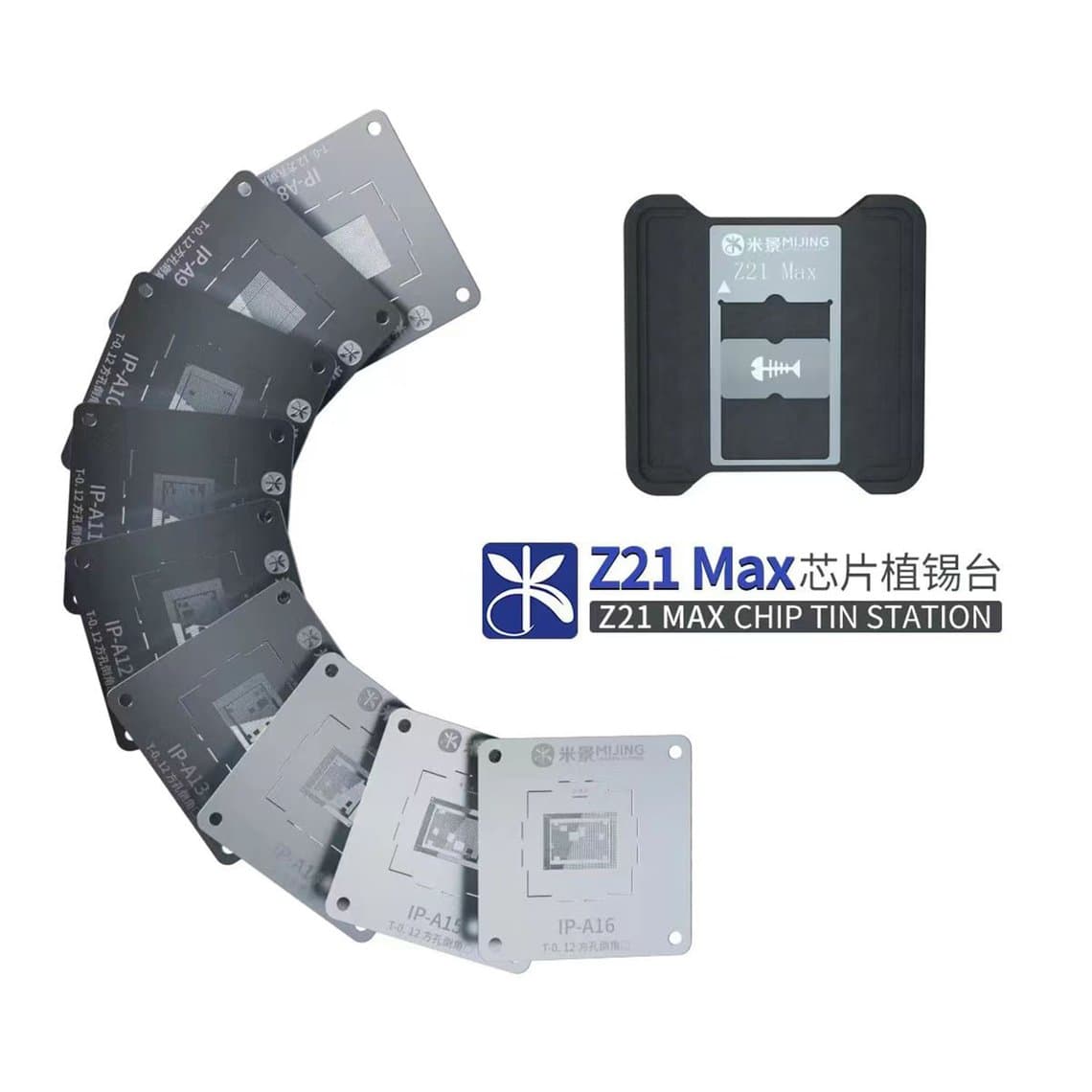
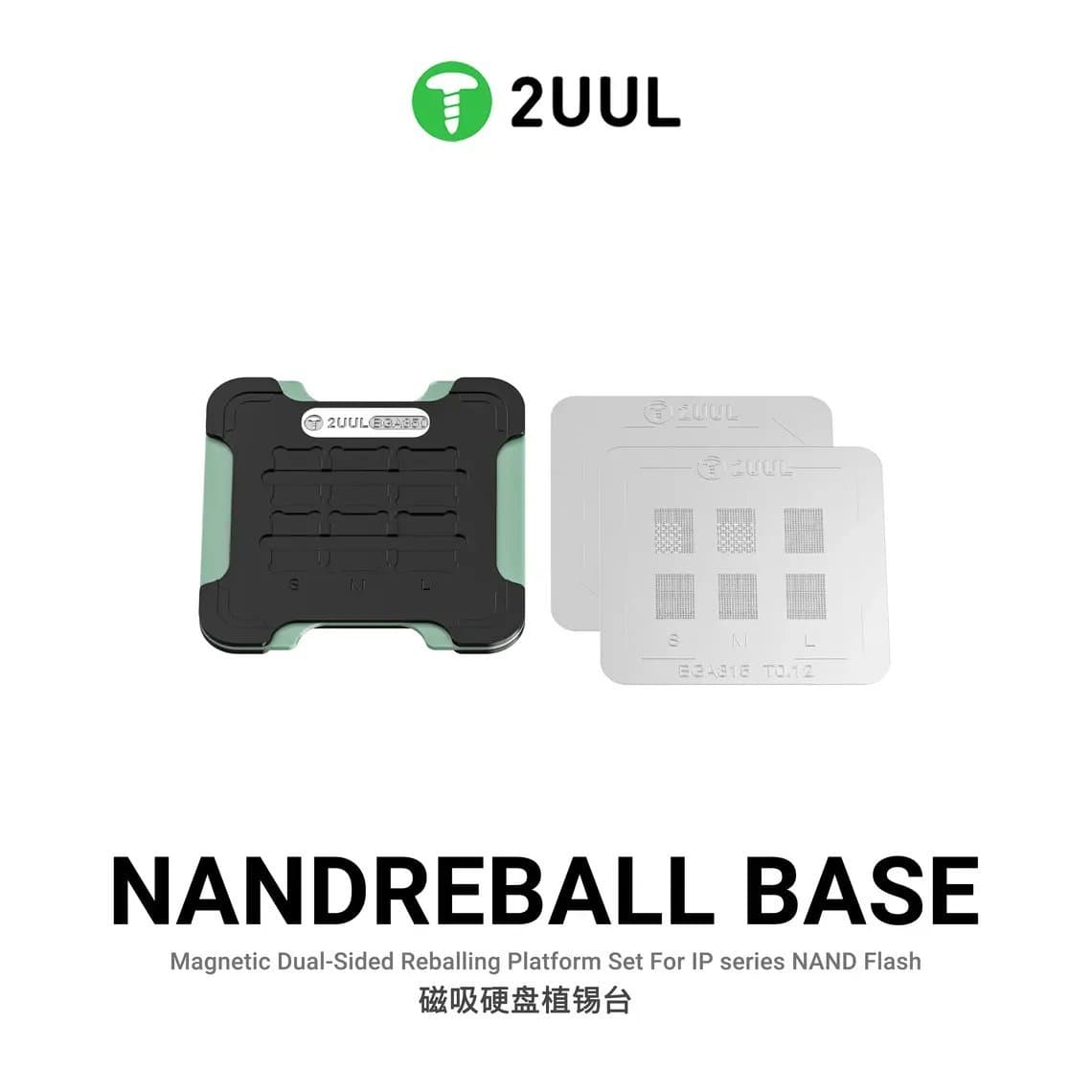
CPU platforms hold an individual chip, most often a phone processor, though many also take RAM, NAND or other BGA chips depending on the set. The chip drops into a matching pocket, the stencil sits over it and is located by magnets or pins, and you apply paste through the stencil. Many designs are magnetic so the stencil pulls down flat onto the chip surface.
Examples include the Mijing Z21 MAX CPU reballing station (iPhone A8–A16 and Android), which covers a range of iPhone processors plus Android chips according to its title, and the 2UUL BH17 magnetic dual-sided CPU reball base set. For storage chips there is the matching 2UUL BH16 NAND reball base set. Always check the listing for the exact chips each set supports before you buy.
Browse CPU and chip reballing platforms and the separate BGA stencils range if you already own a base.
Middle-frame (interposer) reballing platforms
From the iPhone X onwards, many iPhone logic boards are stacked: an upper board and a lower board joined by a middle frame, often called the interposer or middle layer. The middle frame carries solder connections on both faces. When a board is separated for repair, whether for a faulty component on one layer or a damaged connection between layers, the middle frame usually needs new solder before the stack can be rejoined.
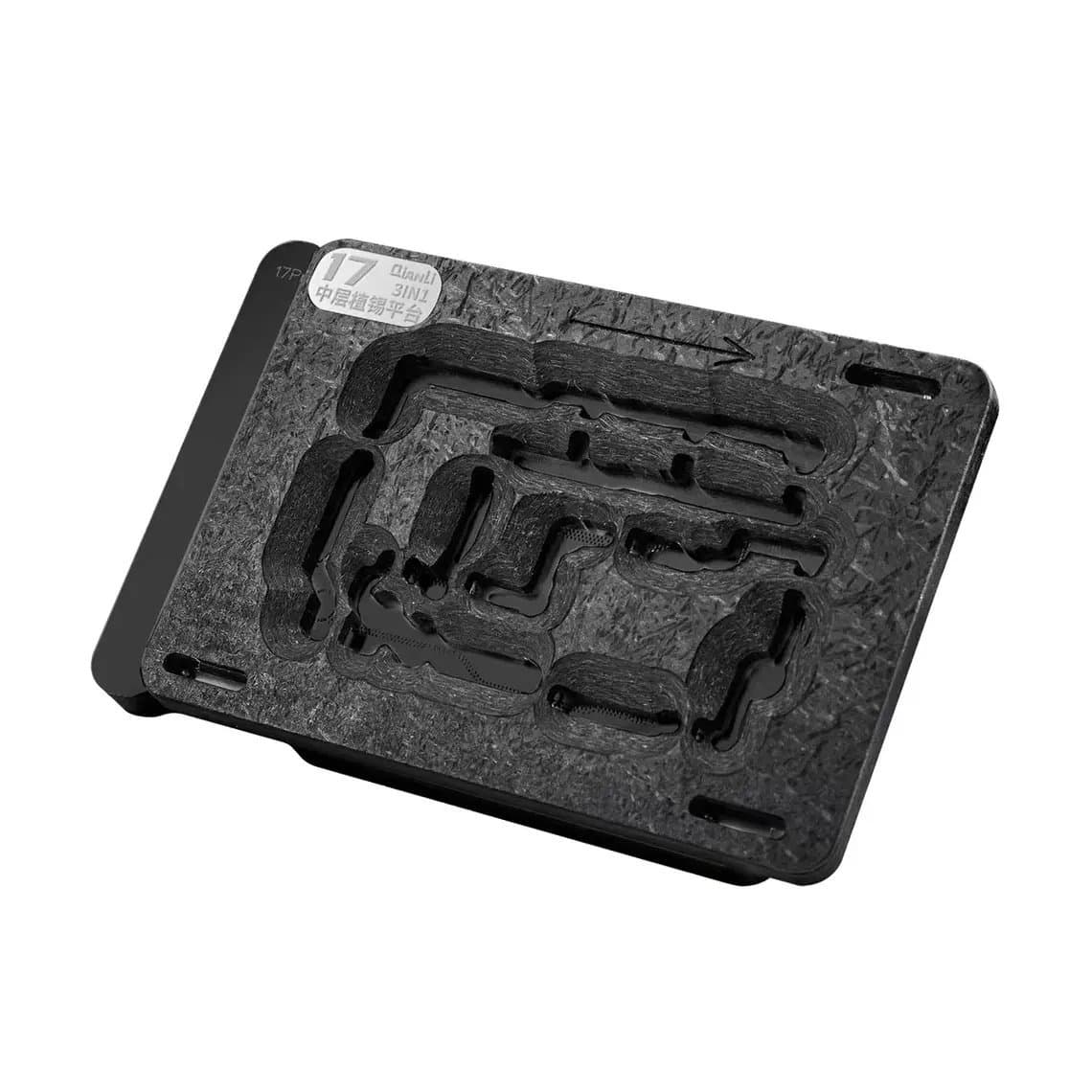
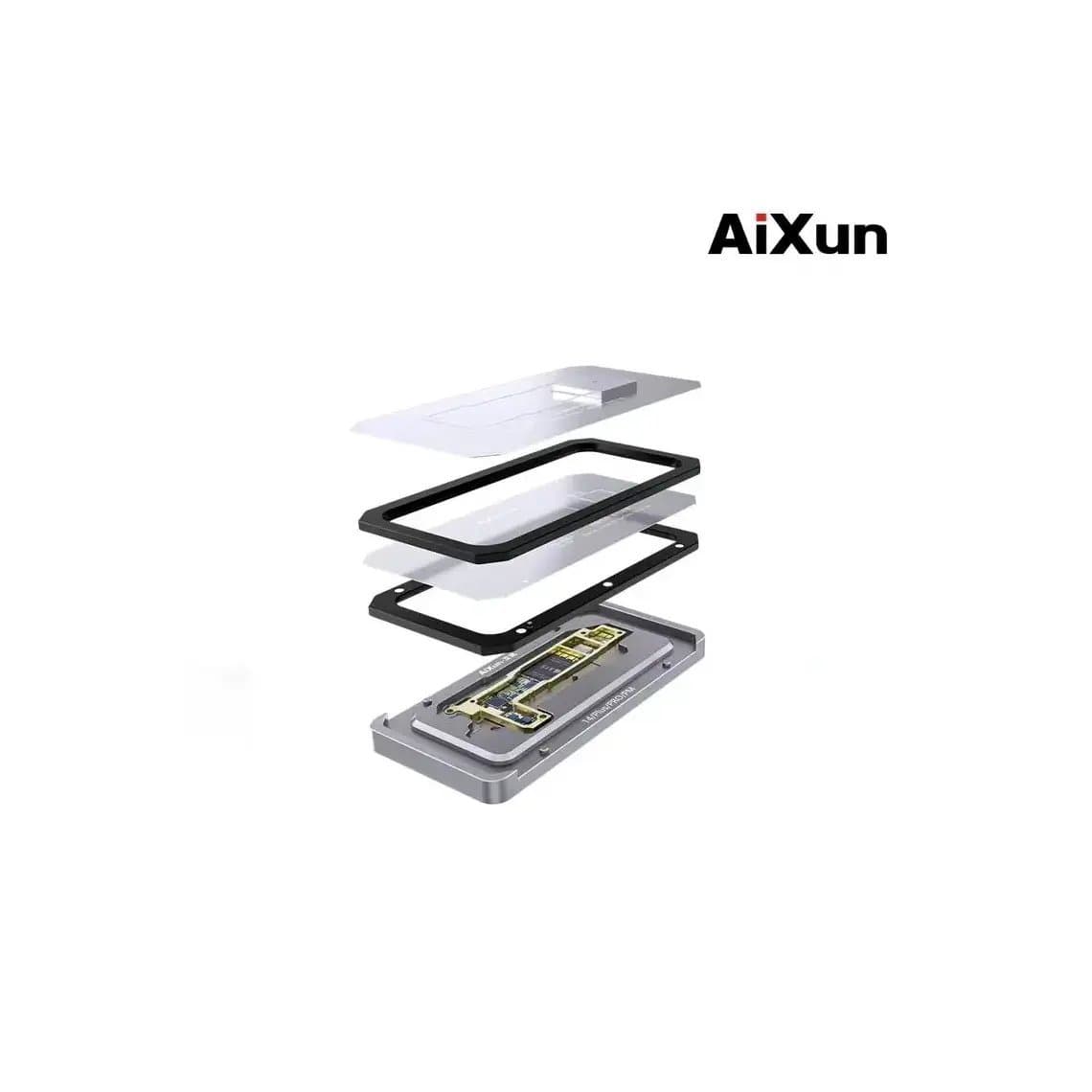
A middle-frame platform holds the board half or the interposer in a shaped pocket and locates a stencil over its pad pattern. Because the frame is long, thin and uneven around its perimeter, holding a loose stencil over it is especially difficult, which is why dedicated platforms are so common for this job. Our guide to middle-layer repair with an iPhone motherboard test fixture covers how to test the stack before and after rejoining.
Examples range from single-generation tools such as the Qianli 3-in-1 magnetic middle-frame reballing platform for iPhone 17 / 17 Pro / 17 Pro Max to the AiXun Z14 4-in-1 motherboard middle-frame planting tin stand. Some sets are sold with accessories such as the Qianli iAtlas gold-plated foil gasket for middle-frame reballing; check the listing for which platforms it is designed to work with. See the full mid-frame reballing platforms range.
Model-specific vs multi-model platforms
Middle-frame platforms come in two broad styles:
- Model-specific: made for one iPhone generation, often with separate pockets for each size in that series. The fit is close and setup is quick, but you need a new tool when a new generation arrives.
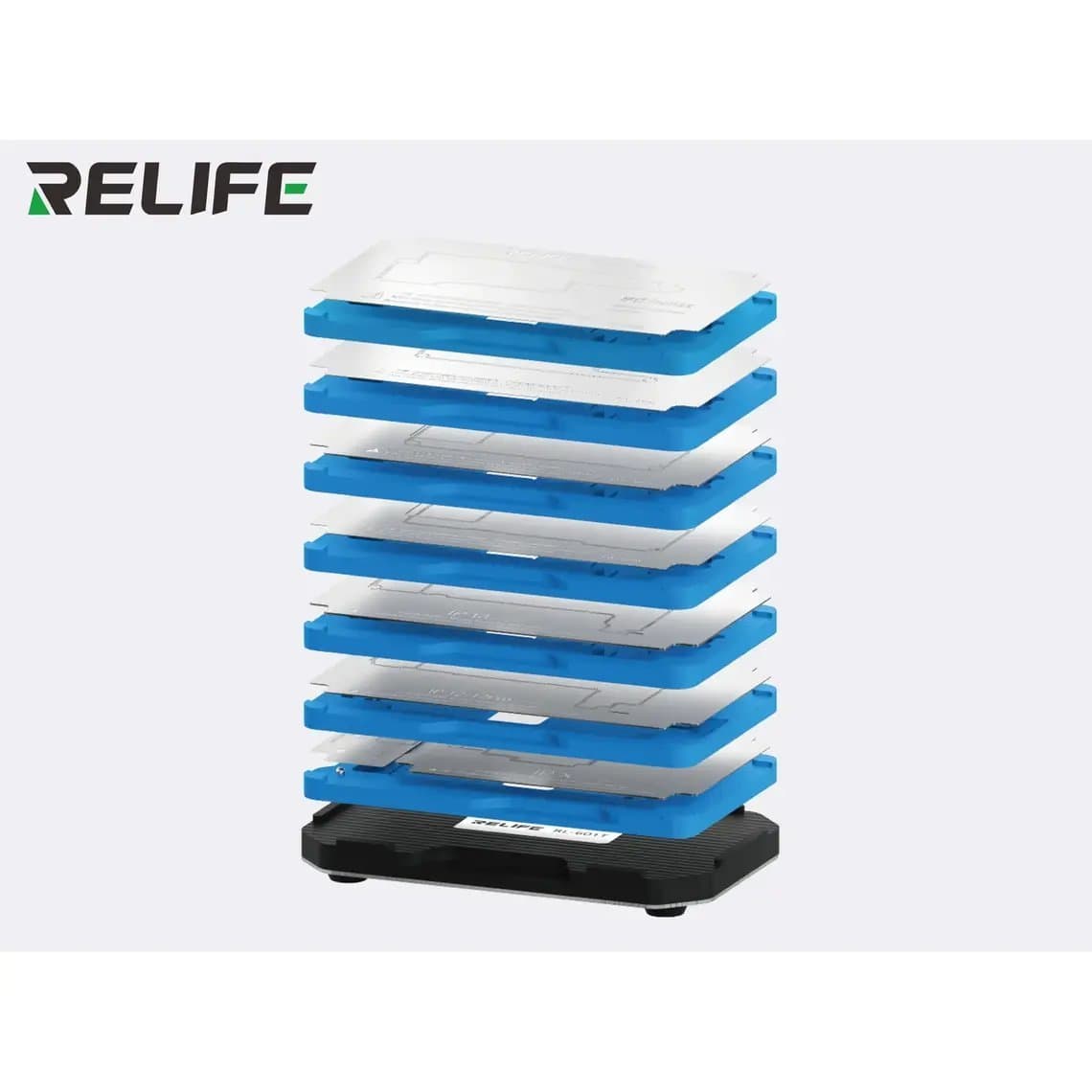
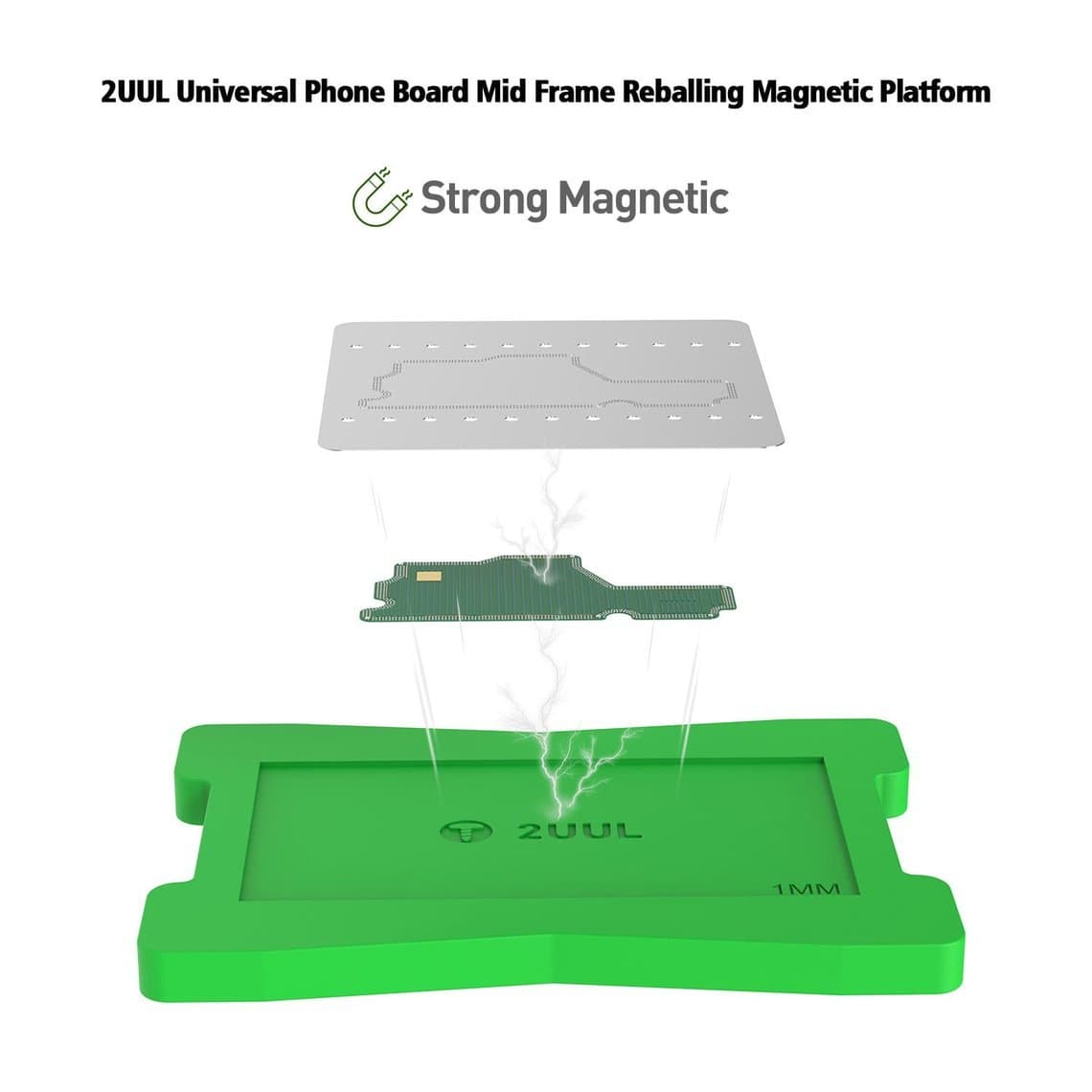
- Multi-model: one base with interchangeable plates or stencils that cover many generations, such as the Relife RL-601T 31-in-1 middle-layer platform for iPhone X–17 Pro Max, or universal magnetic bases like the 2UUL universal mid-frame reballing magnetic platform.
| Shop situation | Sensible choice |
|---|---|
| Mostly recent models, high volume on one generation | Model-specific platform for that generation |
| Mixed models from X onwards, moderate volume | Multi-model set |
| Busy board-repair bench | A multi-model set for coverage plus model-specific tools for the most common models |
Coverage claims come from each product's title and listing; when a set says "X to 17 Pro Max", check which individual models are included and whether any need separate stencils.
A typical reballing workflow
Exact steps vary by platform, chip and paste, so follow the instructions for your tools. The general outline is:
- Clean. Remove old solder from the pads with flux and solder wick, then clean off flux residue with isopropyl alcohol. Pads should be flat, bright and level.
- Inspect. Check under a microscope for lifted or missing pads before going further. Repairing a pad later is far harder.
- Mount. Seat the chip or middle frame in the correct pocket. It should sit flat with no rocking.
- Align. Fit the stencil using the pins or magnets. Check under magnification that every hole sits over a pad.
- Paste. Apply a thin layer of solder paste and scrape it across so every hole is filled level with the stencil surface. Wipe excess off the top.
- Heat. Reflow with hot air using gentle, even movement until the balls form. Let the assembly cool before touching the stencil.
- Release and inspect. Lift the stencil, then inspect for missing, bridged or uneven balls. Touch up with flux and gentle heat if needed.
A microscope is close to essential for steps 2, 4 and 7, especially on middle frames.
Heat control
Heat is where most reballing jobs go wrong. Too little and the paste stays grainy; too much and the stencil warps, the chip overheats or nearby parts move. A few general principles:
- Use the paste type and temperature range stated by the paste maker. Low-temperature and standard pastes behave very differently.
- Keep the hot-air nozzle moving and at a steady distance rather than parking it on one spot.
- When working on a board half, preheating the board from below can reduce the hot-air temperature needed on top. Our guide to the PCB preheater for phone repair explains how and why.
- Let the platform and stencil cool before lifting. Lifting early can drag balls off or tear the stencil.
Safety: never reball or rework near a battery. Remove the battery from the phone before board work, keep flammable solvents away from hot air, use ESD protection, and run fume extraction when heating flux.
Maintenance and care
- Clean after every use. Remove paste and flux from the stencil holes and the platform pocket with isopropyl alcohol and a soft brush. Dried paste in holes causes missing balls next time.
- Keep stencils flat. Store them flat and separated. A bent stencil will not seal against the chip.
- Protect the locating features. Bent pins or damaged pockets ruin alignment. Do not pry chips out with metal tools against the pocket edge.
- Watch the magnets. Keep magnetic platforms away from fine screws and loose steel parts, and check that the stencil still pulls down firmly.
- Label sets. With multi-model kits, keep plates and stencils in their marked slots so the right one is always at hand.
Common mistakes
- Skipping pad cleaning, which leaves uneven pads and uneven balls.
- Using too much paste, which causes bridges.
- Lifting the stencil while the solder is still hot.
- Choosing a platform without checking that it covers the exact models you repair.
- Overheating one area of a middle frame while trying to finish the far end.
Questions
What is a reballing platform used for?
It holds a BGA chip or iPhone middle frame steady and keeps the stencil aligned over it while you apply solder paste and reflow new balls. It makes results more even and repeatable than a loose, hand-held stencil.
Do I need a middle-frame platform to repair stacked iPhone boards?
Not strictly, but it makes the job much easier. The middle frame is long and thin, and holding a loose stencil flat over it is difficult. A platform made for that board keeps alignment consistent across the whole frame.
Is a universal platform better than a model-specific one?
Neither is always better. Universal or multi-model sets cover more phones for the money, while model-specific platforms usually fit tighter and set up faster. Many busy benches own both.
What temperature should I use for reballing?
Follow the range stated by your solder paste maker, as low-temperature and standard pastes differ. Use steady, moving hot air and consider preheating the board from below to reduce the heat needed on top.
Find the right base in our mid-frame reballing platforms and CPU reballing platforms ranges. Tools are tested before shipping and ship from Shenzhen by DHL, FedEx or UPS. Wholesale prices unlock after $500 of purchases, explained on our wholesale page, and you can reorder by SKU or CSV with Quick Order.