Hydrogel Film Cutting Machine: A Profit Add-On for Repair Shops
17 November 2026 · LightspeedTools team
Short answer: A hydrogel film cutting machine cuts a custom screen protector from a blank sheet of soft film in about the time it takes to chat with the customer: you pick the device in the software, load a sheet, the machine cuts the shape, and you apply it. One machine and a few boxes of film replace a wall of model-specific protectors, which is why many repair shops add it as a quick, high-margin counter sale.
Most repair shops already sell screen protectors, but stocking a protector for every phone is a losing game. New models arrive every few months, old stock goes out of date, and the one model a customer needs is the one you have run out of. A film cutting machine flips that around: you hold blank film, and the machine makes the right shape on demand. This guide explains how the machines work, the film types, what to check before you buy, and how to work out what each fit earns you.
What hydrogel film is
Hydrogel film is a soft, flexible screen protector material, usually built from layers of TPU-type film with a self-adhesive layer on the back. It is not tempered glass. Its main strengths are:
- Flexibility: it bends around curved edges and fits screens that rigid glass struggles with.
- Self-healing surface: light surface scratches on many films fade over time, depending on the film.
- Full coverage: because it is cut to the exact device outline, it can cover more of the screen than a generic protector.
- Thin profile: it adds very little thickness and generally works with phone cases.
The trade-off is impact protection. A soft film protects against scratches and scuffs; it does not spread an impact the way thick tempered glass can. Be honest with customers about that and offer glass where they want drop protection.
How a film cutting machine works
- Select the device. On the machine's screen, or a connected app, choose the brand and model. Many machines also offer back films, camera covers, smartwatches and tablets, depending on the software library.
- Load a blank sheet. Place a sheet of film into the feed slot with the correct side facing up.
- Cut. The machine cuts the outline, cut-outs for cameras and sensors, and sometimes the release tab, usually in well under a minute.
- Apply. Clean the screen, peel the backing, align the film and smooth it down from the centre outwards. Small bubbles in soft film usually settle within a day or so.
- Cure, if the film needs it. UV-cure films are hardened under a UV lamp after application, which some shops do with a combined unit such as a cutting, laminating and UV curing machine.
The cutting itself is done by a small blade plotter. The value is in the software: an up-to-date library of device outlines is what lets one machine serve every customer who walks in.
Film types you can offer
| Film type | What it does | Typical customer |
|---|---|---|
| Clear HD | Keeps the screen looking as close to original as possible | Most customers; the default upsell |
| Matte | Reduces glare and fingerprints, with a slight frosted look | Gamers, outdoor workers, people who hate fingerprints |
| Privacy | Narrows the viewing angle so people beside you cannot read the screen | Commuters, office and banking users |
| Anti-blue light | Filters part of the blue light from the display | Heavy evening users, parents buying for children |
| UV-cure | Soft film that is hardened under UV light after fitting | Customers who want a firmer surface than standard hydrogel |
For film stock, our range includes HD hydrogel UV soft film, matte hydrogel film and anti-blue light hydrogel film. Check that the sheet size suits your machine before ordering in bulk.
Offering three tiers (clear, matte or privacy, and a premium option) makes the upsell easy: the customer chooses, rather than deciding whether to buy at all.
Why it works as a shop add-on
- One machine covers many models. New phones are added in software, so you do not have to wait for protector stock to arrive.
- No dead stock. Blank sheets do not go out of date when a phone model is discontinued.
- Less shelf space. A few boxes of film replace hundreds of individual packets.
- More than phones. Depending on the software, you can cut back films, watch films and tablet films from the same machine.
- A natural add-on to repairs. Every screen or back glass repair is a chance to fit a fresh protector before the device goes back.
- Fast service. The whole fit takes a few minutes, which suits walk-in customers.
What to check before you buy a machine
Software library and updates
Ask how often new devices are added, whether updates are automatic over Wi-Fi, and whether the library covers the brands your customers actually use. A machine that lags on new releases is the main way this add-on fails.
Cut limits and subscriptions
Some machines charge per cut, some use codes or credits tied to film, and some are sold as "unlimited". Machines such as the SunShine Y22 Plus unlimited cutter and the E210 unlimited film cutter are sold on that basis, but always read the terms: check whether "unlimited" depends on an account, a region, or a particular film brand, and whether software updates stay free.
Film compatibility
Some machines only accept their own film, others take universal sheets. Confirm the sheet size and whether the machine reads film codes before you buy stock.
Blade wear and maintenance
The cutting blade is a consumable. A worn blade leaves ragged edges or fails to cut through. Ask whether replacement blades are easy to get and how the cutting depth is adjusted.
Space and connectivity
Most units are compact desktop machines, but you still need power, a stable network for cloud-based models, and a clean, dust-free spot to apply the film. Dust is the biggest enemy of a good fit.
Comparing machine styles
| Style | Example in our range | Suits |
|---|---|---|
| Compact cloud cutter | SunShine SS-807C Mini | Smaller counters and kiosks |
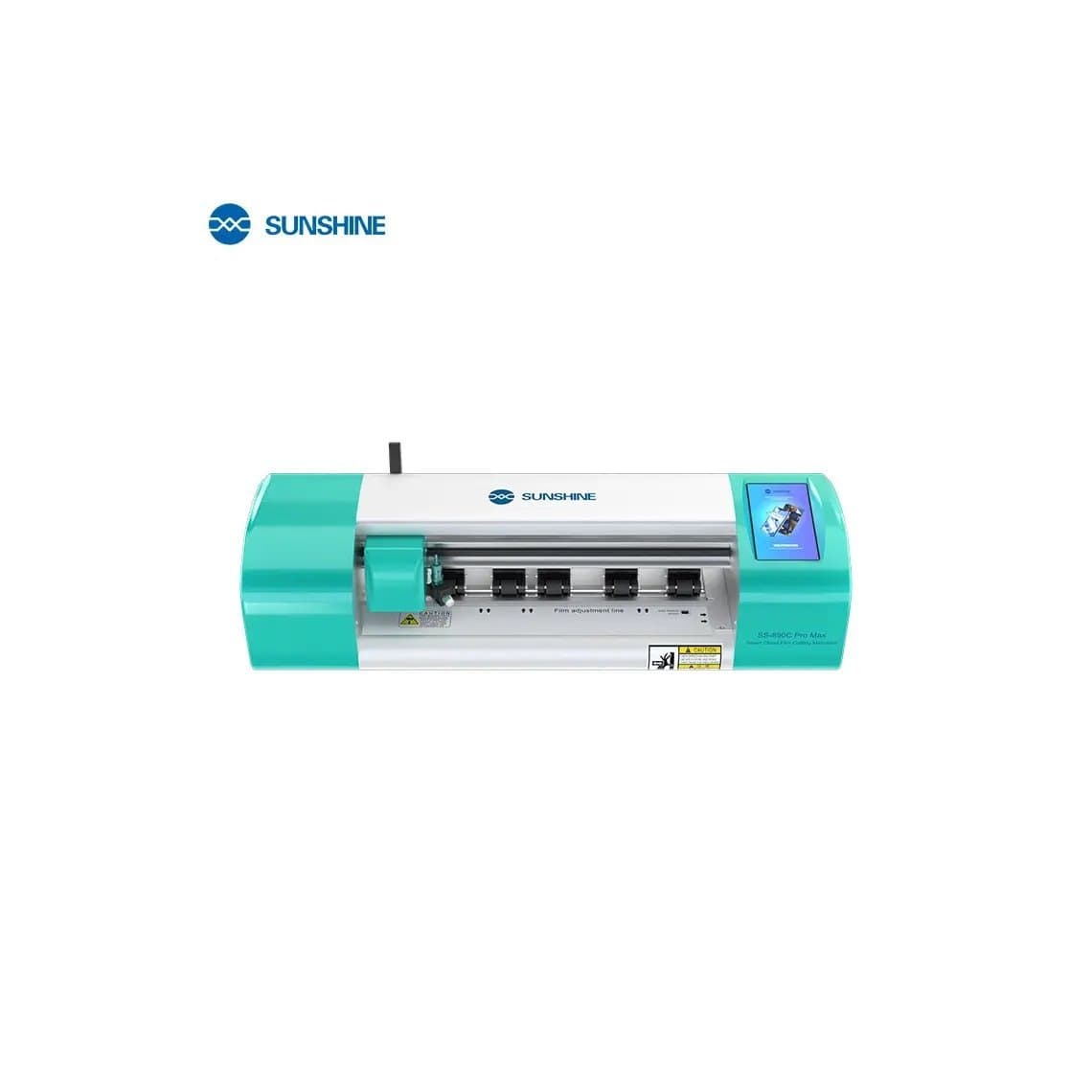
| Larger multi-function cloud cutter | SunShine SS-890C Pro Max | Busy shops cutting phones and tablets |
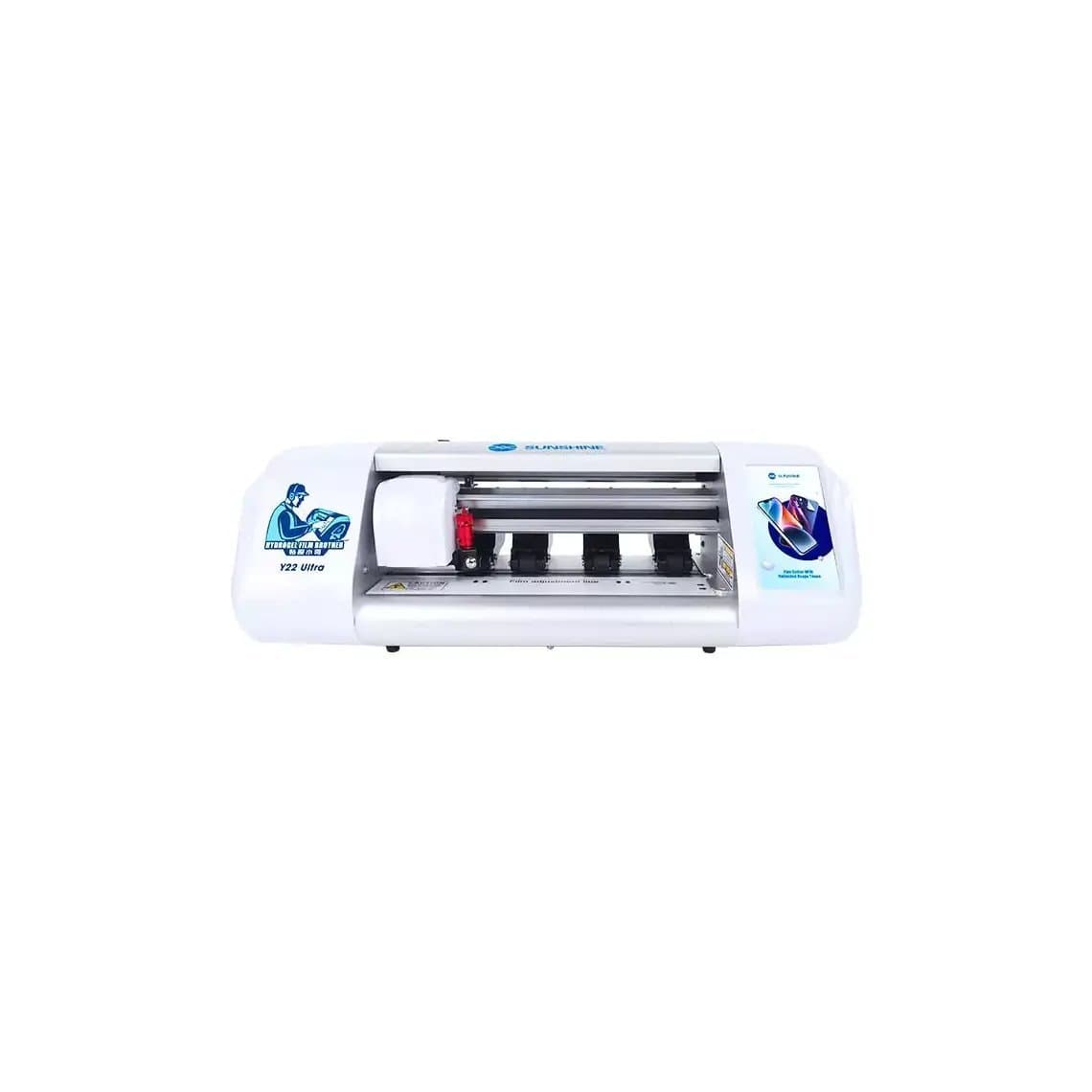
| Unlimited-cut models | SunShine Y22 Ultra | High-volume shops that want predictable running costs |
Compare the full range on our hydrogel film cutters page.
How to sell it in-store
- Fit while they wait. Offer to cut and fit the film there and then. A customer who watches the machine cut a protector for their exact phone is already sold.
- Put the machine where people can see it. The cutting process itself is the best advert you have.
- Offer it at checkout on every repair. A freshly repaired screen is the moment a customer is most willing to protect it.
- Show samples. Keep demo phones fitted with clear, matte and privacy films so customers can compare.
- Bundle. Front and back film together, or a family deal for several devices.
- Offer a refit policy. Decide in advance whether you replace a film that lifts or bubbles badly within a short period, and say so. It builds trust and costs you only a sheet.
Working out your profit per fit
Prices for machines, film and fitting vary widely by market, so work the numbers with your own figures. Per fit:
- Film cost per sheet = price per box ÷ sheets per box = A
- Cut cost = cost per cut on credit-based machines, or zero on unlimited models = B
- Waste allowance = an estimate for miscut or badly applied sheets, for example A × your waste rate = C
- Blade and consumables = blade cost ÷ cuts per blade, plus cleaning wipes = D
- Your selling price = P
Gross margin per fit = P − (A + B + C + D).
To see how long the machine takes to pay for itself, divide the machine price by the margin per fit. That gives the number of fits needed. Then divide by your realistic fits per week to estimate the payback in weeks. Remember to count the few minutes of staff time per fit, especially at busy times.
Common mistakes
- Buying a machine without checking how quickly it adds new models.
- Assuming "unlimited" means unlimited without reading the terms.
- Applying film in a dusty area and blaming the film for bubbles.
- Selling hydrogel as drop protection; it is mainly scratch protection.
- Stocking only one film type and missing the upsell.
- Ignoring blade wear until edges start lifting.
Film cutters are one of several machines that can earn their place on the counter. For a wider view of what drives repair-shop income, see our article on phone repair business profit drivers.
Questions
Is hydrogel film better than tempered glass?
It depends on what the customer wants. Hydrogel is thin, flexible, covers curved edges and resists scratches, but it does not absorb impacts as well as thick tempered glass. Many shops offer both and explain the difference.
How does a screen protector cutting machine know the phone model?
It uses a software library of device outlines. You choose the brand and model on the screen or in the app, and the machine cuts that shape. New models are added through software updates, which is why update support matters when you buy.
Do film cutting machines need a subscription?
Some do and some do not. Models may charge per cut, use film codes or credits, or be sold as unlimited. Read the terms carefully, including whether updates and unlimited cutting depend on an account or a specific film.
Can a film cutting machine make back films and tablet protectors?
Many can, if the software library includes those templates and the film sheet is large enough. Check the supported device list and sheet sizes before you rely on it for tablets or watches.
Compare machines on our hydrogel film cutters page and see the rest of our machines. Shops buying machines and film together can unlock trade pricing through wholesale, and restock film by SKU with Quick Order.