USB-C PD Fast Charger Wholesale: What Retailers Should Stock
17 November 2026 · LightspeedTools team
Short answer: A good USB-C PD fast charger wholesale range covers three groups: single-port USB-C power adapters in two or three wattages and the plug versions your market uses, a few multi-port GaN desktop chargers for customers who charge several devices, and multi-port bench chargers with displays for repair shops. Match wattage to the devices your customers carry, ask suppliers for compliance documents for your market, and sell the right USB-C cable alongside every charger.
Chargers are one of the easiest accessories to add to a repair counter or phone shop. Almost every customer owns a USB-C device, many still use an old slow brick, and a charger is a small, light item that ships well. The hard part is choosing a range that sells through instead of a drawer full of wattages nobody asks for. This guide covers the charger types worth stocking, what the fast-charging terms mean, how to match wattage to devices, plug versions per market, the compliance questions to ask, and how to build a sensible stocking mix.
The three charger types worth stocking
1. Single-port USB-C power adapters
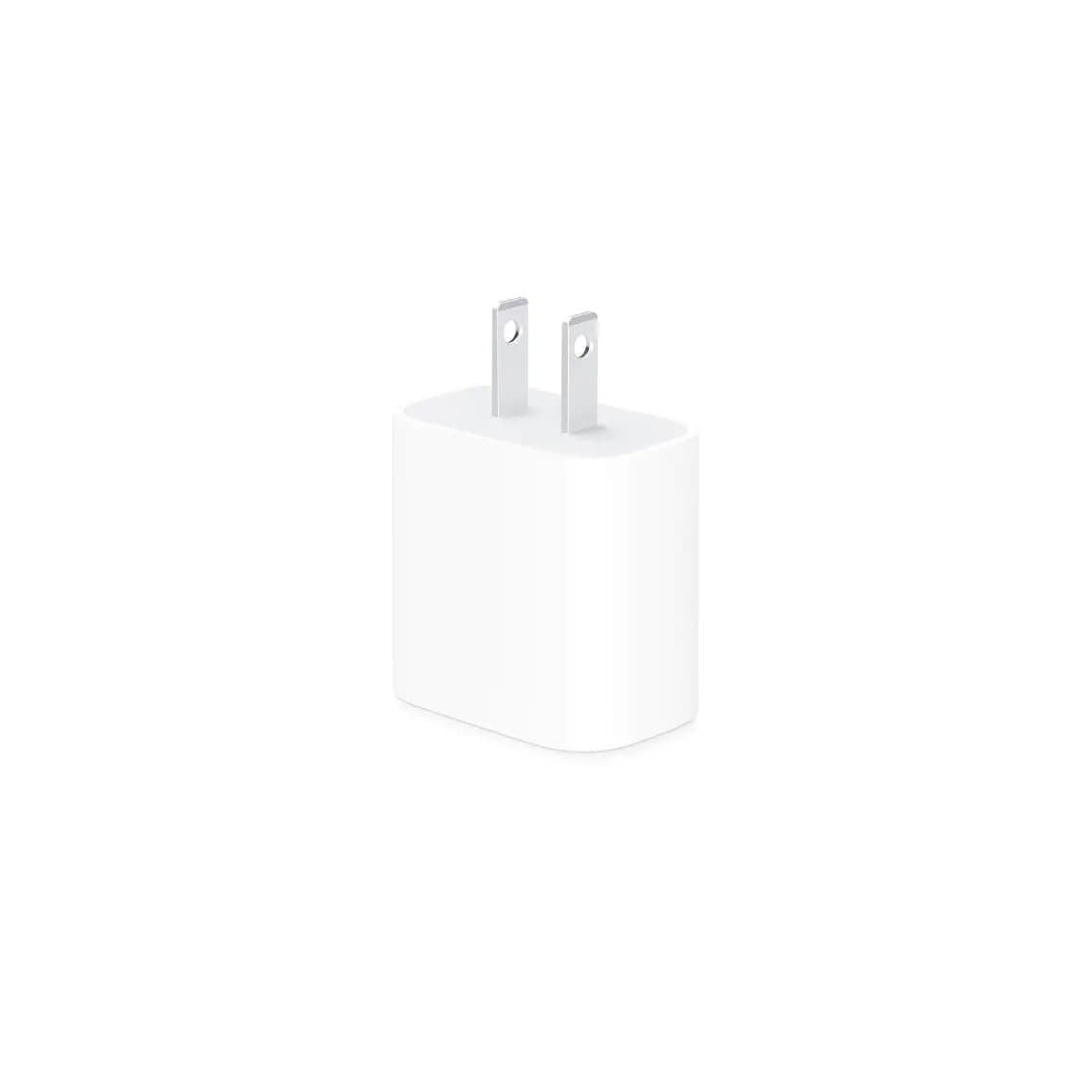
This is your volume item. A customer buys a new phone without a charger in the box, or their old one has died, and they want one plug that does the job. Stock them by wattage and by plug version. The everyday seller is the 20W class, such as the 20W USB-C power adapter (US version), with a higher-wattage option for customers who want more headroom, such as the 35W USB-C power adapter (US version). Single-port adapters are easy to explain at the counter and easy to reorder by SKU.
2. Multi-port GaN desktop chargers
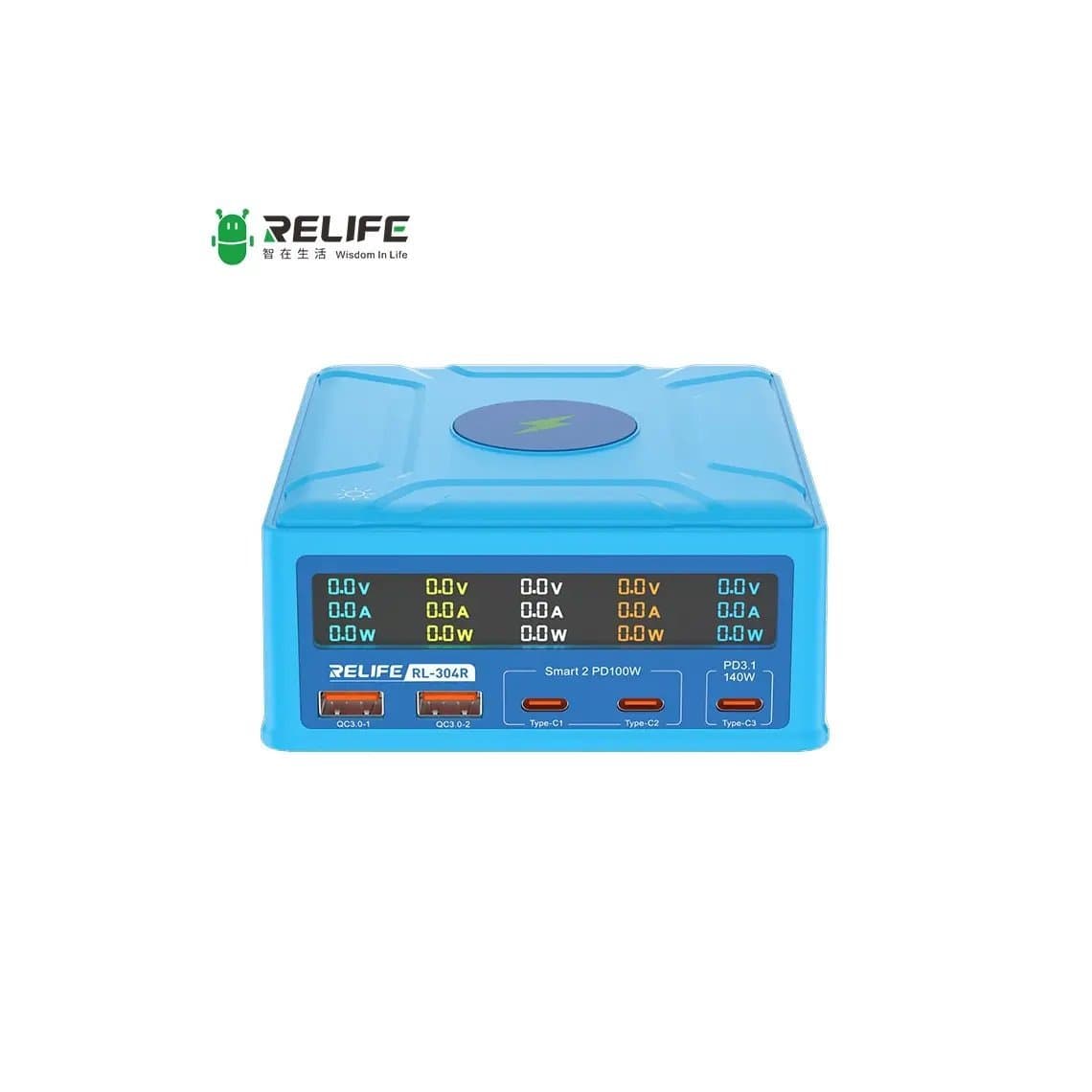
These suit customers who charge a phone, tablet, earbuds and sometimes a laptop from one plug, at a desk or while travelling. They come in compact two- and three-port wall styles and in larger desktop blocks. Examples include the Relife RL-304R multi-port GaN charger and, at the higher end, the Relife Q8 165W GaN multi-port charger. They carry a higher ticket than single-port adapters and are a natural upsell for laptop owners.
3. Multi-port bench chargers with displays
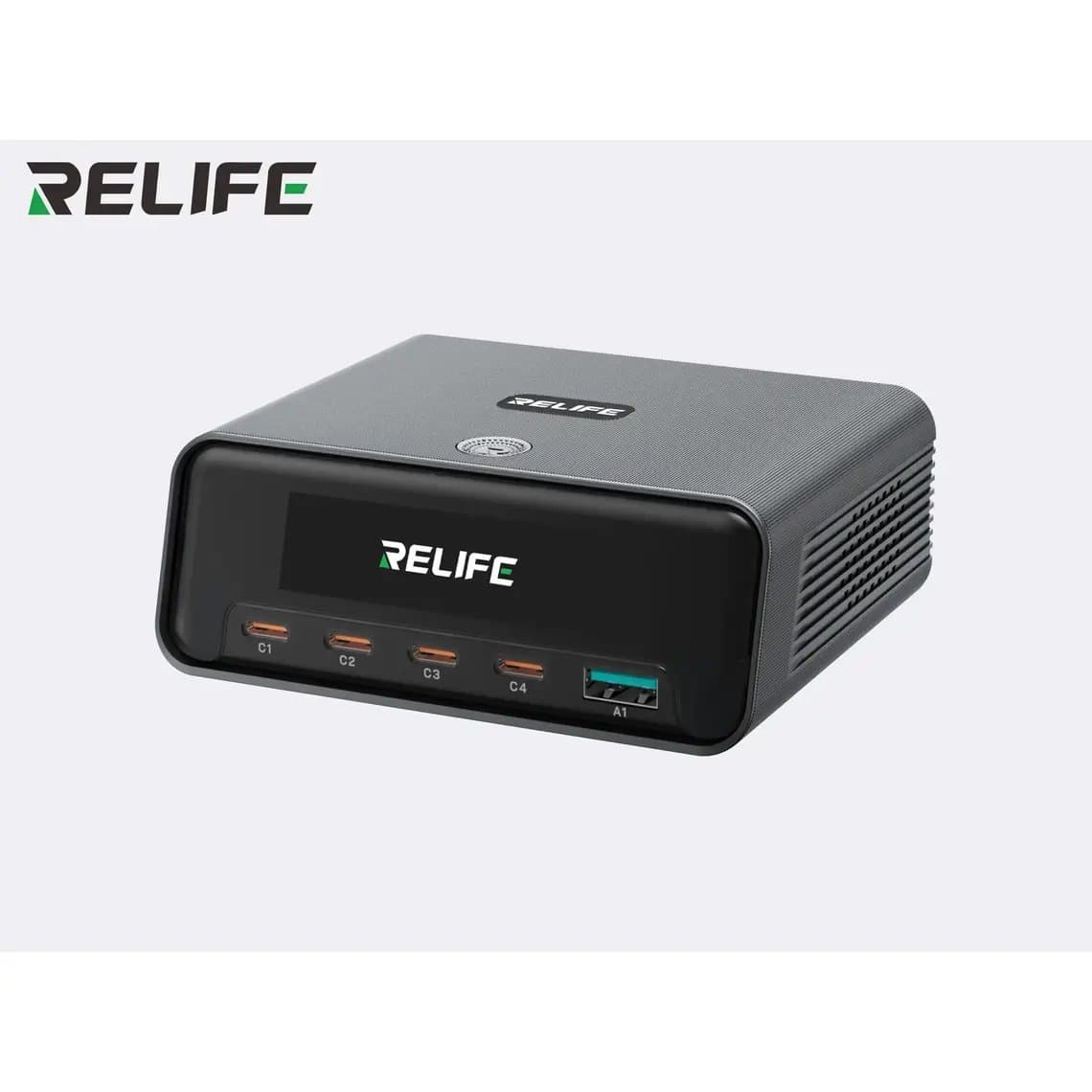
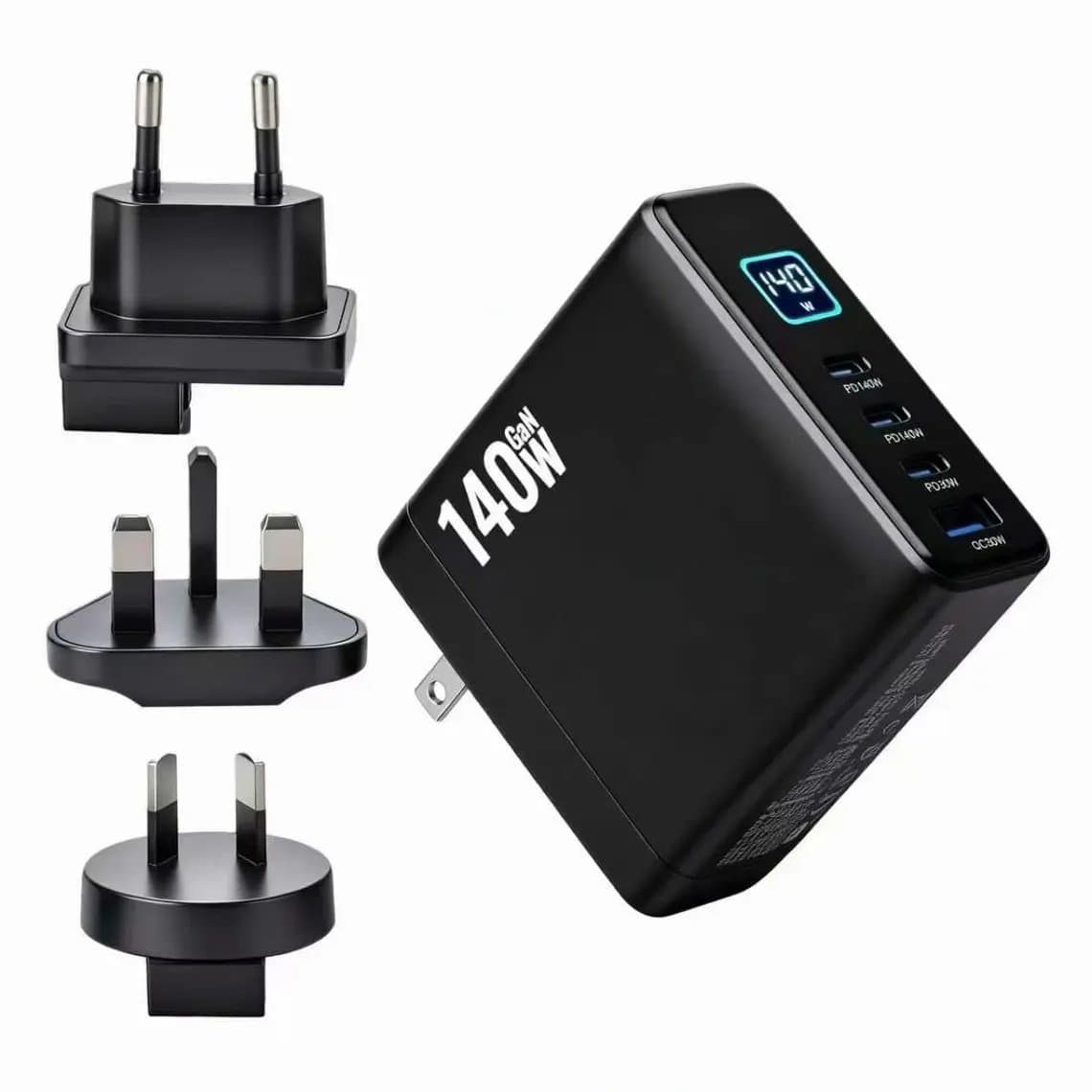
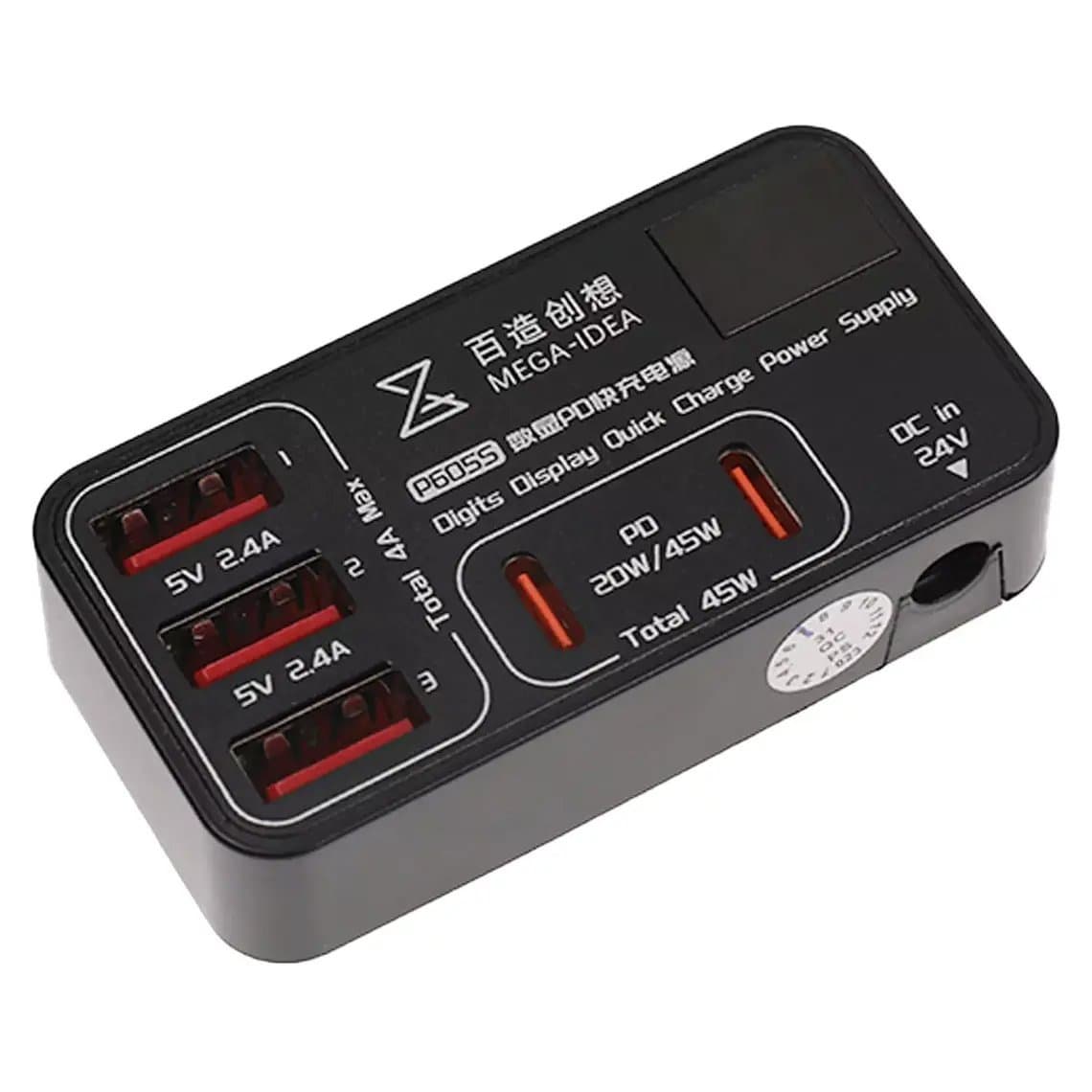
Repair shops need to charge and check several devices at once: customer phones waiting for collection, devices that came in flat, and refurbished stock being prepared for sale. Bench chargers with a display let a technician see at a glance whether a port is delivering power. Options include the 140W 4-port PD/QC GaN charger with digital display, the Qianli Mega-Idea P605S 5-port PD charging station with LCD and the 2UUL PC12 110W digital monitor desktop charger. Treat the display as a quick indicator, not a lab instrument; for proper readings use a USB tester, as explained in our guide to USB tester readings for phone repair.
PD, QC and PPS in plain words
Fast chargers do not simply push more power. The charger and the device talk to each other and agree on a voltage and current. The labels on the box tell you which "languages" the charger speaks.
| Term | What it generally means | Where it matters |
|---|---|---|
| USB Power Delivery (PD) | An open USB standard, usually over USB-C, where charger and device negotiate a higher voltage step when both support it. | Most recent iPhones, iPads, many Android phones, and USB-C laptops. |
| Quick Charge (QC) | A proprietary fast-charging protocol found on many Android phones, often over USB-A ports. | Older and mid-range Android devices; mixed-port chargers often list it. |
| PPS (Programmable Power Supply) | An optional part of newer PD versions that allows small, fine voltage adjustments during charging. | Some Android phones, including several Samsung models, may need PPS for their fastest charging mode. |
Exact behaviour varies by phone model and software version, so treat the table as a guide rather than a guarantee. If a charger only lists PD, it will still charge a QC phone, just usually at a lower speed. When customers ask "will this fast charge my phone?", the honest answer is: it depends on whether the phone and the charger share a fast-charging protocol at that wattage.
GaN vs traditional chargers
GaN (gallium nitride) chargers use a different semiconductor material from traditional silicon designs. In general, GaN lets manufacturers build a charger that is smaller for the same output and runs more efficiently, which means less wasted heat. That is why most compact high-wattage multi-port chargers are GaN. Traditional chargers are still fine for low-wattage single-port use and are usually cheaper. A practical rule: at 20W, the material matters little to the customer; at 65W and above, GaN is what makes a pocket-sized charger possible.
Matching wattage to devices
You do not need a chart of every phone. Think in classes and sell the charger that covers the customer's most demanding device:
- Phones: a 20W to 30W class USB-C PD adapter covers most phones' everyday fast charging. Some Android phones support higher wattages, often only with their own protocol or PPS.
- Tablets: a 20W to 35W class adapter suits most tablets; older tablets that charge from a USB-A adapter charge fine at their own lower rate.
- Laptops: USB-C laptops usually need 45W to 100W or more. Check the wattage printed on the laptop's original charger and match or exceed it.
- Several devices at once: on a multi-port charger, the total wattage is shared. A 100W charger may give 100W to one port but much less per port when three devices are plugged in. Ask the supplier for the per-port split.
A higher-wattage charger does not harm a phone; the device only draws what it negotiates. The risk is the opposite: a customer buys a small charger for a laptop and it charges slowly or not at all under load.
Plug versions per market
Ordering the wrong plug is the most common and most avoidable charger mistake. Many single-port adapters are offered in four versions:
| Version | Typical markets | Note |
|---|---|---|
| US | USA, Canada, Mexico, parts of Latin America and Asia | Two flat pins. |
| UK | United Kingdom, Ireland, parts of the Middle East, Hong Kong, Singapore, Malaysia | Three rectangular pins; for example the 20W USB-C adapter (UK version). |
| EU | Most of continental Europe and many other regions | Two round pins. |
| AU | Australia, New Zealand and some Pacific markets | Two angled flat pins. |
Check plug standards for your exact country before ordering; some regions use more than one. If you sell to travellers or across borders, pair adapters with a few travel adapters rather than stocking every plug version in depth.
Safety and compliance: what to ask
Chargers connect to mains power, so compliance matters for your customers and for you as the seller. Requirements depend on your country. Common marks include CE in the EU, UKCA in Great Britain and FCC in the USA, and some markets have their own schemes. Before you place a volume order:
- Tell the supplier exactly which country you sell in.
- Ask for the test reports and declarations that apply to that market, for the exact model and plug version you are buying.
- Check that the marks on the charger and the box match the documents.
- Keep the documents on file in case a customs officer, marketplace or customer asks.
- Ask your local trade body or a compliance adviser if you are unsure what your market requires.
Do not assume a mark on the box means the paperwork exists. Ask, check and keep copies.
Packaging
Decide where each charger will be sold before choosing packaging. Retail shelves need a printed retail box with clear wattage, protocol and plug type. Repair counters often prefer simple bulk packing, since the charger goes straight to the customer with the repaired phone. Bench chargers for your own workshop need no retail box at all. If you plan to sell under your own brand, ask about logo and box options and the minimum quantities involved early, as these usually affect lead time.
A sensible stocking mix
A good starting range for a shop or small retailer is narrow and deep rather than wide and thin:
- Core: a 20W class single-port USB-C PD adapter in your main plug version, in the largest quantity.
- Step up: a 30W to 35W single-port adapter, for tablet and power users.
- Multi-port: one compact GaN multi-port and one 100W-plus option for laptop owners.
- Workshop: one or two bench chargers with displays for your own repair bench.
- Cables: USB-C to USB-C and USB-C to Lightning cables rated for the wattage you sell.
Watch what sells for a few weeks, then widen the range. Reordering through Quick Order by SKU makes topping up the fast movers simple.
Pair every charger with the right cable
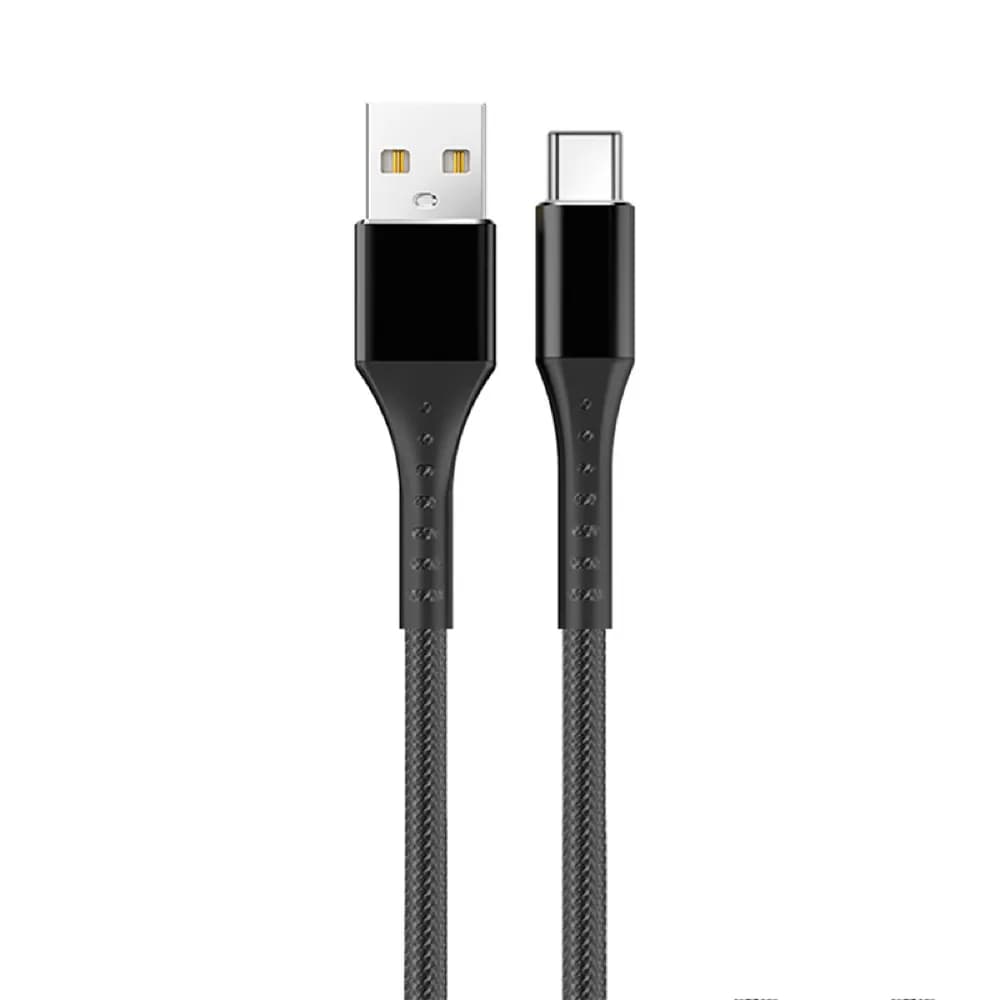
A fast charger is only as fast as the cable. A cheap or thin cable can limit power, and higher-wattage USB-C charging (generally above 60W) needs a cable built for it. Offer a matching cable at the point of sale; for laptop chargers, choose a cable rated for the full wattage, such as the A10 braided USB-C cable rated up to 240W. Browse the full range of charging and data cables, and if you want your own brand on them, read our guide to custom charging cables wholesale with OEM logo and MOQ.
Common mistakes
- Ordering one plug version for a market that uses another.
- Stocking only high-wattage chargers when most customers just need a phone charger.
- Selling multi-port chargers without explaining that power is shared between ports.
- Skipping compliance documents to save time on a first order.
- Pairing a 100W charger with a cable that cannot carry 100W.
Questions
What wattage USB-C charger should a shop stock most?
The 20W to 30W class covers fast charging for most phones and many tablets, so it is usually the best core item. Add a 35W option and one multi-port GaN charger for laptop users. Adjust after you see what customers actually ask for.
Will a higher-wattage charger damage a phone?
No. With USB PD the phone and charger agree on a level, and the phone only draws what it can take. A 65W charger will charge a phone at the phone's own maximum, not at 65W.
Is GaN worth paying more for?
For high-wattage and multi-port chargers, generally yes, because GaN allows a smaller, cooler-running charger for the same output. For a basic 20W phone charger the difference is small, so a traditional design can be fine.
What certificates should I ask a charger supplier for?
Ask for the test reports and declarations required in your country for the exact model and plug version, for example documents supporting CE, UKCA or FCC marks. Check that they match the product and keep copies on file. If you are unsure what applies, check with a local compliance adviser.
Browse our USB-C PD fast chargers and the wider chargers range. Products are tested before shipping and ship from Shenzhen by DHL, FedEx or UPS; wholesale prices unlock after $500 of purchases, explained on our wholesale page. Reorder by SKU or CSV with Quick Order, or contact us for plug versions, packaging or compliance documents for your market.