B7000 vs T7000 vs E8000: Which Glue for Phone Repair?
17 November 2026 · LightspeedTools team
Short answer: B7000 is a clear, semi-fluid general-purpose glue that shops typically use for frames, back covers and bezels; T7000 does the same job in black, so it suits black frames and edges where a clear glue line would show; E8000 is clear and usually more flexible once cured. All three are solvent-based contact adhesives that need hours to cure fully, and none of them makes a phone water resistant. For that, use pre-cut sealing adhesive.
These thin-nozzle tubes look alike, get swapped for each other, and get blamed for comebacks: lifting screens, smeared displays, glued-up speaker meshes. Here is what each is commonly used for, how to apply them cleanly, and when a pre-cut adhesive, soft buffer glue or UV glue is the better choice.
What B7000, T7000 and E8000 have in common
The three names are product types made by many factories, not one brand, so formulas and tube labels vary between makers. In general they are solvent-based adhesives that come out as a gel or semi-fluid paste. They bond by the solvent evaporating. That has three practical effects:
- They stay workable for a short time. You get a few minutes to position the part before the surface skins over.
- They need air to cure. Glue squeezed between two non-porous parts cures slowly, because the solvent can only escape at the edges. This is why a joint that feels set after an hour can still be soft inside.
- They give off fumes while curing. Ventilation matters, and the fumes can fog or mark nearby surfaces in a closed device.
Cure times vary by brand, bead thickness, temperature and humidity, so always check the tube. As a rule, the joint can be handled sooner than it is fully cured, and full cure usually takes many hours. Tell customers to treat the phone gently for the rest of the day, and do not put a freshly glued phone under heavy clamping pressure, heat or water testing.
B7000: the clear general-purpose glue
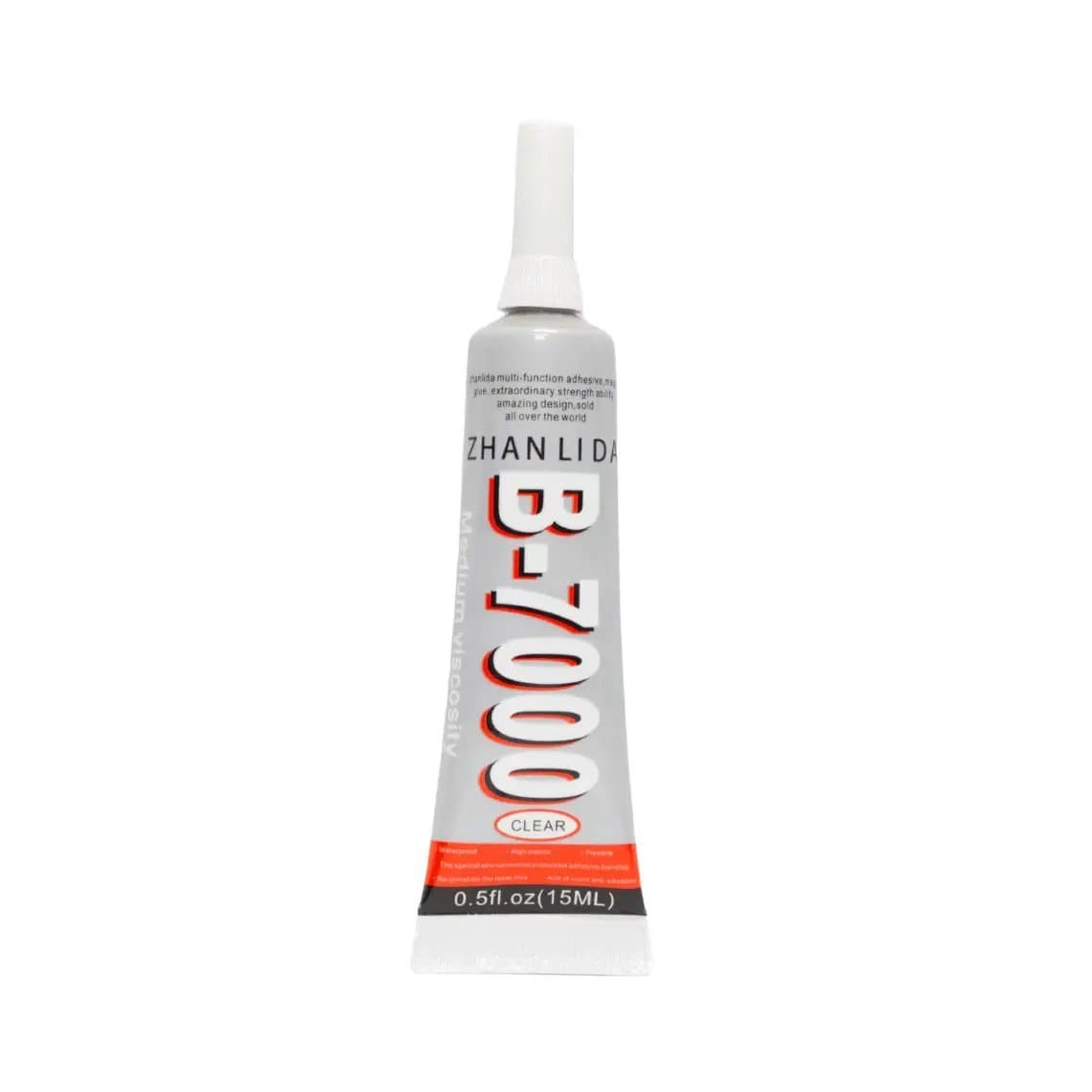
B7000 is the one most shops buy first. It is clear (or slightly milky in the tube), semi-fluid and dries to a fairly firm but not brittle bond. Typical uses on the bench:
- Re-bonding a screen to a frame on older or budget phones that never had a pre-cut gasket.
- Back covers, camera bezels and small trim pieces.
- Tablet and smartwatch frames where the part has a small bonding lip.
- Securing loose plastic clips or bezel strips that have come away.
Because it is clear, any excess that squeezes out on a light or silver frame is less obvious, although it can still look shiny or cloudy if you leave it. A 10-pack of B7000 glue is a sensible stock size, because opened tubes thicken over time.
T7000: the same idea in black
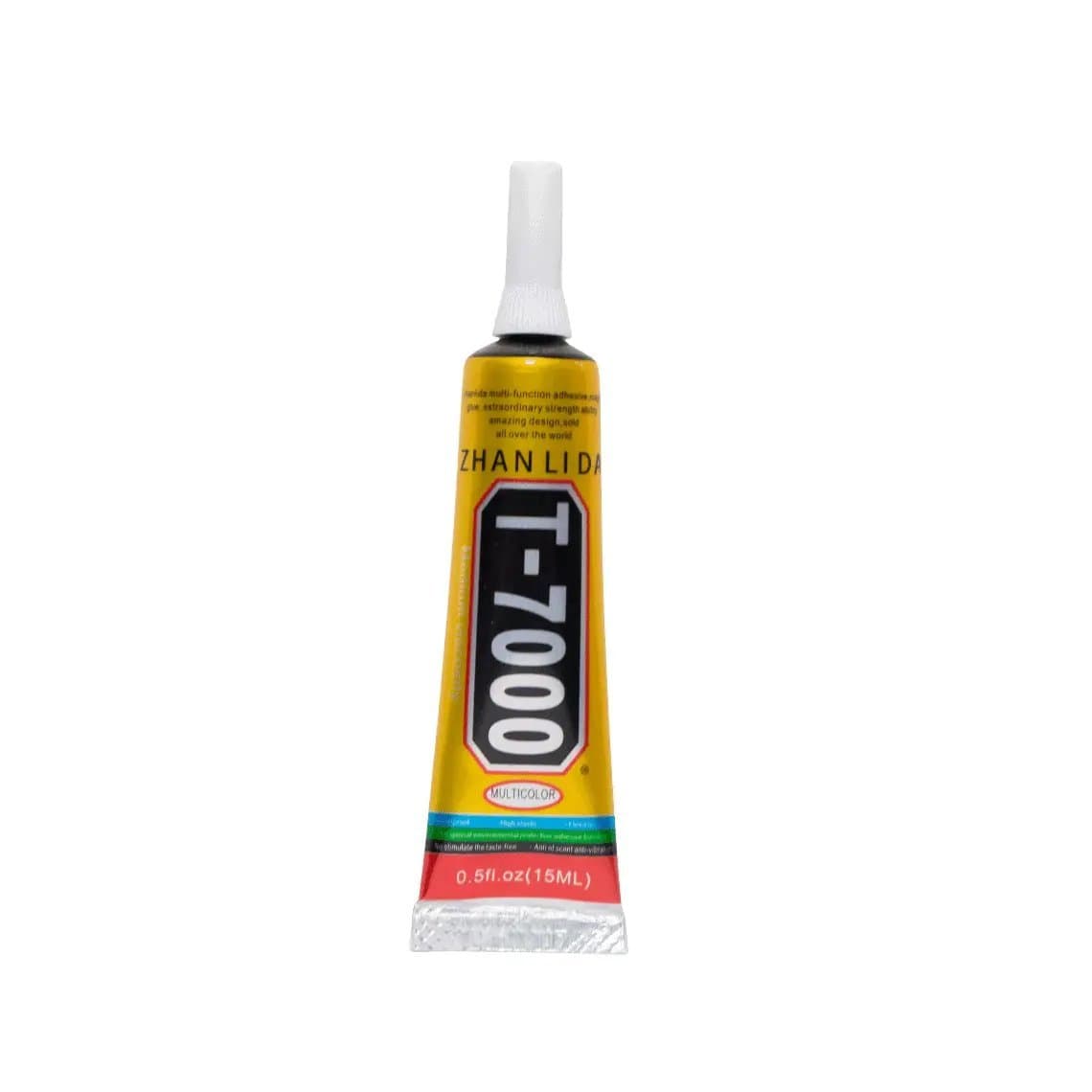
T7000 is usually described as the black counterpart to B7000. It is used in much the same places, but it is the better choice when the glue line could show: black screen frames, dark bezels, the black border around a display, or the gap between a black back glass and the housing. Shops that do a lot of black-bezel screen work tend to keep T7000 black contact adhesive next to the B7000 rather than instead of it.
The trade-off is cleanup. Black glue on a white or silver part, or smeared onto the active display area, is very noticeable. Mask the part or apply more carefully than you would with a clear glue.
E8000: clear and more flexible
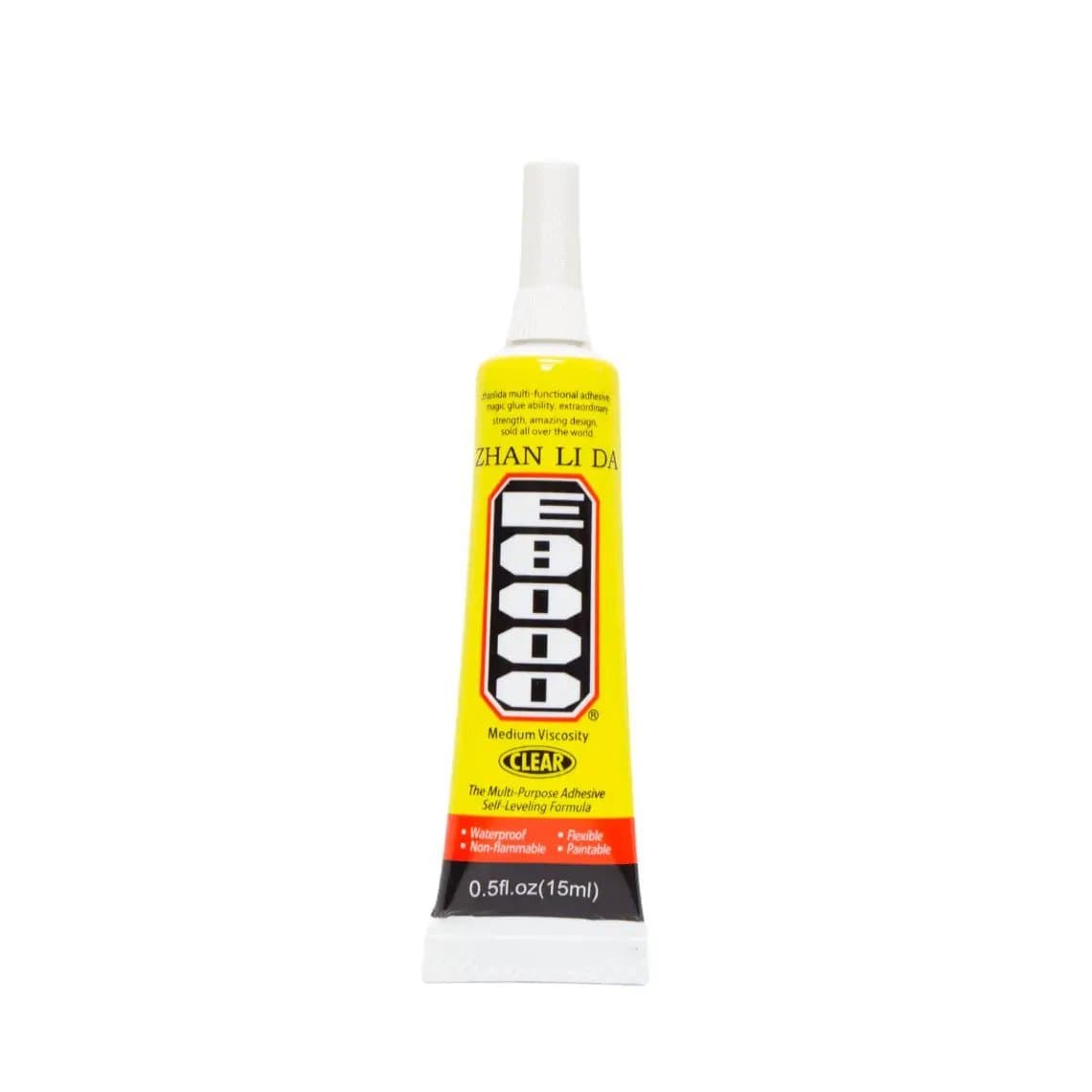
E8000 is also clear, but it is commonly described as more flexible or elastic once cured than B7000. Technicians tend to pick it for joints that will see some movement or vibration, or where two different materials meet and expand at different rates, such as plastic trim on a metal frame. Formulas differ between makers, so treat "more flexible" as typical behaviour rather than a guaranteed specification. E8000 clear contact adhesive is worth having for the jobs where a firmer glue would crack or peel.
B7000 vs T7000 vs E8000 compared
| Glue | Colour when cured | Typical feel | Common uses | Watch out for |
|---|---|---|---|---|
| B7000 | Clear | Semi-fluid, firm but not brittle bond | Frames, back covers, bezels, trim | Cloudy or shiny excess on dark parts |
| T7000 | Black | Similar to B7000 | Black frames and edges, screen borders | Very visible smears on light parts or the display |
| E8000 | Clear | Usually more flexible once cured | Joints that flex, mixed materials, trim | Can stay tacky longer if applied thickly |
| Soft buffer glue | Black or white, varies | Soft, cushioning bead | Screen-to-frame bonding where a gasket is not used | Needs a dispensing gun for a neat bead |
| UV glue (LOCA) | Optically clear | Liquid, cures under UV light | Glass-to-display lamination in refurbishing | Not a frame glue; floods easily |
Other glues worth knowing
Soft buffer glue
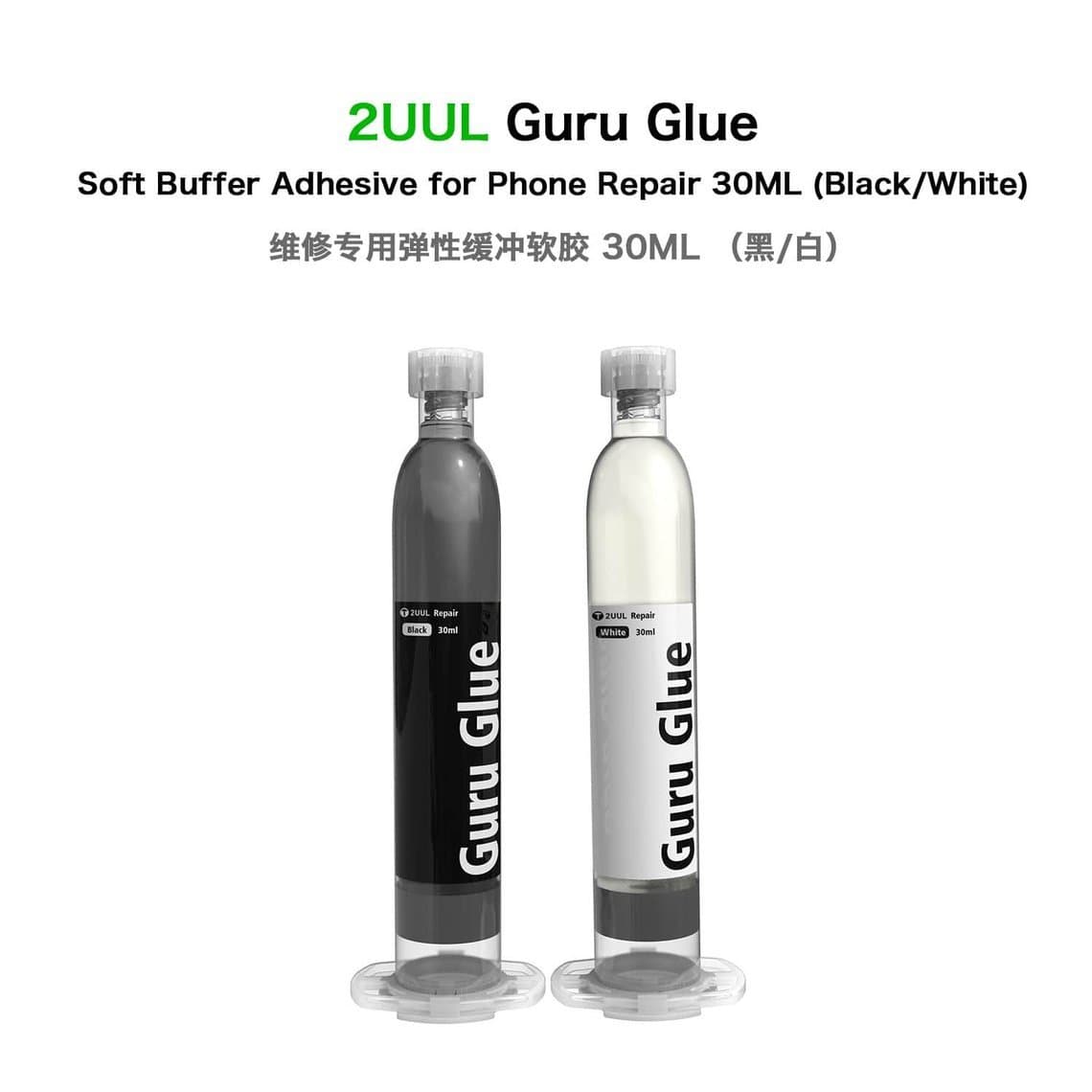
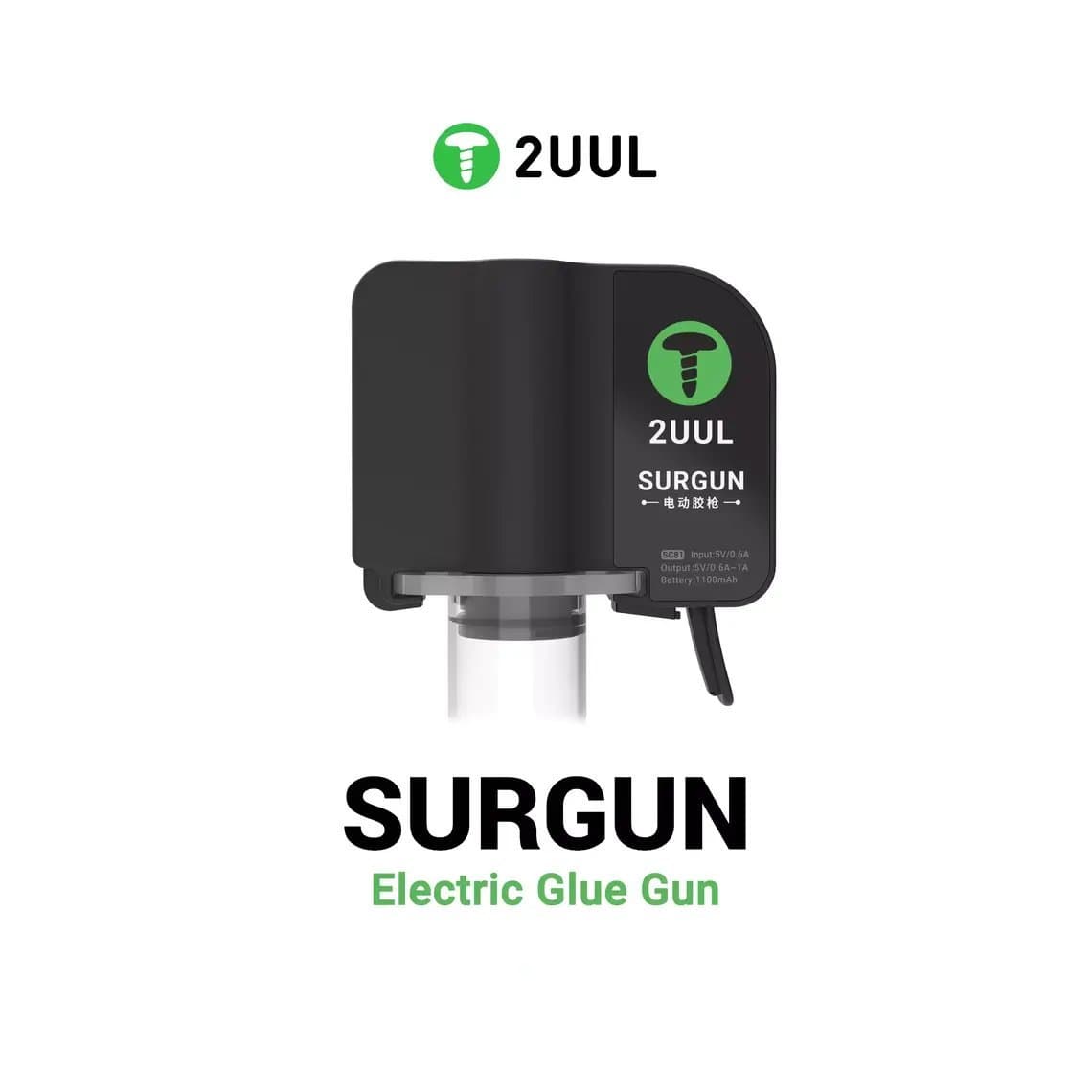
Soft buffer glues are newer, thicker adhesives designed for bonding screens to frames. They cure to a softer, cushioning bead that holds the display without being rock hard, which can make the next repair easier. Products like 2UUL Guru Glue soft buffer adhesive come in black or white, in larger tubes meant for a dispenser. A trigger dispenser such as the 2UUL SC81 SurGun glue gun gives a steadier, thinner bead than squeezing a tube by hand, which matters most on narrow phone frames.
UV glue (LOCA)
Liquid optical clear adhesive is a different tool for a different job. It bonds cover glass to a display panel and is cured with a UV lamp. It is used in screen refurbishing, not for gluing a display into a frame. If you work with it, LOCA UV glue and a lamp from our UV curing lamps range go together.
How to apply B7000-type glue cleanly
- Clean the bonding surfaces. Remove all old adhesive and dust, then wipe with isopropyl alcohol and let it dry fully. New glue on top of old glue is the most common cause of a screen that sits proud or lifts.
- Dry-fit the part. Check the screen or cover sits flat without glue first. If it rocks, find the cause before you add adhesive.
- Apply a thin, even bead. Run the nozzle along the bonding lip, not the inner edge. Thin is better than thick: more glue does not mean a stronger bond, it means more squeeze-out and slower curing.
- Keep away from openings. Stay clear of speaker and microphone meshes, the earpiece slot, sensor windows, buttons and flex cable paths. Glue that flows into a mesh muffles sound; glue on a flex can stiffen or lift it.
- Wait briefly, then fit. Many technicians give the bead a short moment to tack up before closing, which reduces stringing and squeeze-out. Follow the tube.
- Clamp or hold gently. Use a clamp or fixture with even, light pressure. Too much pressure on an OLED can mark or crack it.
- Clean excess right away. Wipe squeeze-out with a plastic tool or a swab before it cures. Cured glue is much harder to remove from glass.
- Let it cure in a ventilated spot. Leave the device clamped for the time the tube recommends and warn the customer that full strength comes later.
When not to use B7000, T7000 or E8000
Liquid glues are flexible tools, but on modern phones they are often the wrong choice.
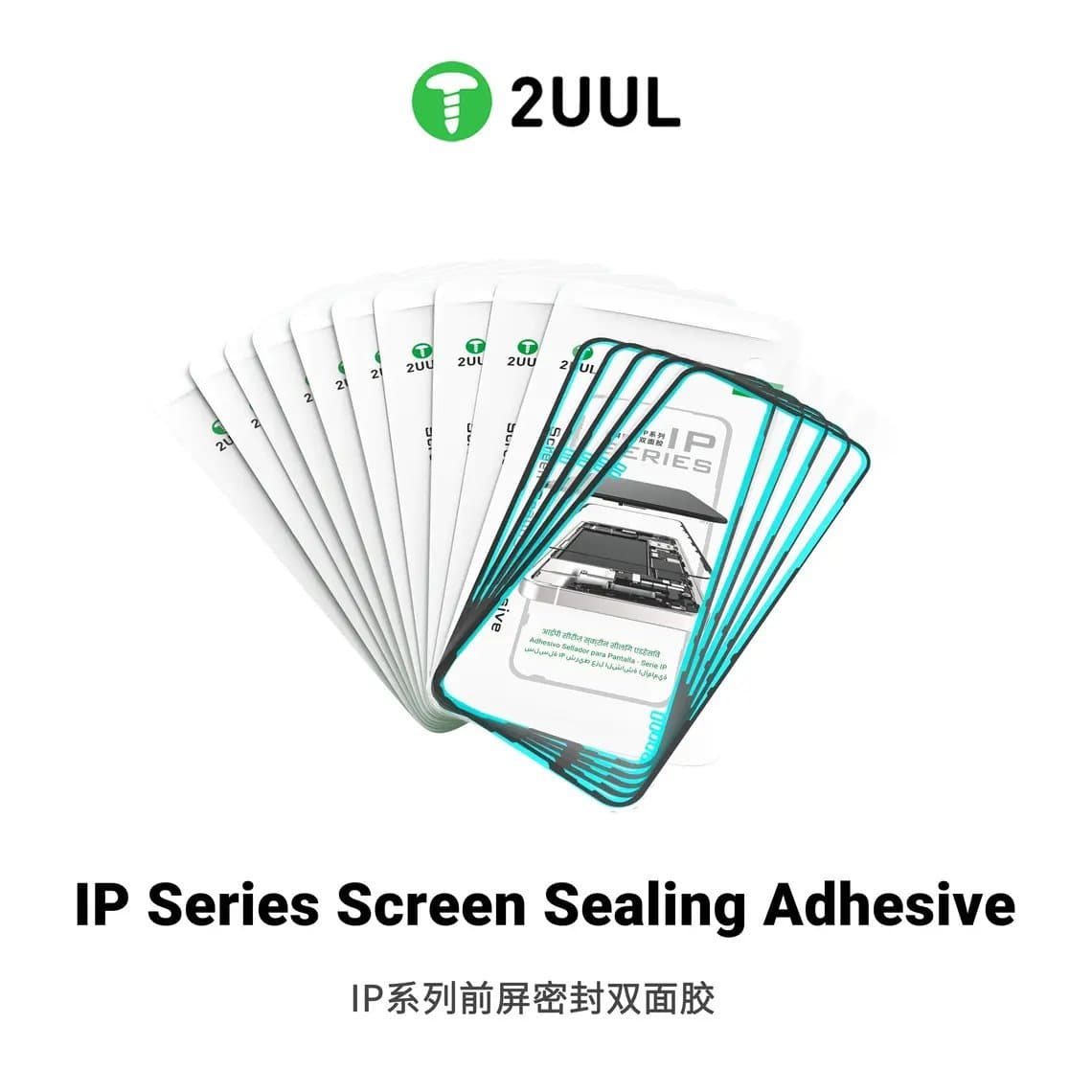
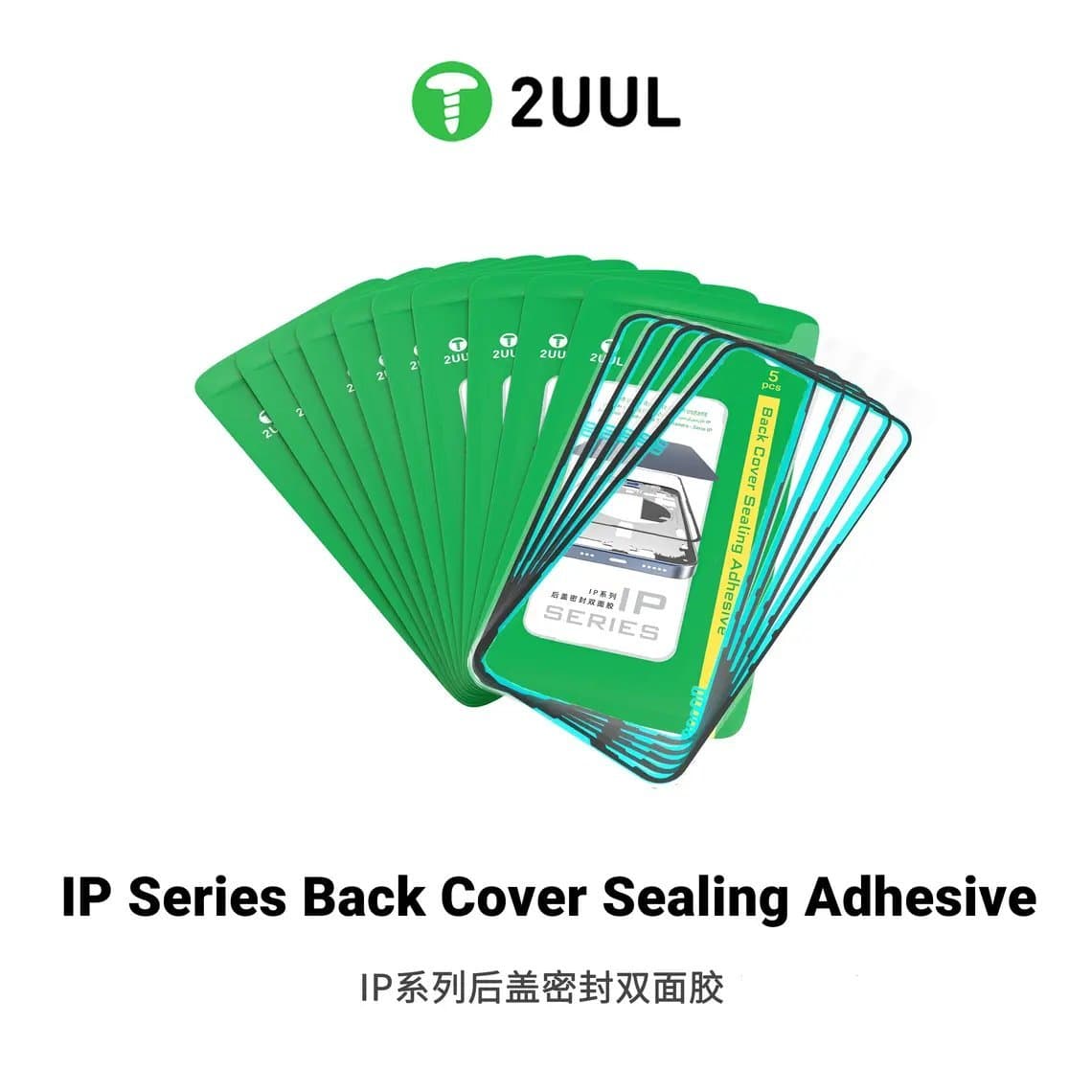
- Phones that used a pre-cut gasket from the factory. Most recent iPhones and many flagship Android phones seal the screen and back glass with a die-cut adhesive. For these, a model-specific screen sealing adhesive for iPhone 12 to 17 fits the frame exactly, keeps the screen at the right height and gives a clean result. The same applies to back glass: use a matching back cover sealing adhesive. Our iPhone screen replacement guide covers fitting it.
- When the customer asks about water resistance. A new gasket helps keep dust and splashes out, but no repair glue or adhesive can guarantee the original water resistance rating.
- Directly on the display. Solvent glue on the face of an OLED or LCD can damage the polariser or the panel edge. Glue goes on the frame, never on the screen.
- Near a battery. Do not glue a battery in with B7000-type glue. Use the battery's own stretch-release strips or a proper battery adhesive.
Back glass repairs are a special case: whether you re-glue a panel or swap the housing changes which adhesive you need. See laser back glass removal vs housing swap for that decision.
Removing B7000 and similar glues
You will often open a device that someone sealed with too much glue. Work slowly:
- Warm it. Gentle, even heat softens most of these glues. Keep the temperature moderate and away from the battery area.
- Cut, don't pry. Slide a thin blade or opening pick along the glue line instead of levering the screen, which cracks glass and tears flex cables.
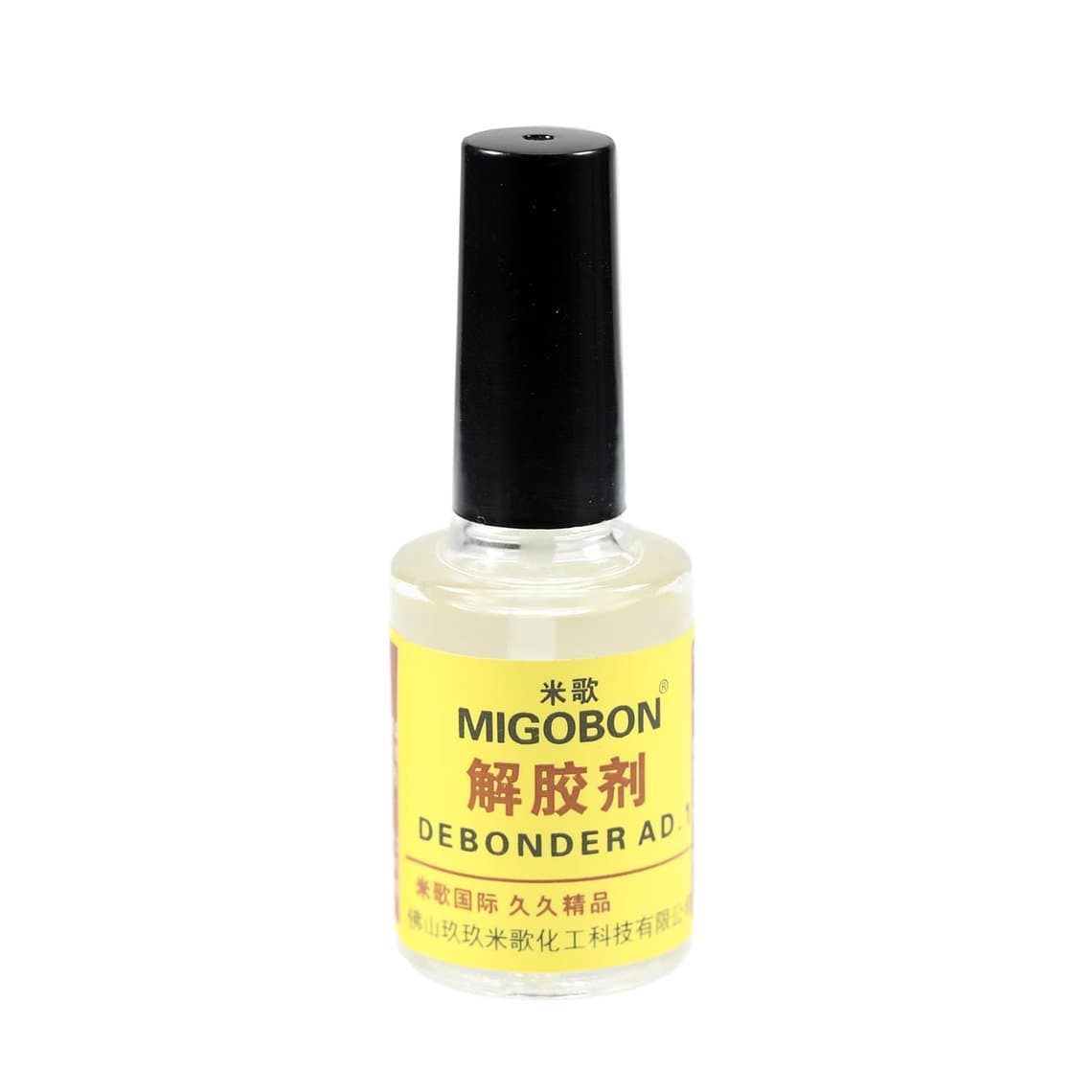
- Use a remover for what's left. A purpose-made adhesive remover or isopropyl alcohol shifts the last film. Test on a hidden spot first, because some removers attack plastics or coatings. Scrapers, cleaners and other aids are in our adhesive removal tools range.
Safety
- Ventilate. These glues release solvent fumes while curing. Work with fume extraction or at least an open, airy bench, and do not leave a row of uncapped tubes in a small room.
- Protect skin and eyes. Wear nitrile gloves if you use glue all day, and keep it away from eyes. If you get it on skin, peel it off once dry or wash with soap; follow the safety note on the tube for anything more.
- Keep away from heat and flames. Solvent-based glues are generally flammable. Don't use a hot air station on wet glue.
- ESD and batteries still apply. Disconnect the battery and use an ESD mat as normal.
Questions
What is B7000 glue used for in phone repair?
B7000 is a clear, semi-fluid general-purpose glue used for bonding screens to frames on phones without a pre-cut gasket, and for back covers, bezels and trim pieces. It is applied as a thin bead on the frame and left to cure. On most modern flagships a model-specific pre-cut adhesive is the better choice.
What is the difference between B7000 and T7000?
The main practical difference is colour: B7000 dries clear and T7000 dries black. They are used for similar jobs, but T7000 hides the glue line on black frames and screen borders.
How long does B7000 take to dry?
It varies by brand, bead thickness, temperature and humidity, so check the tube. The joint can usually be handled before it is fully cured, but full cure typically takes many hours. Keep the device clamped as recommended and ask the customer to treat it gently for the rest of the day.
Does B7000 make a phone waterproof?
No. No repair glue or adhesive can guarantee the original water resistance rating after a phone has been opened. A pre-cut sealing gasket gives better protection against dust and splashes than a liquid bead, but you should still tell the customer that water resistance is not guaranteed.
B7000, T7000, E8000, soft buffer glues and dispensing guns are in our adhesives and glue category, all tested before they ship from Shenzhen. Shops buying in volume can open wholesale pricing and reorder by SKU or CSV through Quick Order.