Flux for Phone Repair: Which Type for Which Job
17 November 2026 · LightspeedTools team
Short answer: For phone repair, a tacky gel or paste flux in a syringe is the everyday choice for BGA reballing, chip removal and connector work, because it stays where you put it under hot air. Liquid flux suits drag soldering and fine wire work, and higher-activity fluxes are kept for badly oxidised pads, followed by a clean with isopropyl alcohol.
Flux is the cheapest consumable on the bench and the one that most often decides whether a joint is clean or a mess. The right type for the job makes solder flow, stops bridges and protects pads from lifting. The wrong type, or a poor-quality one, leaves sticky or corrosive residue that can cause faults weeks later. This guide sorts flux by type, activity and job, then covers application, storage and safety.
What flux does
Every metal surface on a board carries a thin oxide layer, and solder will not wet oxide. Flux chemically removes that layer as it heats, shields the metal from fresh oxidation while hot, and lowers surface tension so molten solder spreads and pulls into neat joints. Under hot air, a good flux also spreads heat more evenly across a chip and helps balls self-align when a BGA reflows.
Flux contains no solder. If you need to add metal, for example when reballing, you need solder paste or solder balls as well.
The main flux types
| Type | Base | Residue | Typical phone repair use |
|---|---|---|---|
| Rosin-based | Natural or modified rosin | Amber, sticky; usually cleaned off | General soldering, chip work, older-style benches |
| No-clean | Low-solids resin blends | Designed to be left in many cases; often cleaned anyway on phone boards | Connectors, small components, final touch-ups |
| Water-soluble | Organic acids | Active; must be washed off | Rare on phone boards; more common in production lines |
| Tacky paste / gel | Thickened rosin or resin | Varies by product | BGA reballing, chip lifting, rejoining stacked boards |
| Liquid | Thin solvent-based | Light film | Drag soldering, tinning wire, pre-fluxing pads |
Rosin-based flux
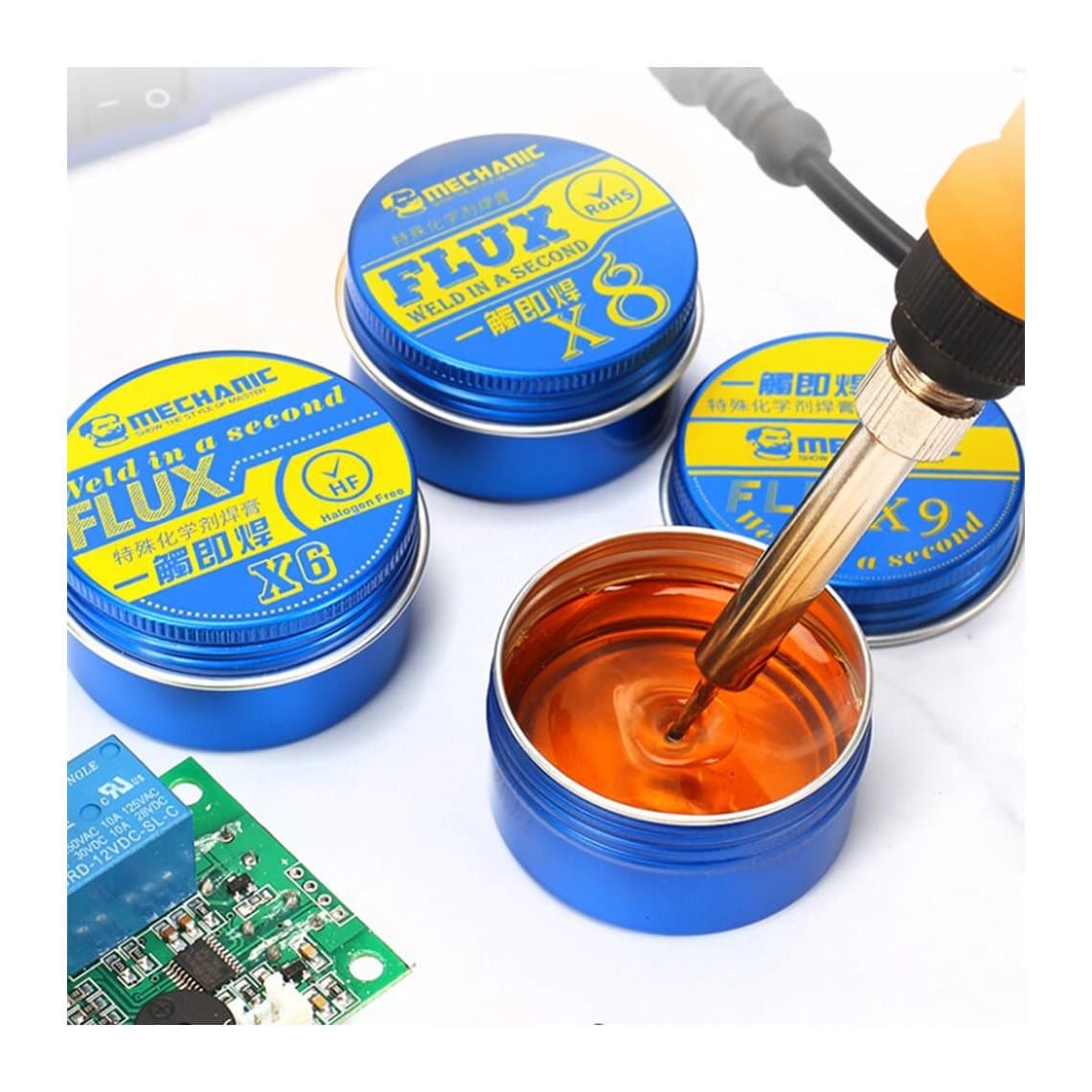
Rosin flux is the traditional choice and still works well. Halogen-free rosin products such as the Mechanic X6 / X8 / X9 halogen-free rosin flux aim to give good wetting with less aggressive chemistry. Rosin residue is sticky and attracts dust, so most technicians clean it off phone boards after the job.
No-clean flux
"No-clean" means the residue is formulated to be relatively benign if left, not that the flux leaves nothing. On a phone board that may see moisture, many shops still clean around connectors so the residue does not collect dirt or interfere with contact. The Mechanic LEF100 lead-free no-clean flux is an example of this category.
Water-soluble flux
Water-soluble fluxes are usually more active and are designed to be washed off thoroughly. That makes them a poor fit for phone boards with underfilled chips and areas you cannot rinse properly. Most repair benches avoid them.
Tacky paste and gel flux
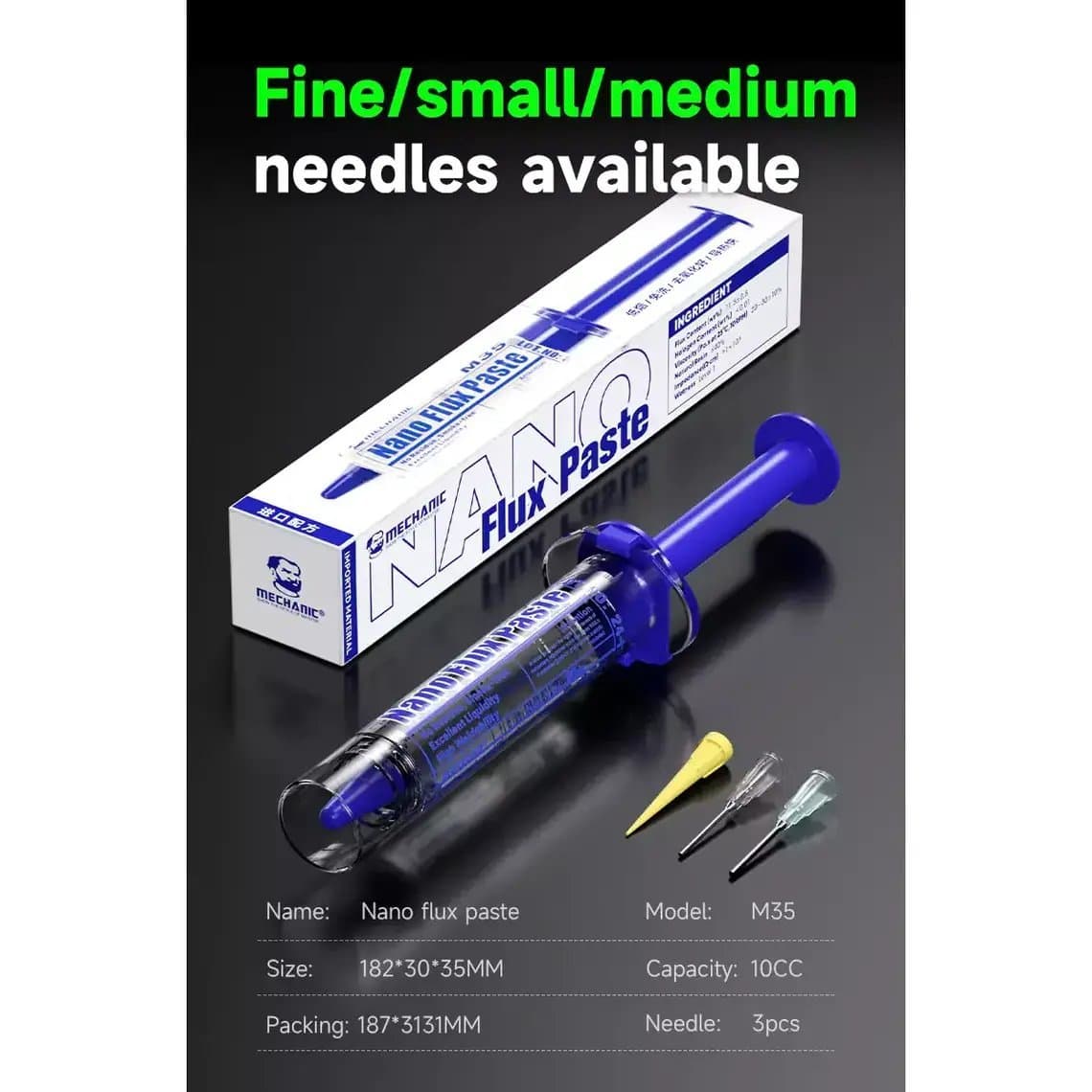
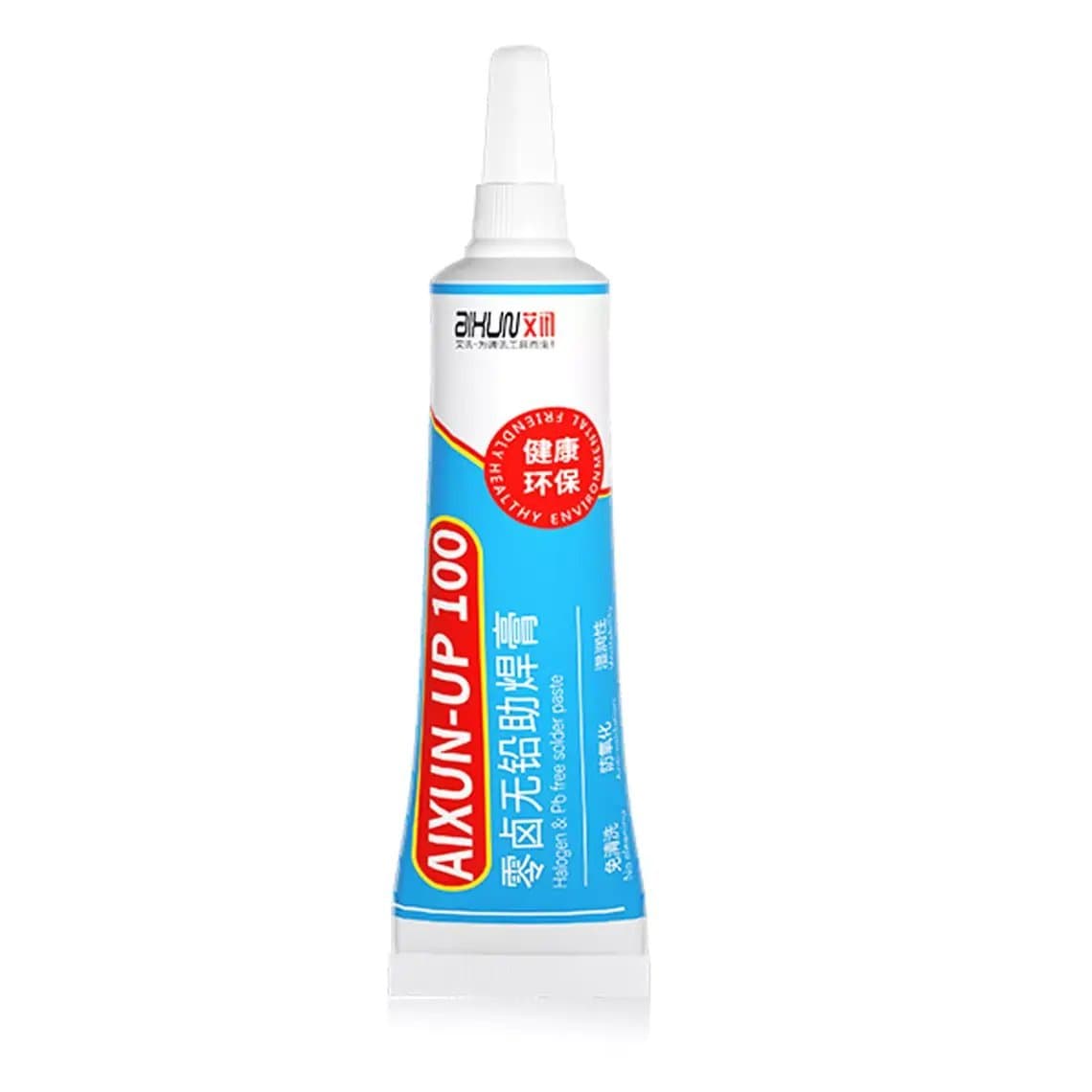
This is the workhorse of board-level phone repair. It is thick enough to stay on a chip under hot air without running into nearby parts, and it holds solder balls in place on a reballed chip. The Mechanic M35 10cc flux paste is sold for BGA chip rework and middle frame (stacked board) work, and the AiXun UP100 zero halogen flux is another paste flux in a syringe.
Liquid flux
Liquid flux, applied with a pen or needle bottle, suits drag soldering a row of pins and tinning thin wire for jumpers. It burns off faster than gel, so it is not ideal for long hot air work.
Activity levels and corrosion risk
Flux activity describes how aggressively it removes oxide. Higher activity cleans badly oxidised or water-damaged pads faster but leaves residue that is more likely to be corrosive or conductive if left on the board.
- Low or mild activity: fine for clean, fresh pads and most reballing. Residue is generally less of a concern, but cleaning is still good practice.
- Medium activity: a general bench flux for chip removal and connector work.
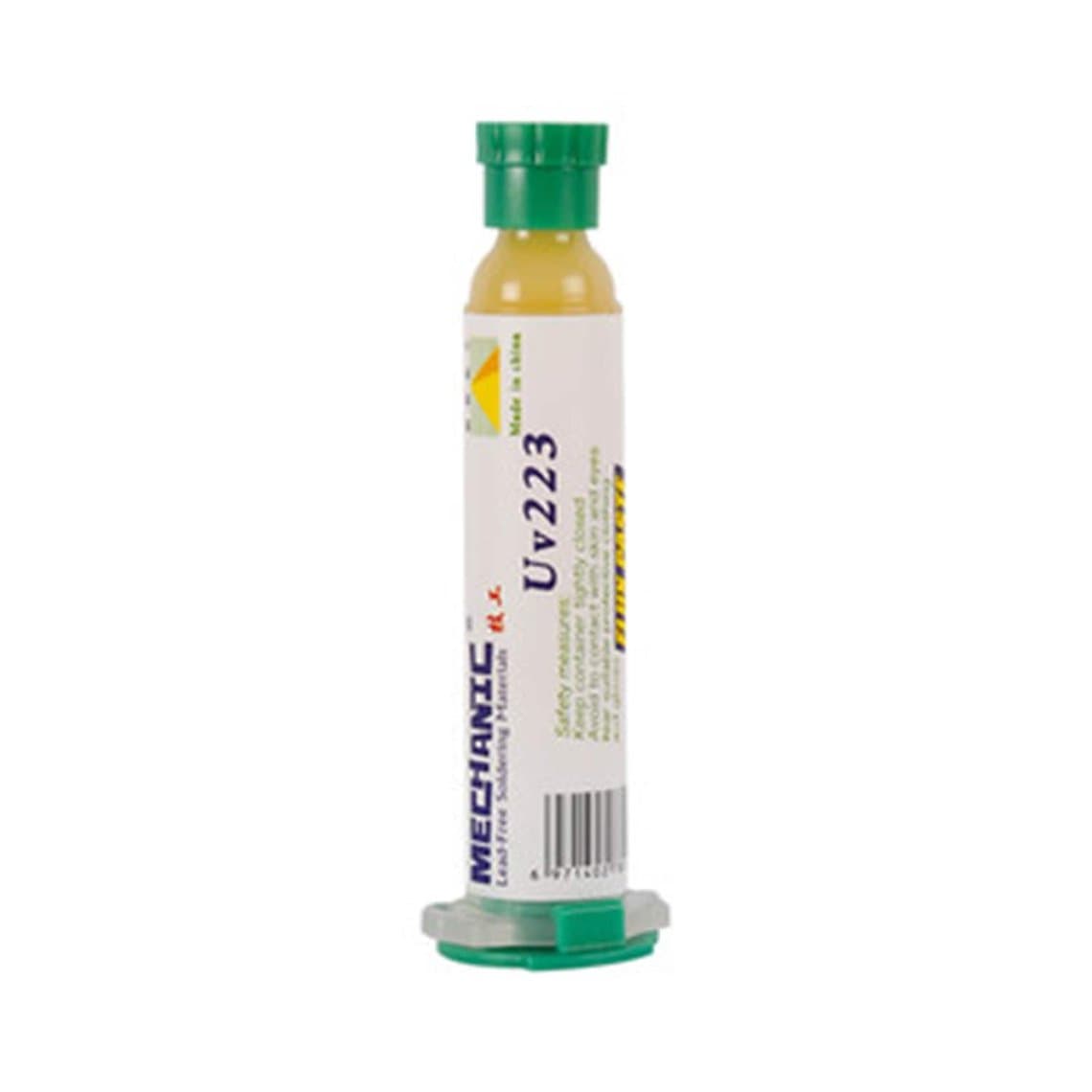
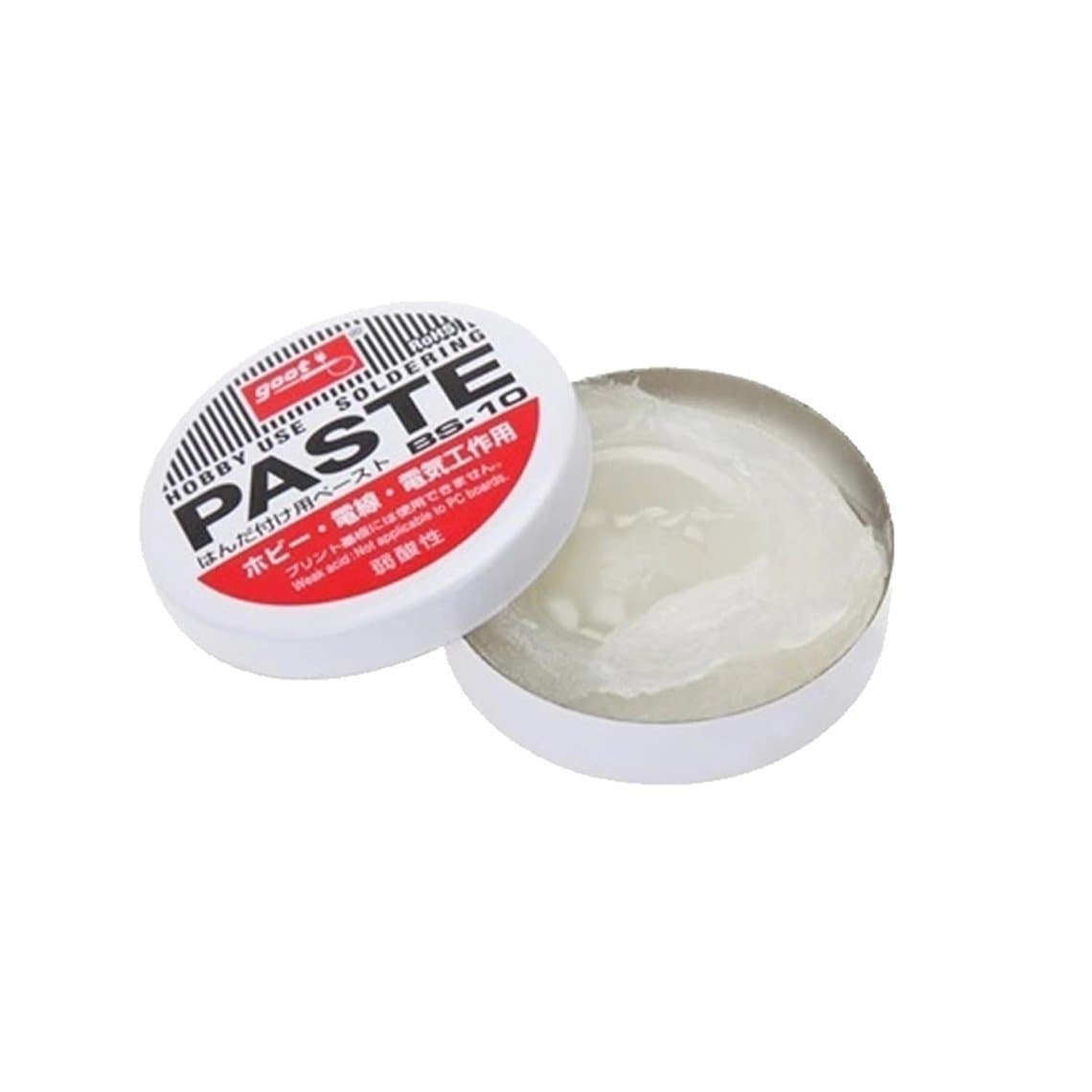
- High activity: for heavily oxidised pads, old solder and corroded areas. Products such as the Mechanic 223 / 559 high-activity flux and the Goot weak acid flux paste sit at the stronger end. Clean thoroughly afterwards.
The safe rule: the more active the flux, the more important it is to remove the residue. Use 99% isopropyl alcohol and a soft brush, then let the board dry completely before powering it. See our cleaning liquids for suitable solvents.
Choosing flux by job
| Job | Best fit | Why |
|---|---|---|
| BGA reballing | Tacky gel or paste flux | Holds balls and stencil paste in place, spreads heat evenly |
| IC lifting and fitting | Paste flux, medium activity | Stays under the chip and helps old solder release evenly |
| Rejoining stacked boards | Paste flux suited to low-temperature work | Must stay active through a long, gentle heat cycle |
| Connector and FPC socket soldering | Paste or no-clean flux, small amounts | Prevents bridging; easy to clean between fine pins |
| Jumper wires | Liquid or thin paste flux | Wets fine wire and tiny pads without flooding |
| Oxidised or water-damaged pads | Higher-activity flux, then full clean | Breaks through stubborn oxide |
For connector removal specifically, the 2UUL SC97 desoldering flux for FPC and dock connectors is sold for that job. For the full reballing workflow, read how to reball a BGA chip.
Applying flux properly
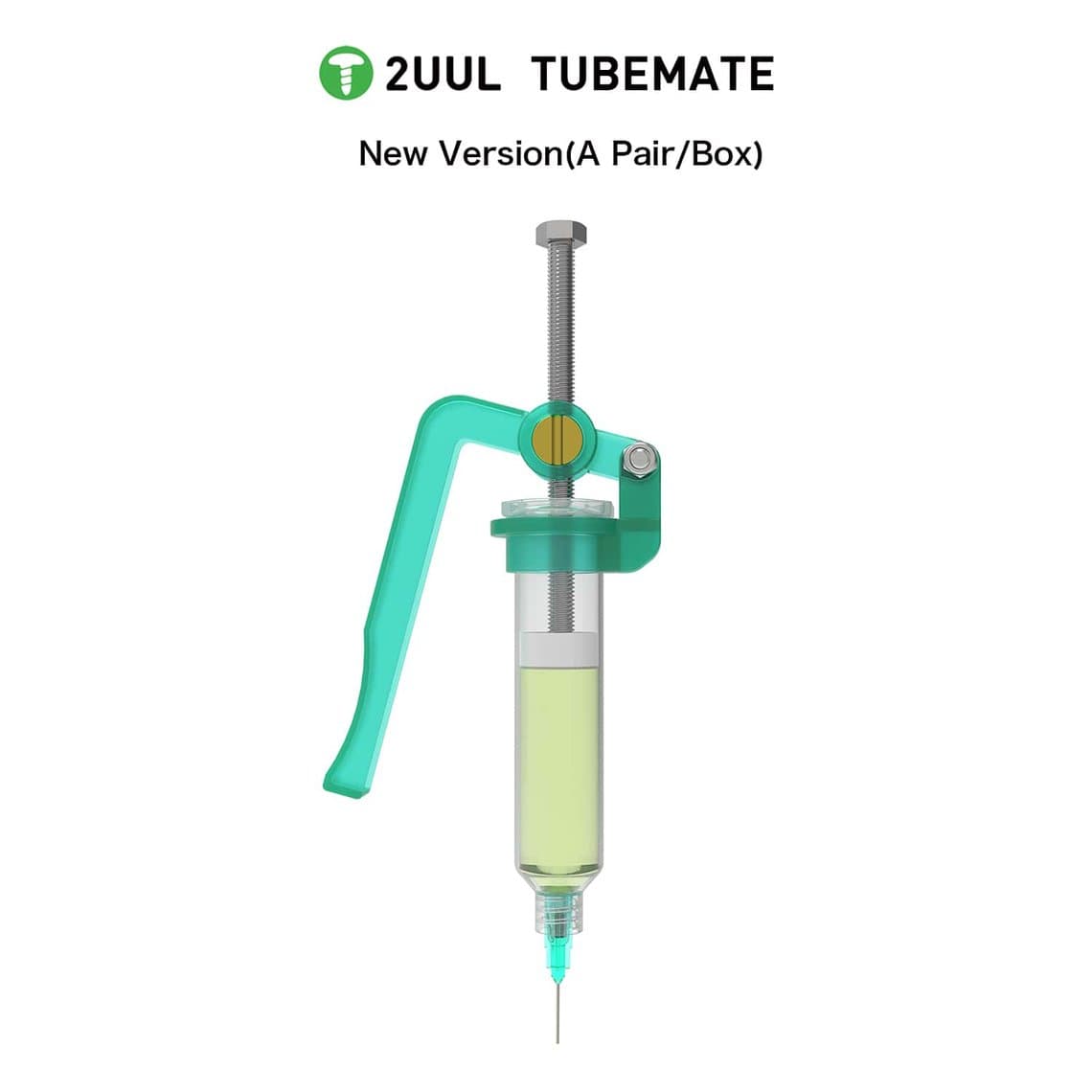
Most paste flux comes in a 10cc syringe. Push it out with a plunger rather than squeezing the barrel, and fit a dispensing tip for small jobs.
- Clean the area first. Flux works on oxide, not on old burnt residue.
- Apply a thin, even layer that just covers the pads or chip edge. Too much flux makes chips float and slide, and boils into spatter under hot air.
- For BGA chips, spread a thin coat across the pads so every ball sees flux.
- Heat steadily. Paste flux should bubble gently and stay clear; if it turns dark brown and smoky, the heat is too high or held too long.
- Clean residue with isopropyl alcohol and inspect under a microscope.
A dispenser like the 2UUL TubeMate flux syringe dispenser makes it easier to push precise amounts from a syringe with one hand.
Heat behaviour
Every flux has a working window. Below it, flux does not activate; above it, flux burns off and leaves carbonised residue that blocks wetting. Long hot air jobs, such as stacked boards, need a flux that stays active for longer. Liquid fluxes are best for quick iron work. If a joint turns dull and grainy partway through, the flux has usually been exhausted; add a little fresh flux rather than adding more heat.
Fakes and quality concerns
Popular flux products are widely copied. Counterfeit or poor-quality flux may separate in the syringe, smell unusual, burn black quickly, or leave residue that stays sticky or conductive. Signs to watch for in general:
- Inconsistent colour or texture between syringes from the same batch.
- Residue that is hard to remove with isopropyl alcohol.
- Heavy smoke at normal working temperatures.
- Missing batch or date information on the packaging.
Buy from suppliers that sell known brands and test new stock on a scrap board before using it on customer devices.
Storage
- Keep syringes capped and upright, away from heat and direct sunlight.
- Follow the maker's storage temperature; some pastes prefer cool storage, and a few makers recommend refrigeration.
- If a flux has been chilled, let it reach room temperature before use so it dispenses smoothly.
- Note opening dates and replace flux that has separated or dried.
Safety
Flux fumes irritate the eyes and lungs, and rosin fumes are a known cause of respiratory sensitisation with long exposure. Use a fume extractor positioned close to the work. Wear eye protection, wash your hands after handling flux, and keep isopropyl alcohol away from open heat. Always disconnect the battery before board work, and never point hot air at a lithium battery. Use proper ESD protection throughout. If you are just starting out, micro soldering for beginners covers the basics.
Questions
What flux is best for phone repair?
A tacky paste or gel flux in a syringe covers most phone board work, including BGA reballing, chip removal and connectors. Keep a liquid flux for drag soldering and jumper wires, and a higher-activity flux for oxidised pads.
Do I need to clean no-clean flux?
No-clean residue is designed to be relatively safe if left, but on phone boards many technicians clean it anyway, especially around connectors. Isopropyl alcohol and a soft brush remove most residue.
Can flux damage a motherboard?
Active residue left on a board can cause corrosion or leakage between fine pins over time. Overheated flux can also leave carbon deposits. Use the mildest flux that does the job and clean off residue after high-activity flux.
Is flux the same as solder paste?
No. Flux contains no metal; it only cleans and helps solder flow. Solder paste is powdered solder mixed with flux and is used when you need to add new solder.
Browse the full range of flux for phone repair, from gel and paste flux to liquid and high-activity types. Repair shops buying in volume can unlock trade pricing through wholesale, and reorder by SKU with Quick Order.