Phone Repair Warranty: How Long to Offer and What to Cover
17 November 2026 · LightspeedTools team
Short answer: A phone repair warranty should cover the part you fitted and your workmanship, and exclude new physical damage, liquid damage, third-party tampering and software problems. Set the period per part grade and keep it no longer than your supplier's warranty on that part, so every claim you honour is covered further up the chain. Then document each repair so you can handle claims quickly and fairly.
A clear warranty wins customers, and a vague one costs money. Offer too little and customers walk to the shop down the street. Offer too much on a cheap part and you end up replacing it at your own cost. This guide covers what a repair warranty usually includes and excludes, how to choose a period for each part grade, how to document repairs so claims are easy to judge, and how to handle claims without losing the customer or your margin.
What a phone repair warranty usually covers
Most repair warranties cover two things.
- The replaced part. If the new screen, battery, port or camera fails under normal use, you replace it. Typical defects are dead pixels or lines appearing on a display, touch failing in one area, a battery that swells or will not hold charge as it should, or a charging port that stops connecting.
- Your workmanship. If something you did causes a problem, such as a loose connector, a missing screw, a lifting screen from poor adhesive, or a flex cable you pinched, you fix it at no charge.
Write both into the warranty in plain words. Customers understand "the part we fitted and the work we did" much better than a paragraph of legal language.
What it usually excludes
- New physical damage. A cracked screen, bent frame or crushed corner after the repair is a new accident, not a defect.
- Liquid damage after the repair, including damage from rain, sweat or a drop in water.
- Third-party tampering. If someone else has opened the phone since your repair, you cannot know what they did.
- Software issues. iOS or Android updates, apps, settings and data problems are not hardware defects.
- Water resistance. After a phone is opened, the original seal cannot be guaranteed even with new adhesive. Say so on the ticket.
- Parts you did not touch. A screen warranty does not cover a battery that ages or a camera that fails later.
- Normal wear such as scratches, and the natural capacity loss of a battery over time.
- Software notices about non-original parts. On recent iPhones, a non-Apple part triggers an "Unknown part" notice in Settings while the part still works. Tell the customer before the repair and note that it is expected, not a fault. Our guide to the "Unknown part" message on iPhone explains it.
Write the exclusions on the ticket and the receipt so they are agreed before the work, not argued about afterwards.
How long to offer: tie it to the part grade
Warranty periods in the trade vary widely, from a few weeks to lifetime offers on some parts. There is no single right number. The safest way to choose is to tie your period to the warranty your supplier gives you on the same part. If your warranty to the customer is no longer than your supplier's warranty to you, a genuine part failure is covered at both ends.
These are the warranties we give on the parts we supply:
| Part grade | Our supplier warranty | Customer warranty that stays covered |
|---|---|---|
| Original New screen | 12 months | Up to 12 months |
| Original Refurb screen | 12 months | Up to 12 months |
| Original Pull screen | 6 months | Up to 6 months |
| Premium Soft OLED screen | 12 months | Up to 12 months |
| Hard OLED screen | 6 months | Up to 6 months |
| Incell screen | 3 months | Up to 3 months |
| Batteries | 6 months | Up to 6 months |
The full terms, including what counts as a defect and how to return a part, are on our warranty page, and the differences between grades are explained on our quality grades page.
Use the grade to sell, not just to protect yourself
Different warranty periods give customers a reason to choose a better part. "This screen comes with three months of warranty, this one with twelve" is an easy upgrade conversation, and the higher-grade part usually carries a better margin too. Offering the same warranty on every grade wastes that conversation and exposes you on the cheaper parts.
If you want to offer longer than your supplier
Some shops offer a longer warranty than their supplier as a selling point. That can work, but the gap is now your own risk: any failure after the supplier's period is paid by you. If you do it, build the cost into the price and track how often you actually pay out. Our guide on how much to charge for phone repair covers pricing parts, labour and risk together.
Workmanship can be separate
You can cover your workmanship for a different period than the part, because workmanship faults usually show up quickly. Whatever you choose, state both periods clearly on the receipt.
Document every repair
Good records turn a difficult claim into a five-minute decision. They protect honest customers and protect you from claims for damage you did not cause.
Before the repair
- Photograph the phone on intake from all sides, including existing scratches, dents, bent frames and the state of the screen.
- Record what works before you open it: cameras, Face ID or fingerprint, speakers, microphones, buttons, charging, signal. Note anything you cannot test because of the damage.
- Agree the warranty terms and exclusions on the ticket and get the customer's signature or digital acceptance.
During and after the repair
- Track the part. Record the part grade, the supplier and the order or batch reference on the job, so you can match a returned part to its supplier warranty.
- Mark the part. A small warranty sticker, a marker dot or a recorded serial on the part makes it easy to confirm that a returned part is yours and has not been swapped.
- Use tamper-evident warranty stickers on screws or internal brackets where appropriate, so you can see if the phone was opened elsewhere.
- Test and record the results. Run the same functional checklist after the repair and save it with the job.
Test parts before they go in
Testing a screen before fitting it catches a bad panel before you waste adhesive and labour on it, and gives you a record that the part worked when installed. A dedicated tester such as the DL S800 multi-functional screen tester or the YCX M830 screen tester checks display and touch without assembling the phone. Our screen testers page lists the options by device range.
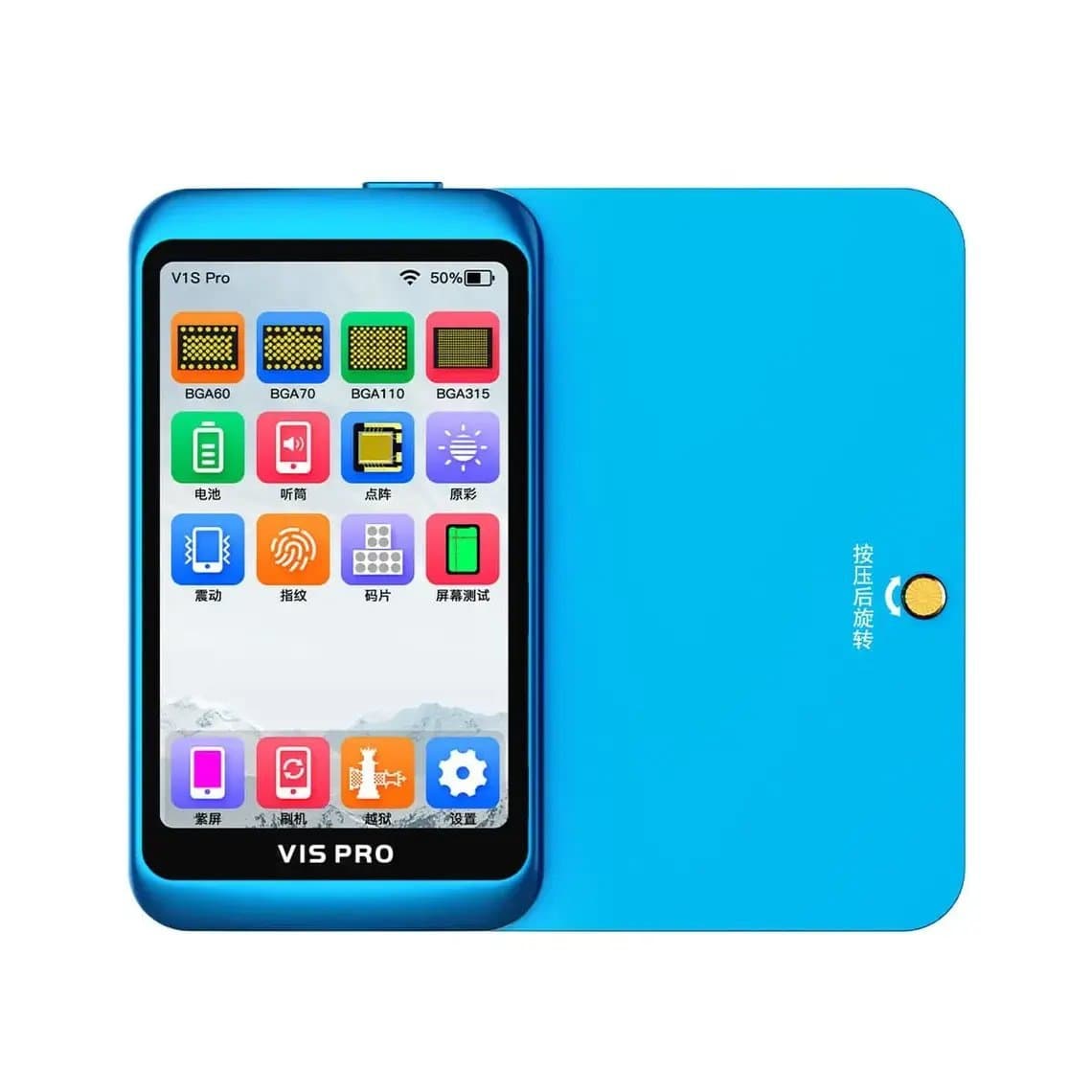
Batteries deserve the same care. A tool like the lithium battery internal resistance tester or the UNI-T UT677A battery resistance tester gives you a measured reading to note on the ticket. On recent iPhones, battery health and True Tone after a repair are common sources of complaints; a programmer such as the JCID V1S Pro can help on supported models, and supported features vary by model.
Store lithium batteries for testing and returns safely. Never test a swollen or punctured battery, keep damaged cells in a fire-safe container, and follow local rules for disposal.
Handle claims fairly
The way you handle a claim matters more to the customer than the length of the warranty. A simple, consistent process keeps it fair for both sides.
- Listen and log. Write down the complaint in the customer's words and the date.
- Check the records. Confirm the repair date, part grade and period, and compare the intake photos and test results.
- Inspect the phone with the customer present where possible. Look for new impact marks, liquid indicators, broken warranty stickers and signs of third-party work.
- Test the part. Reproduce the fault. Many claims turn out to be a software setting, a dirty port or a case pressing on the screen.
- Decide and explain. If it is covered, fix it quickly and without argument. If it is not, show the customer why, using the photos and records, and offer a fair price for the new repair.
- Claim from your supplier. Return the faulty part within the supplier's warranty with your job reference, so the cost does not stay with you.
Some shops choose to help a customer with a borderline case, such as a small discount on a new screen after an accident. That is a business decision, not an obligation, but it often keeps the customer for life. Our article on phone repair business profit drivers looks at how comebacks and repeat customers affect the numbers.
Local consumer law comes first
Your own warranty sits on top of the law, not in place of it. In many countries, consumer law gives customers rights that a shop cannot remove with its own terms, for example that a service is carried out with reasonable care and skill and that parts are of acceptable quality. The rules, periods and remedies differ by country, and in some countries by state or province. Check the consumer rules where you trade, and avoid wording such as "no refunds under any circumstances" that may not be enforceable and can create problems with regulators.
Common mistakes
- Offering the same long warranty on every grade, including the cheapest parts.
- No intake photos, so every claim becomes your word against the customer's.
- Not recording which supplier and batch a part came from.
- Leaving exclusions unwritten and trying to explain them after a claim.
- Fitting screens without testing them first.
- Promising water resistance after opening the phone.
Questions
How long should a phone repair warranty be?
There is no single standard. A practical rule is to match the warranty your supplier gives you on that part grade, for example longer on original and premium screens and shorter on budget screens. If you offer longer, you carry the extra risk yourself.
Does a phone repair warranty cover a dropped phone?
Usually not. A repair warranty covers defects in the part fitted and the work done, while a new crack or bent frame after a drop is new damage. Some shops offer a discount on a second repair as goodwill, but that is optional.
Is a phone still water resistant after a screen replacement?
It cannot be guaranteed. Shops fit new adhesive, but the original factory seal is gone once the phone is opened, so most repair warranties exclude water resistance. Tell the customer before the repair and write it on the ticket.
Does opening my phone at a repair shop void the warranty?
It can affect the manufacturer's warranty, depending on the brand and the country, and consumer law in some places limits how far a manufacturer can refuse cover. A repair shop's own warranty normally ends if another shop opens the phone afterwards, which is why many shops use warranty stickers.
Back your warranty with parts that carry their own: browse iPhone screens by grade and iPhone batteries, all tested before they ship from Shenzhen. Regular buyers can unlock wholesale pricing, and Quick Order takes SKUs or a CSV for fast restocking.