Thermal Camera for Phone Repair: Find Shorts Fast
17 November 2026 · LightspeedTools team
Short answer: A thermal camera for phone repair finds a short by showing which component heats up first when you feed a limited current into the shorted line. The faulty capacitor, IC or diode turns into a bright spot within seconds, so you replace one part instead of lifting good ones. For board work, choose a camera with enough thermal resolution, a close-focus or macro option for small parts, and a mount that holds it steady over the board.
Shorted power lines are one of the most common board faults in phone repair. Finding the one faulty part among dozens of tiny capacitors on the same rail used to take a lot of guessing; a thermal camera turns that guess into a picture. This guide explains how the method works, what matters when choosing a camera, how the common types compare, and what makes a camera show you the wrong part.
How a thermal camera finds the shorted component
A short to ground means current flows through a path that should not carry it, usually a cracked capacitor, a failed IC or a damaged diode. If you push a small, controlled current into that line from a bench power supply, almost all of the power is dissipated at the point of failure. That spot warms up before anything else on the board.
A thermal camera sees that warmth as a colour change. Instead of touching parts one by one, you watch the screen and the shorted part appears as a hot spot, often within a few seconds. The full injection method, including how to choose a safe starting voltage and current limit, is covered in our phone short circuit repair guide, so here we focus on the camera side.
The basic flow looks like this:
- Confirm the short with a multimeter in diode or resistance mode and note which line it is on. If you need a refresher, see how to use a multimeter on a phone motherboard.
- Remove the battery and any shields that cover the area, if they can be removed safely.
- Set the camera over the board, focus it and let the image settle so you have a clean baseline.
- Connect the DC power supply to the shorted line and ground, starting low and raising the current slowly.
- Watch for the first spot that rises above the rest of the board, then cut power.
- Confirm the suspect part under the microscope, remove it, and measure the line again.
The key word is first. Leave the power on too long and heat spreads into the copper and nearby parts, and the image becomes a warm blob instead of a single point.
What matters when choosing a thermal camera
Thermal cameras built for board repair differ from general building or electrical inspection cameras. A phone capacitor can be smaller than a grain of sand, so the features that matter are different. Here is what to look at, roughly in order of importance.
Thermal resolution
Thermal resolution is the number of pixels in the infrared sensor, not the visible camera or the display. It is usually far lower than a normal camera's resolution, and it decides how small a part you can separate from its neighbours. Higher thermal resolution gives you a cleaner hot spot on a crowded board. Check the thermal sensor figure in the specifications; the "4K" in some product names usually refers to the visible camera or video output, not the infrared sensor.
Thermal sensitivity
Sensitivity (often listed as NETD) describes the smallest temperature difference the camera can show. The more sensitive the camera, the earlier it shows the faulty part, which means less current and less heat spread. For short hunting this often matters as much as resolution.
Focus and close-up capability
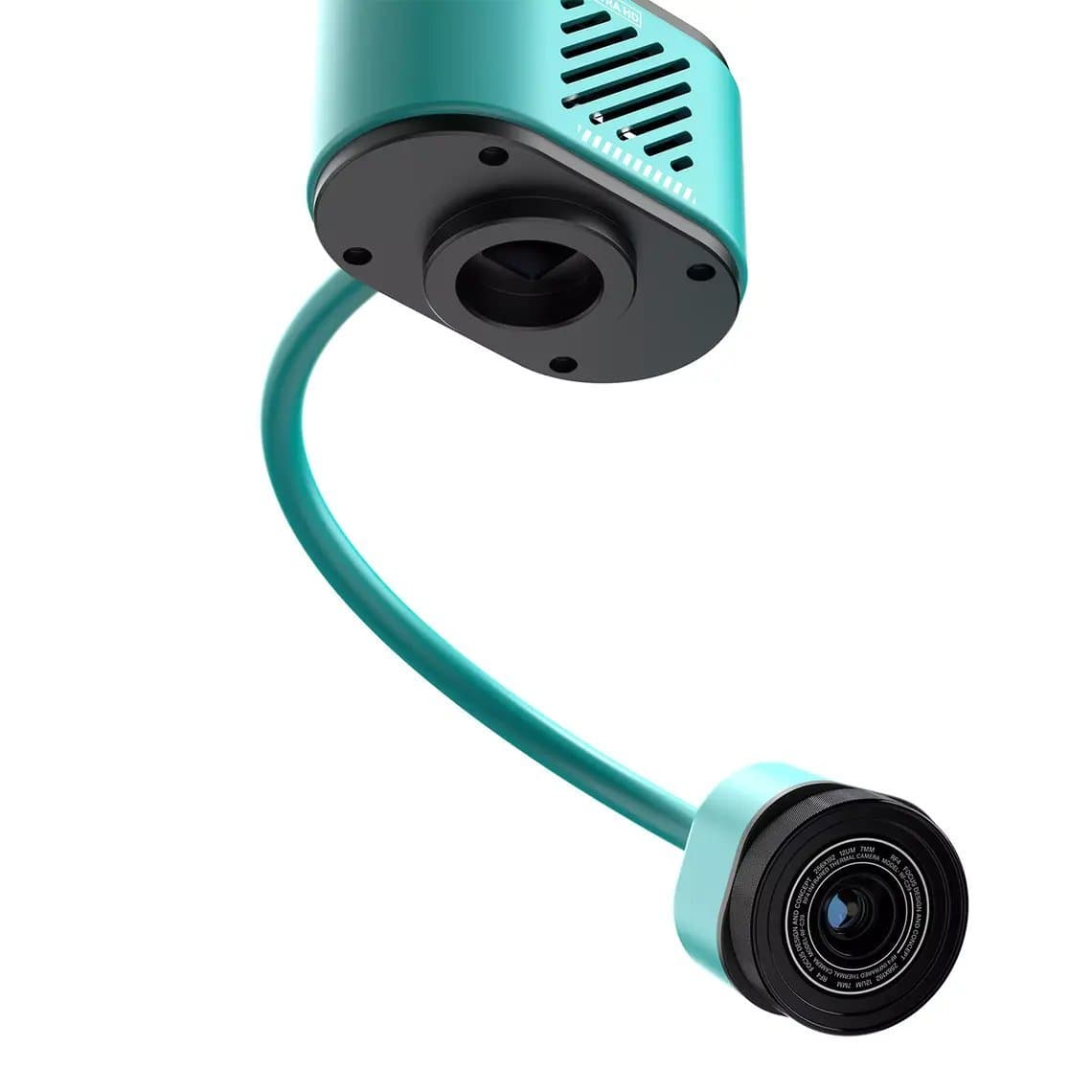
Many general-purpose thermal cameras are designed to look at a wall or a fuse box from a distance. Held close to a phone board, they cannot focus and every part merges into one patch. For board work, look for a camera made for PCB use, an adjustable focus, or a macro or close-up lens option. Some units are designed to fit on or next to a microscope, which lets you look at the board and the heat map from the same position.
Frame rate and response
A higher frame rate makes the image update smoothly, so you see the moment a part starts to warm instead of a jump between frames. This matters when a short heats very quickly at the current you inject.
Visible image overlay
A thermal image on its own shows a hot spot but not always which part it sits on. Dual-spectral or dual-light cameras combine a visible camera with the infrared sensor and blend the two, so the hot spot appears over the actual component outline. This saves time on dense boards where several similar capacitors sit together.
Display, software and PC connection
Some cameras have a built-in screen, others connect to a monitor, phone or computer. A PC or app connection makes it easy to record the result, set a temperature alarm or adjust the colour palette. A built-in screen is simpler and works anywhere on the bench. Check what the product listing says about software and connection before buying.
Stand and mounting
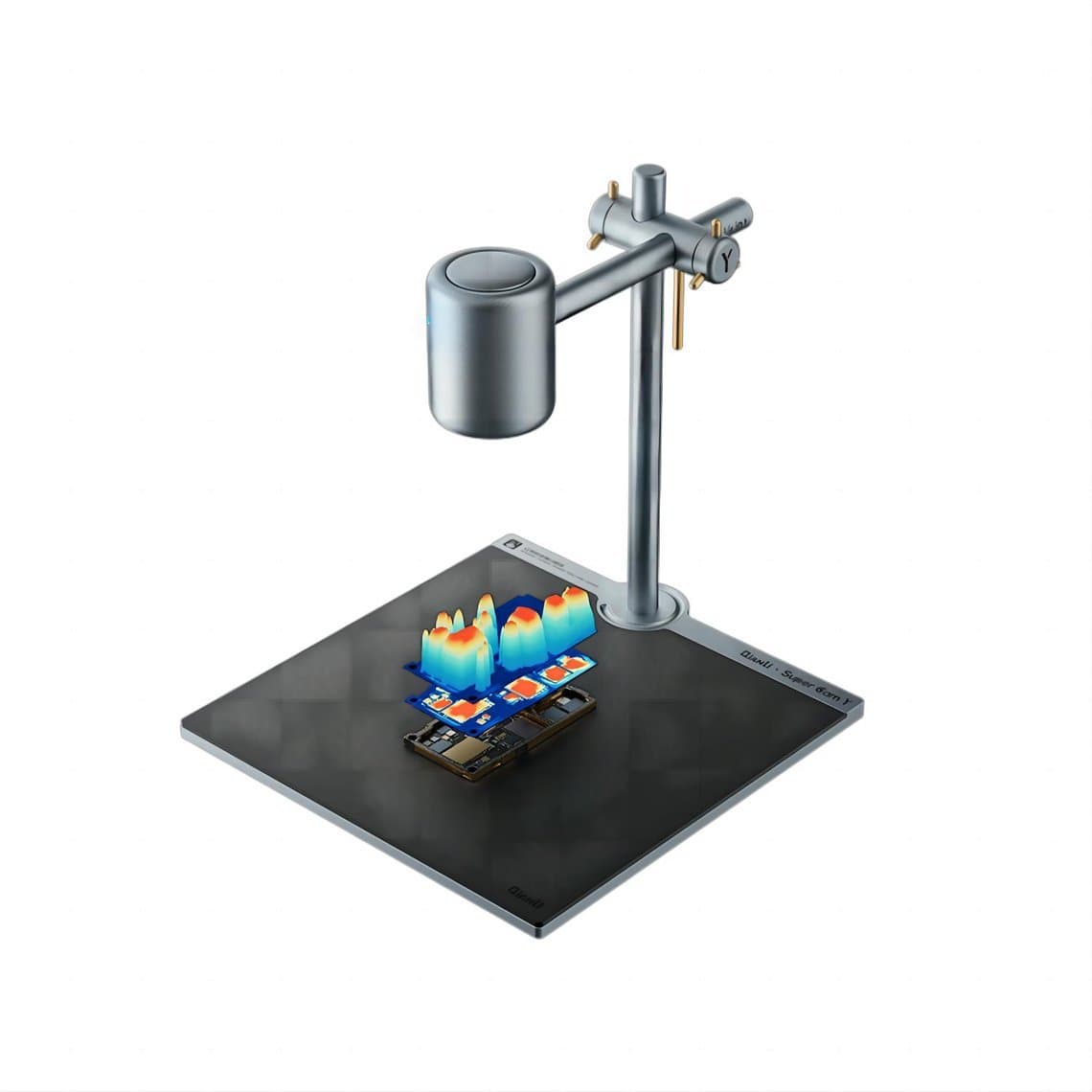
Short hunting needs both hands free for the power supply probes. A camera on a stand or arm that holds it steady over the board is far easier to use than a handheld unit. Some kits include a stand or a phone board holder.
Comparing common thermal camera types
The table below groups cameras by what their product names describe. Always check the full specifications on the product page, because sensor details vary by model.
| Camera | What the name tells you | Best fit |
|---|---|---|
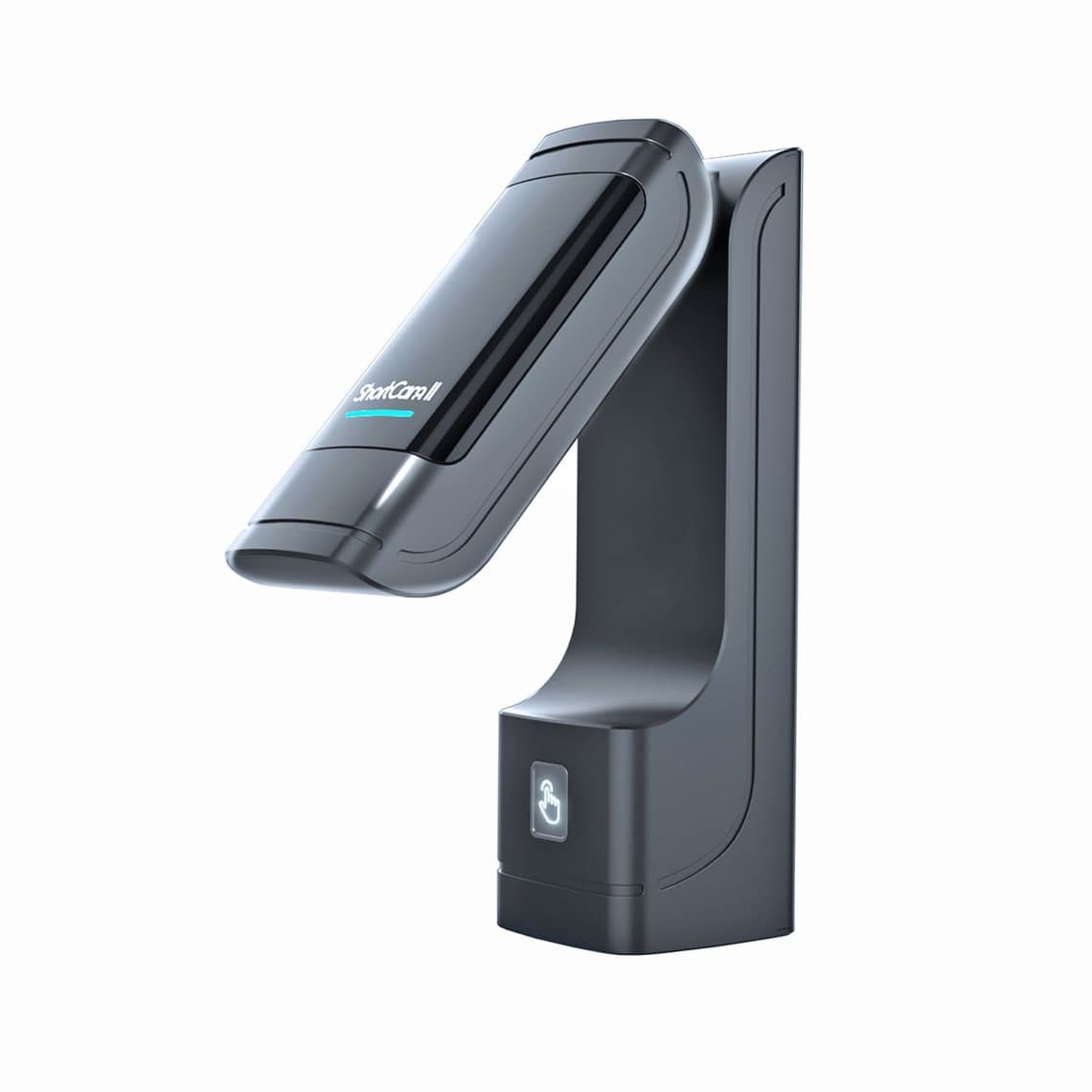
| ShortCam II thermal imaging camera | Made for PCB repair | Shops that want a dedicated short-finding camera |
| Qianli ToolPlus Super Cam Y Pro 3D | Infrared thermal analysing camera with 3D view | Busy board-repair benches |
| RF4 RF-C39 dual-spectral camera | Visible and infrared in one unit | Dense boards where overlay helps pick the exact part |
| Mechanic Action3 60FPS 4K camera | Optical and thermal display, 60 FPS | Techs who want one camera for visual inspection and heat |
| MaAnt XJ-5 3-in-1 | 4K camera, multimeter and thermal imaging combined | Small benches that want fewer separate tools |
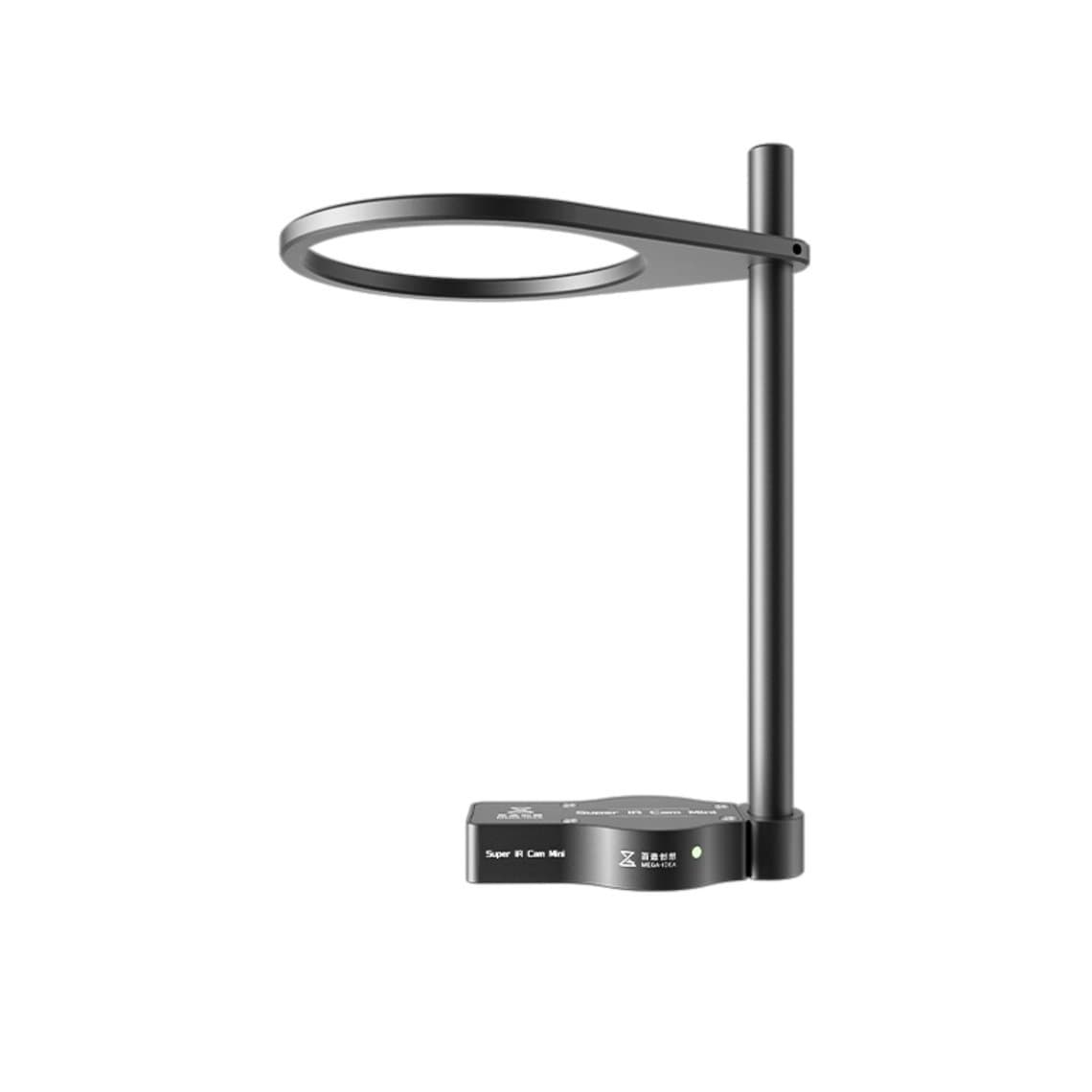
| Qianli Super IR Cam Mini for microscope | Thermal imaging designed for microscope use | Techs who work under a microscope all day |
| TBK 2202 3D thermal imaging instrument | Motherboard fault diagnosis with a phone holder | Benches that want camera and board holding in one kit |
| UNI-T UTi120S | General infrared thermal imaging camera | Mixed use; check close-focus ability for small parts |
You can compare the full range, including compact models and microscope add-ons, in our thermal cameras category.
Alternatives: rosin, freeze spray and the finger test
Before thermal cameras became common, techs found shorts in other ways. They still work, but each has drawbacks.
| Method | How it works | Drawbacks |
|---|---|---|
| Rosin smoke | Coat the area with rosin vapour; the hot part melts it first | Leaves residue that needs cleaning; hard to see on tiny parts |
| Freeze spray | Frost the area; the hot part clears first | Condensation on the board; can mask small differences; extra cost per job |
| Isopropyl alcohol | Thin layer of alcohol; it evaporates first over the hot part | Evaporates quickly everywhere; needs a steady eye |
| Finger test | Feel for the warm part with a fingertip | Imprecise on small parts, risk of burns, ESD risk, needs more current |
| Thermal camera | Shows the hot spot on a screen | Higher upfront cost; reflections on shiny metal (see below) |
The camera is usually safer and faster because it shows a temperature change much smaller than you could feel, so you can inject less current. Less current means less risk of damaging a good part or lifting a weak pad. It also leaves nothing on the board, so you do not need to clean residue before the next step.
Emissivity and reflections from shiny metal
Thermal cameras read infrared energy, and not every surface gives it off the same way. Matte, dark surfaces such as chip packages and solder mask read fairly accurately. Shiny metal such as shields, bare copper, solder joints and the metal ends of capacitors reflects infrared from its surroundings, including your hand, your lamp or the soldering iron, and can show a false hot or cold reading.
In practice:
- Trust the change in temperature, not the absolute number. A part that rises quickly when power is applied is the suspect.
- Keep warm objects such as the iron, the hot air nozzle and your hand out of the camera's view.
- If a shiny area is hard to read, a very thin coat of flux or a small piece of matte tape on a shield can help. Clean it off afterwards.
- Take a baseline image before power is applied so you know what was already warm or reflective.
Tips for faster, cleaner results
- Start low. Begin at a low current limit and raise it in small steps. Many shorts show clearly at modest current, and you avoid damaging a good part.
- Match the voltage to the line. Do not inject more voltage than the line normally runs at. Check the schematic or boardview when you are unsure.
- Use a high-contrast palette. Palettes that show hot spots as bright white or red against a dark board are easier to read quickly.
- Check both sides of the board. On sandwich boards the faulty part may be on the other layer, and the heat you see may only be spreading through.
- Confirm before you remove. When the hot spot sits between two parts, measure or lift one at a time and recheck the line.
- Mind ESD and heat. Work on an ESD mat with a wrist strap, keep the battery disconnected, and never leave current running while you look away.
Questions
Do I need a thermal camera to fix a short circuit on a phone board?
No, rosin, freeze spray and alcohol can all find shorts. A thermal camera is faster, works with lower current and leaves nothing on the board, so it pays off for shops that do board repair every week.
What thermal resolution is enough for phone repair?
There is no single number, because lens and focus distance also matter. In general, more thermal pixels and good close focus make it easier to separate small neighbouring parts. Check the infrared sensor resolution, not the visible camera resolution.
Can I use a general-purpose thermal camera for phone motherboards?
You can if it focuses close enough to show individual components. Many general cameras are designed for longer distances and blur at close range. A macro lens, microscope mount or a camera made for PCB repair solves this.
Why does my thermal camera show the wrong part as hot?
Usually because of reflections from shiny metal or because heat has spread from the real fault. Take a baseline, apply power for only a few seconds, and watch which spot changes first.
Browse our thermal cameras and DC power supplies to set up a short-finding bench. Every tool is tested before shipping from Shenzhen by DHL, FedEx or UPS. Repair shops can unlock wholesale prices through our wholesale programme, and you can reorder by SKU or CSV with Quick Order.