Screen Refurbishing Business: Machines, Setup and Profit Drivers
17 November 2026 · LightspeedTools team
Short answer: A screen refurbishing business takes displays with cracked glass but a working panel, removes the broken glass and old glue, laminates new glass with OCA and sells the result as a refurbished screen. You need a separator, a glue removal method, a vacuum OCA laminator and a bubble remover, plus a dust-controlled bench. Profit depends less on the machines than on yield, buy-back prices for cracked screens and how well you test what you sell.
What screen refurbishing actually is
On most modern phones the glass, touch layer and display are bonded together into one assembly. When a phone is dropped, the glass often cracks while the display underneath still lights up and responds to touch. Refurbishing replaces only the broken glass, so the expensive part, the display panel, gets a second life.
The core process is the same across most models:
- Test the incoming screen. Check display, touch, colour and dead pixels before any work. A screen with a damaged panel is not a refurbishing candidate.
- Separate. Heat the screen on a separator plate to soften the adhesive, then cut the glass away from the display with a fine wire.
- Remove the old glue. Strip the remaining OCA (optically clear adhesive) from the display surface and clean it completely.
- Replace the polarizer if needed. On some screens the polarizer is scratched or damaged during separation and must be replaced.
- Laminate. Align new glass with fresh OCA on the display using a mould, then press it together in a vacuum laminator.
- Debubble. Put the laminated screen in a bubble remover (a pressure chamber) to push out trapped air.
- Test and inspect. Retest display and touch, inspect for dust, bubbles and alignment, then grade and pack.
For a step-by-step view of the whole workflow at the bench, see our guide on how to refurbish a phone screen.
Machines needed at each stage
Every stage has its own equipment. You can buy each machine separately or start with an all-in-one unit and split stages later as volume grows.
| Stage | Machine or tool | What to look for |
|---|---|---|
| Separation | LCD/OLED separator with heated plate and vacuum, cutting wire | Stable temperature, strong vacuum, flat and curved support if you do edge screens |
| Glue removal | OCA glue remover, rotary tool or glue removal liquid | Removes glue without scratching the polarizer |
| Polarizer work | Polarizer remover and polarizer laminator (production setups) | Needed only when the polarizer is damaged |
| Lamination | Vacuum OCA laminator with alignment moulds | Good vacuum, even pressure, mould support for your models |
| Debubbling | Bubble remover (autoclave) | Chamber size, pressure and temperature control |
| Clean environment | Dust-free bench or laminar flow hood, ionizer | Filtered airflow over the lamination area |
Separators
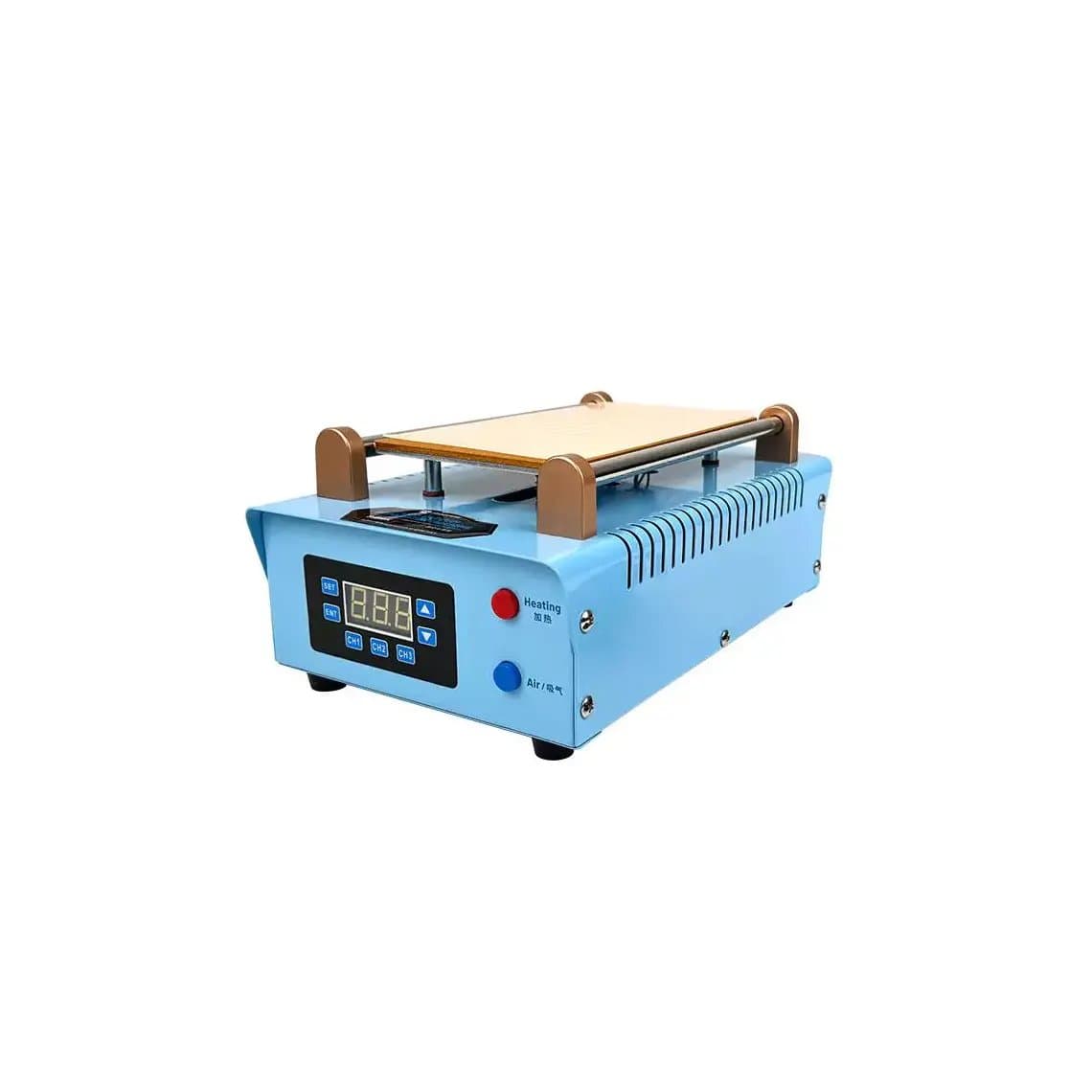
The separator heats the screen so the adhesive softens, and holds it flat with vacuum while you cut. Automatic and semi-automatic models such as the TBK-958 automatic separator can make the cut more consistent. The UYUE 948 MAX-II is a heated separator commonly used for iPhone and Samsung screens. If you need both separation and glue removal on one plate, the Sunshine S-918K separator and OCA glue remover covers both. Keep spare alloy cutting wire on hand, because wire breaks often during practice. You can compare options in our separators range and the wider separators and glue removal machines. Our guide on how to use an LCD separator machine covers temperature and cutting technique.
Laminators and bubble removers
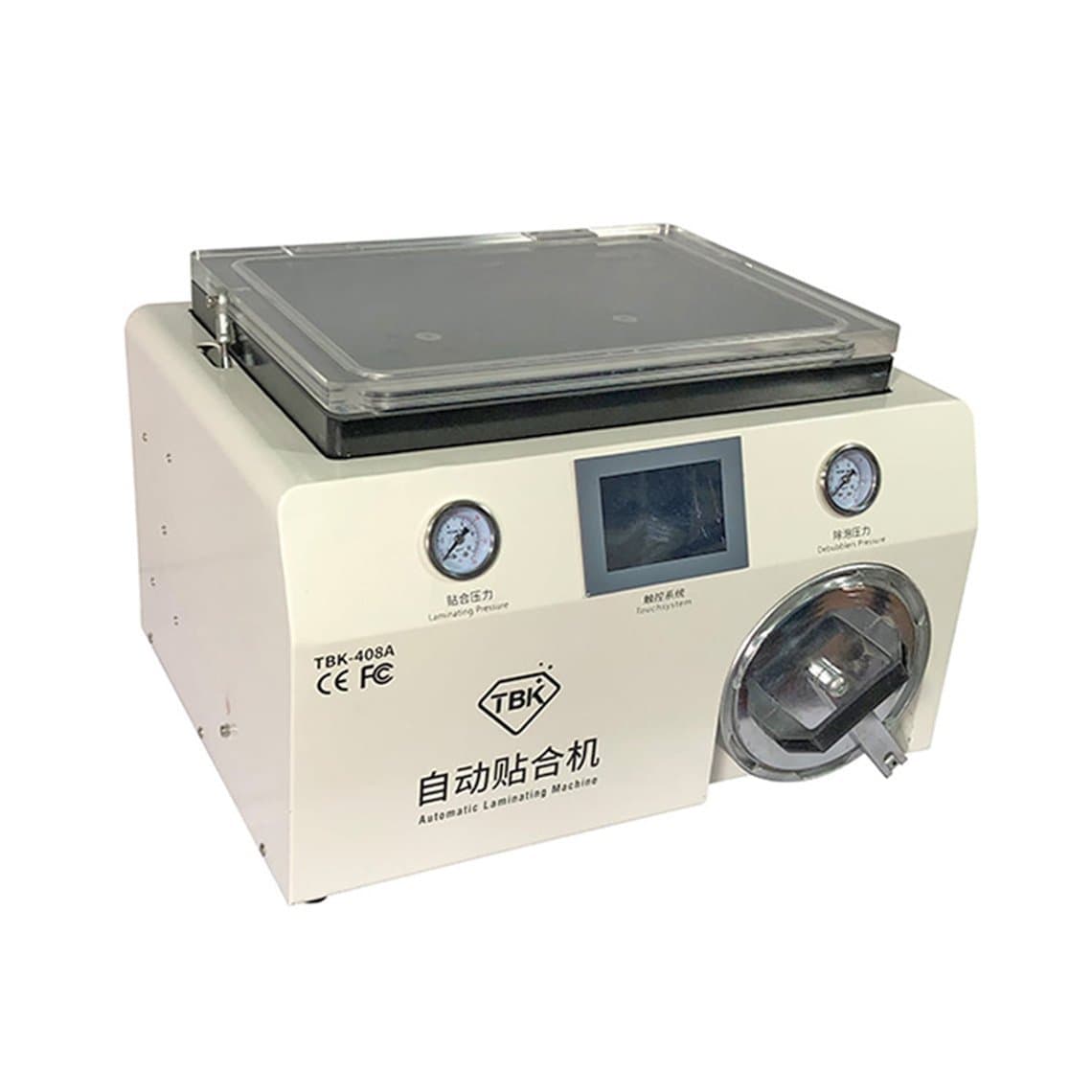
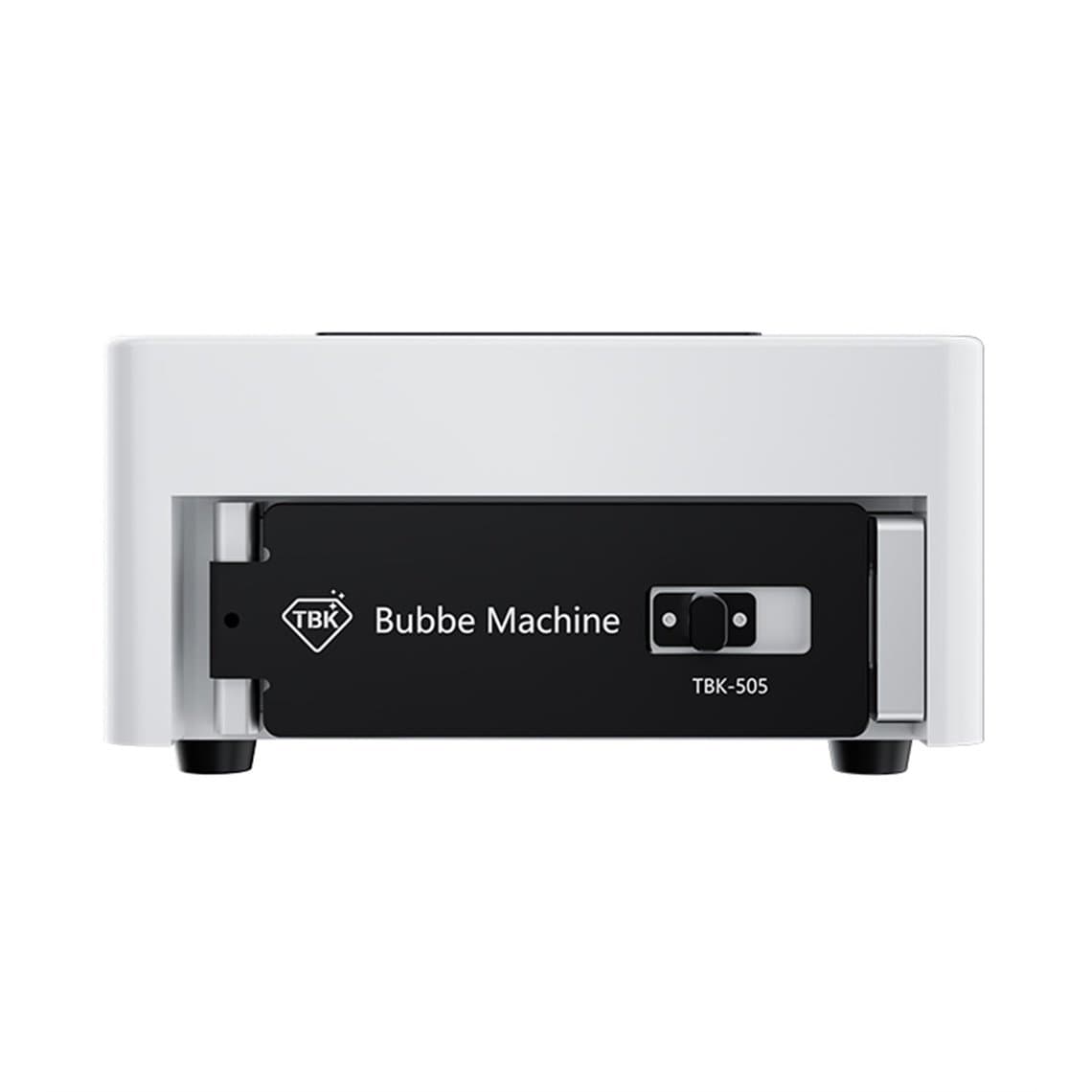
The laminator presses glass, OCA and display together under vacuum. Machines such as the QianLi ToolPlus TH600 laminating machine are built for flat phone screens. Curved OLED screens need a curved-screen laminator, for example the TBK-208C curved screen laminating and bubble remover machine. Combination units like the TBK-408A laminator and debubbler in one save bench space for smaller shops, while a separate unit such as the TBK-505 mini bubble remover lets lamination and debubbling run at the same time. See our laminating and bubble removing machines and the OCA laminating machine guide for how vacuum, pressure and temperature affect results.
Starter setup vs production setup
| Starter setup | Production setup | |
|---|---|---|
| Who it suits | A repair shop refurbishing its own buy-back screens | A dedicated refurbishing line selling to other shops or wholesalers |
| Separation | One heated separator | Several separators so staff can work in parallel |
| Glue removal | Manual removal with liquid and tools | Dedicated OCA glue remover machines |
| Lamination | All-in-one laminator and debubbler, or a 3-in-1 machine | Separate flat and curved laminators, large-chamber bubble remover |
| Polarizer | Usually sent out or screens with damaged polarizer set aside | Polarizer remover and laminator in-house |
| Clean area | Dust-free bench, careful cleaning, ionizer | Laminar flow hoods or a dust-controlled room |
| Testing | Test with a known-good phone | Testers and fixtures per model, grading process |
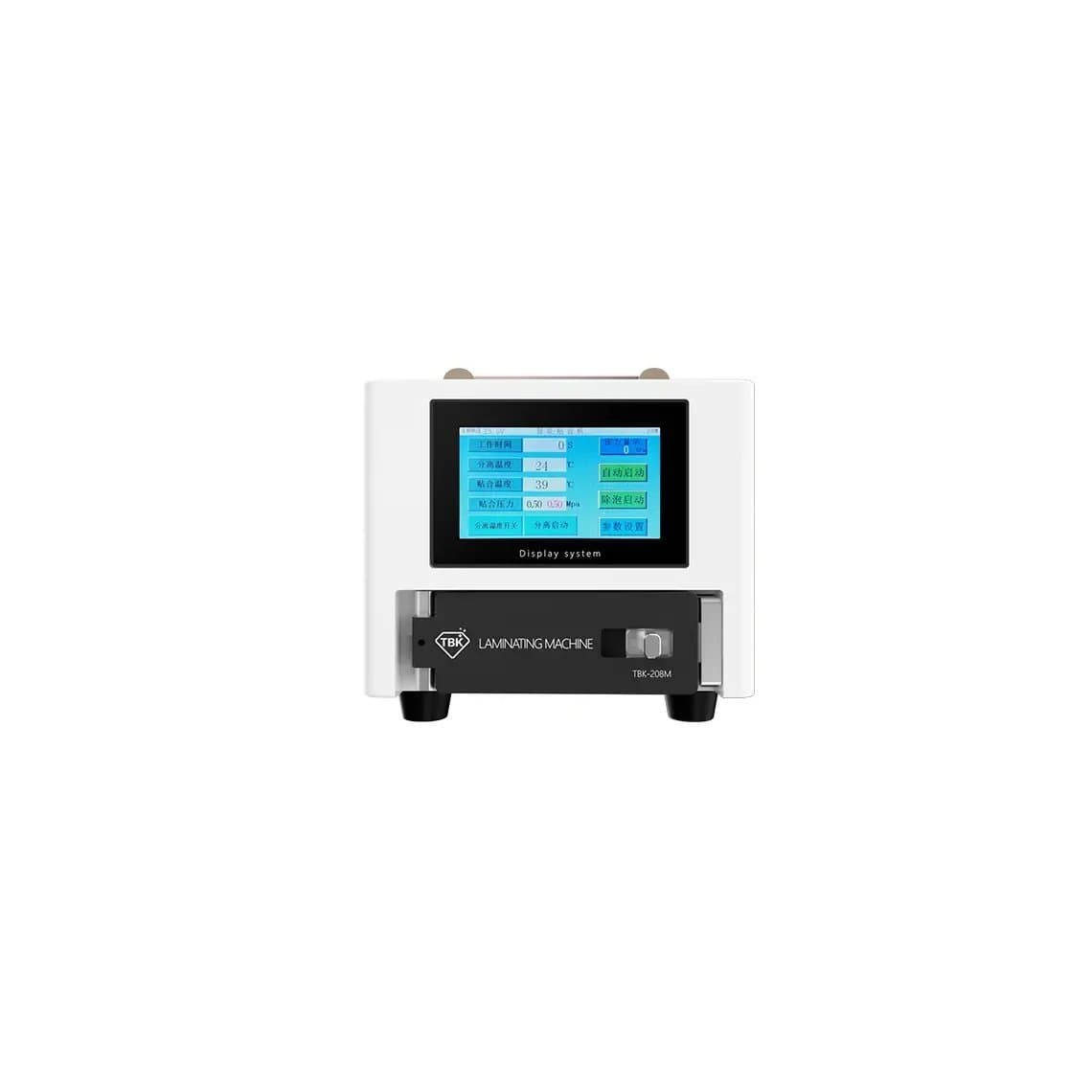
A 3-in-1 unit such as the TBK-208M separator, laminator and defoamer is a compact way to learn every stage on one machine. The trade-off is throughput: while it is laminating, it is not separating. Our screen refurbishing starter kits group matched machines so the stages fit together from day one.
Consumables
- Front glass with OCA. Many shops buy glass with OCA already applied, which removes one alignment step. Glass quality varies, so test a small batch before committing to a supplier.
- OCA film. Needed when glass comes without adhesive. Thickness must match the model.
- Polarizer film. Only when the original polarizer is damaged. It must match the panel type.
- Glue removal liquid, cutting wire, cleaning cloths, dust-removal tape, protective films. Small items, but you use a lot of them.
- Moulds. Alignment moulds per model for the laminator.
Skills and the factors that control yield
Yield is the share of screens that come out of the process sellable. It is the single biggest driver of whether a refurbishing business makes money, and it is mostly about skill and environment, not equipment.
- Dust control. One particle under the glass means rework or a lower grade. Laminate in filtered airflow, wear gloves and a mask, clean with dust tape just before lamination and keep the area free of cardboard and clothing fibres.
- Practice. Expect to lose screens while you learn. Train on cheaper or already-dead screens before working on stock that matters.
- OLED handling. OLED panels are thin and can crack or develop lines if bent, overheated or cut too aggressively. Curved OLEDs are harder than flat ones. Many shops start with LCD screens and move to OLED once their yield is stable.
- Temperature and time. Too much heat can damage the panel or polarizer; too little makes the wire drag and crack the display. Settings vary by model and machine, so record what works.
- ESD and handling. Ground yourself and keep the flex covered. Film peeling creates a lot of static.
- Testing discipline. Test before and after. Without a before-test you cannot tell whether a fault came from the customer or from your process.
Where the value comes from
A refurbishing business usually earns from two directions at once:
- Selling refurbished screens. To your own repair customers, to other repair shops or to wholesalers. Refurbished original panels compete with aftermarket screens on quality, so honest grading matters. Our quality grades page explains how refurbished screens compare with other grades.
- Buying back cracked screens. Every original screen your shop replaces is raw material. Many shops also buy cracked screens from other repairers. The price you pay for these cores is often the deciding factor in margin.
How to work out margin per screen
Prices for screens and cores change constantly by model and market, so build the calculation with your own numbers:
Cost per good screen = (Core buy-back price + Glass and OCA + Polarizer if used + Other consumables + Labour time × Labour rate + Machine cost share) ÷ Yield
Margin per screen = Selling price of the refurbished screen − Cost per good screen − Expected warranty returns cost
Two points matter in this formula. First, dividing by yield shows why a few lost screens hurt so much: every failed screen spreads its core and consumable cost over the good ones. Second, machine cost share means the price of your machines divided by the number of screens you expect to process over their working life, so volume lowers it. Recalculate per model, because both core prices and selling prices shift as models age.
Risks to plan for
- Yield losses during the learning period and on difficult models, especially curved OLEDs.
- Falling prices. Refurbished screen values drop as models age and as aftermarket options improve. Avoid stockpiling cores for older models.
- Core competition. Other refurbishers bid for the same cracked screens, which pushes up buy-back prices.
- Hidden faults. A screen that passes a quick test may have weak touch areas, faint lines or uneven colour. Returns cost you the screen, shipping and reputation.
- Software notices. On recent iPhones, even an original panel moved from another phone can show an "Unknown part" message. The screen still works, but customers should know before they buy.
- Safety. Hot plates, cutting wire, broken glass and solvents. Use cut-resistant gloves for glass, ventilate when using glue removal liquids and keep lithium batteries away from heat and pressure.
- Glass and OCA quality. Poor glass can feel different, show rainbow effects or affect touch. Qualify suppliers on small batches.
Questions
Is screen refurbishing still profitable?
It can be when yield is high, core buy-back prices are reasonable and you sell into a market that values original panels. It becomes difficult when yield is poor or when you overpay for cracked screens, so run the margin formula per model before you scale.
What is the minimum machine setup to start refurbishing screens?
A heated separator with cutting wire, a way to remove OCA, a vacuum laminator with moulds and a bubble remover, plus a clean bench. An all-in-one or 3-in-1 machine can cover several stages while you learn.
Can you refurbish OLED screens as well as LCD?
Yes, but OLED panels are more fragile during separation and curved OLEDs need a curved-screen laminator. Many technicians build skill on LCD screens first and move to OLED once their yield is stable.
How long does it take to learn screen refurbishing?
It depends on the person and how much practice material is available. Most of the learning is in separation and dust-free lamination, so plan for a period of practice on low-value screens before working on stock you intend to sell.
LIGHTSPEED designs its own screen refurbishing machines alongside the brands above. Browse all refurbishing machines, or contact us with the models and volume you plan to handle and we will quote a matched machine setup. Repeat buyers can unlock trade prices through a wholesale account and reorder consumables by SKU with Quick Order.