Solder Paste for Mobile Repairing: Low, Medium and High Temperature
17 November 2026 · LightspeedTools team
Short answer: The best solder paste for mobile repairing depends on the job, not the brand. Use a low-temperature tin-bismuth paste (around 138°C) for stacked boards and heat-sensitive work, a medium-temperature paste for general IC reballing, and a high-temperature lead-free SAC paste (around 217–220°C) only where you need the strongest joints and the board can take the heat.
Most bench problems blamed on "bad paste" are really the wrong alloy for the job, old paste, or paste that was never warmed up before opening. This guide explains what is inside a jar of solder paste, how the temperature families differ, which one to pick for each repair, and how to store and apply it so it behaves the same way every time.
What solder paste actually is
Solder paste is fine powdered solder mixed into a flux vehicle. The powder is made of tiny metal spheres; the flux holds them together, keeps them in place on the pads, and cleans oxide off the metal as it heats. When the paste reaches its melting range, the spheres collapse into liquid solder, the flux pushes contamination aside, and surface tension pulls the solder into a joint or a ball.
Two things decide how a paste behaves on a phone board:
- The alloy, which sets the melting point, the strength of the finished joint and how it ages.
- The powder size and flux, which set how well it prints through a fine stencil, how long it stays tacky, and how much residue it leaves.
Pastes sold for phone repair usually use a fine powder so they print cleanly through BGA stencils with very small holes. Some are labelled "nano" or marketed for specific jobs such as connectors or jumper wires, which mainly tells you the maker has tuned the powder and flux for that work.
Melting ranges by alloy family
Labels often quote one temperature, but that number is the alloy's melting point, not the setting you dial into your hot air station. Air temperature at the nozzle is always higher than the temperature the joint actually reaches, and the gap depends on airflow, nozzle size, distance and board mass.
| Family | Typical alloy | Approx. melting point | Character |
|---|---|---|---|
| Low temperature | Tin-bismuth (Sn42Bi58 and similar) | About 138°C | Gentle on boards and neighbours; joints are harder and more brittle |
| Medium temperature | Bismuth-containing blends, often with silver or other additions | Roughly 150–180°C, varies by maker | Compromise between heat and joint toughness |
| Leaded | Tin-lead 63/37 | About 183°C | Flows easily and forgiving to work; not lead-free |
| High temperature lead-free | SAC (tin-silver-copper, e.g. SAC305) | About 217–220°C | Close to factory joints; needs the most heat |
Treat the medium row with care. "Middle melting point" is a marketing category rather than a standard, and different makers use different alloys and temperatures under that name. Always read the number on the label and, where it exists, the maker's data sheet.
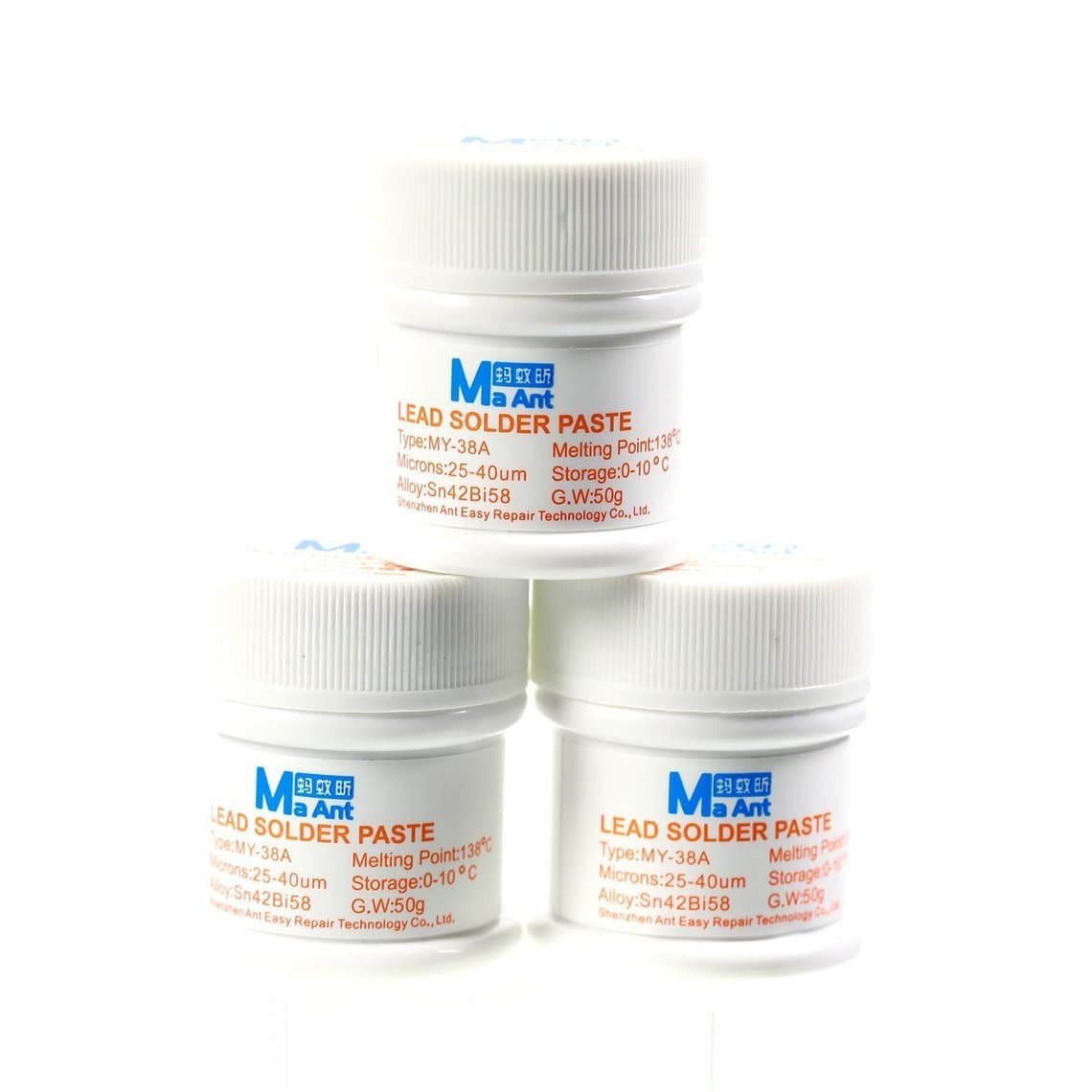
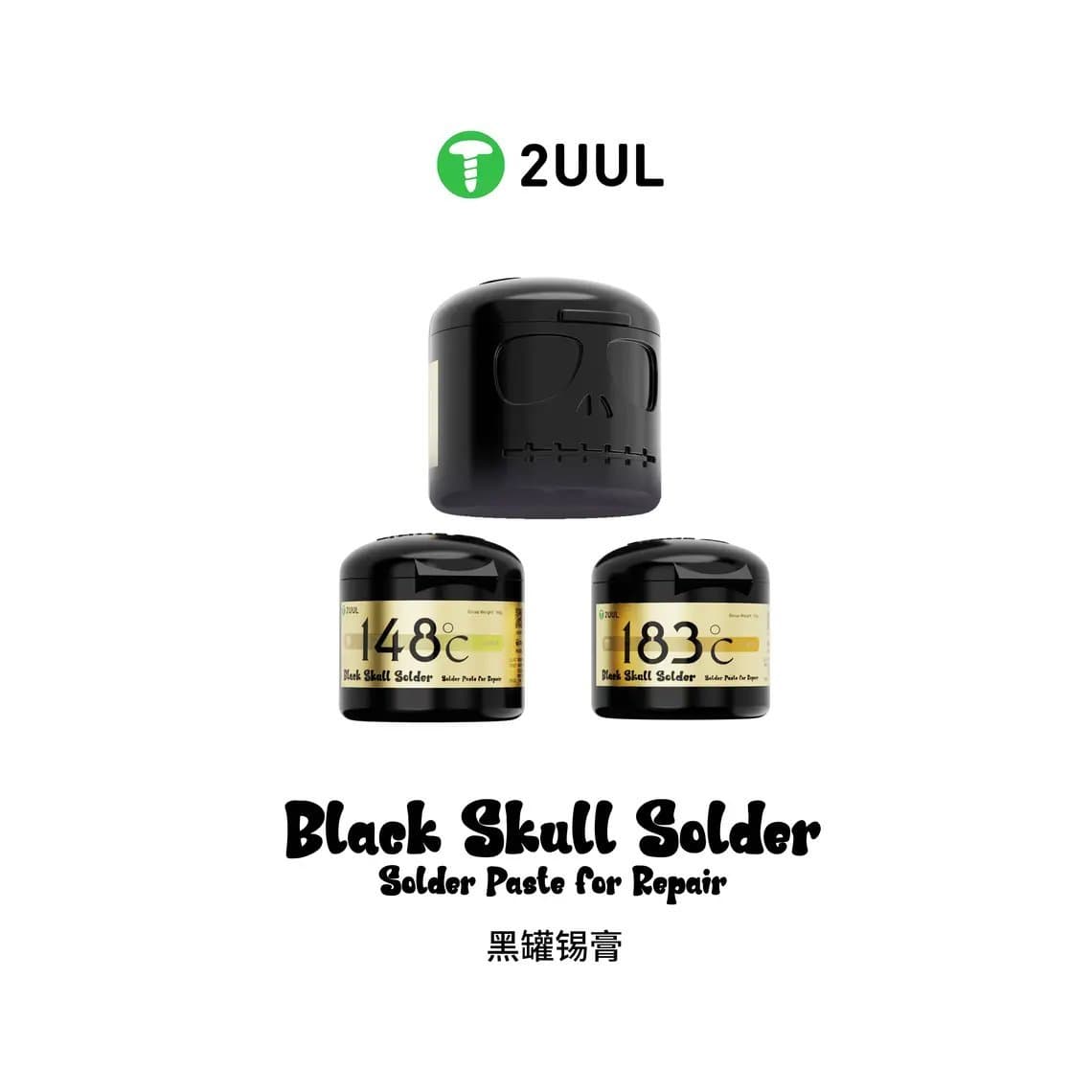
Some jars quote several temperatures. The MaAnt lead-free solder paste in 138, 158 and 183 degree versions and the 2UUL Black Skull paste in 148°C and 183°C versions are sold as separate melting points, so check which one you are ordering.
Which paste for which job
Stacked boards and middle-layer work
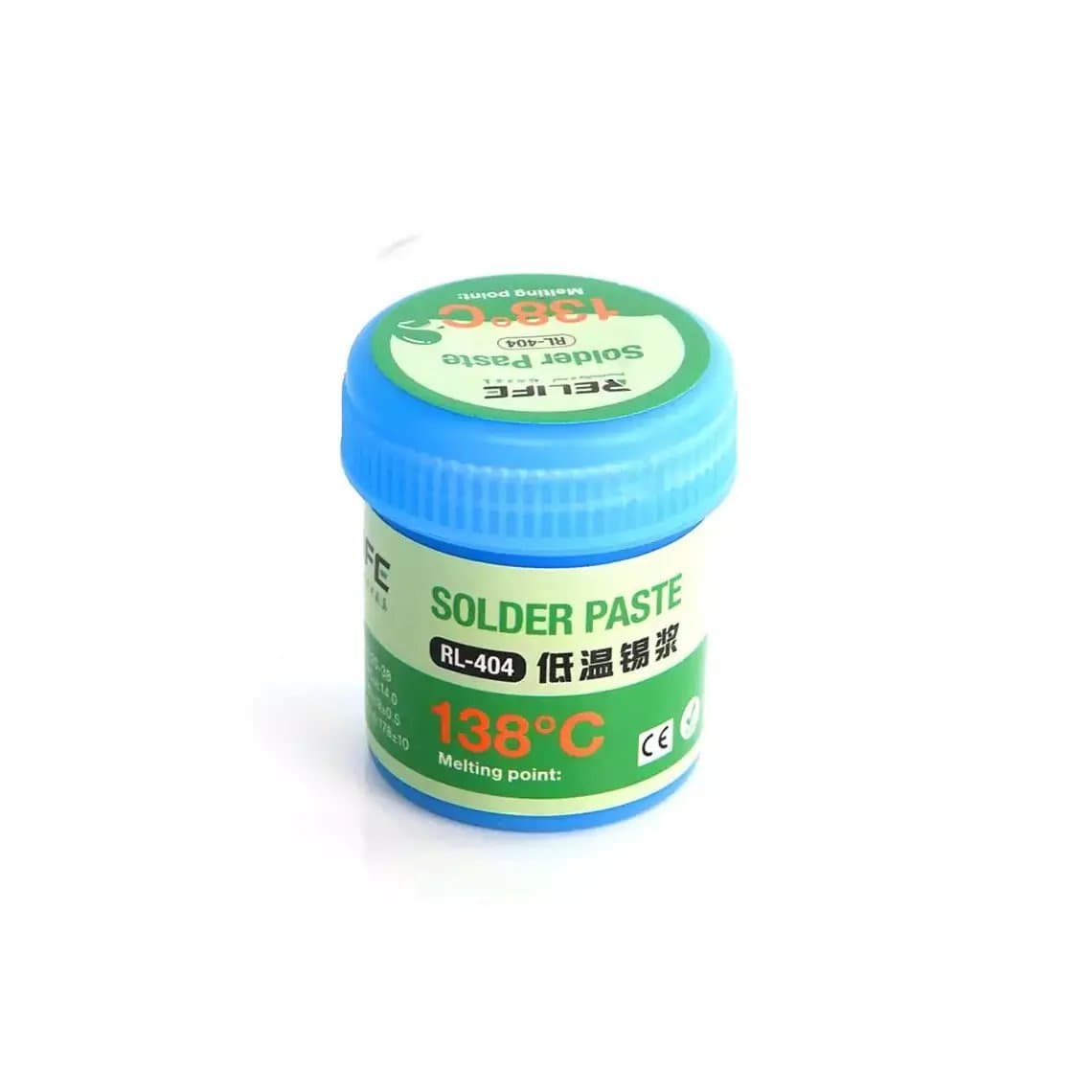
Sandwich logic boards (two boards joined by an interposer, as on many recent iPhones) are where low-temperature paste earns its place. When you separate and rejoin the layers, you want the interposer joints to melt without cooking the components on the far side or reflowing chips you have not touched. A 138°C tin-bismuth paste such as the Relife RL-404 138°C low temperature paste is the usual choice for reballing the interposer before rejoining the boards. A preheater under the board makes the job far more even than hot air alone.
CPU and large BGA reballing
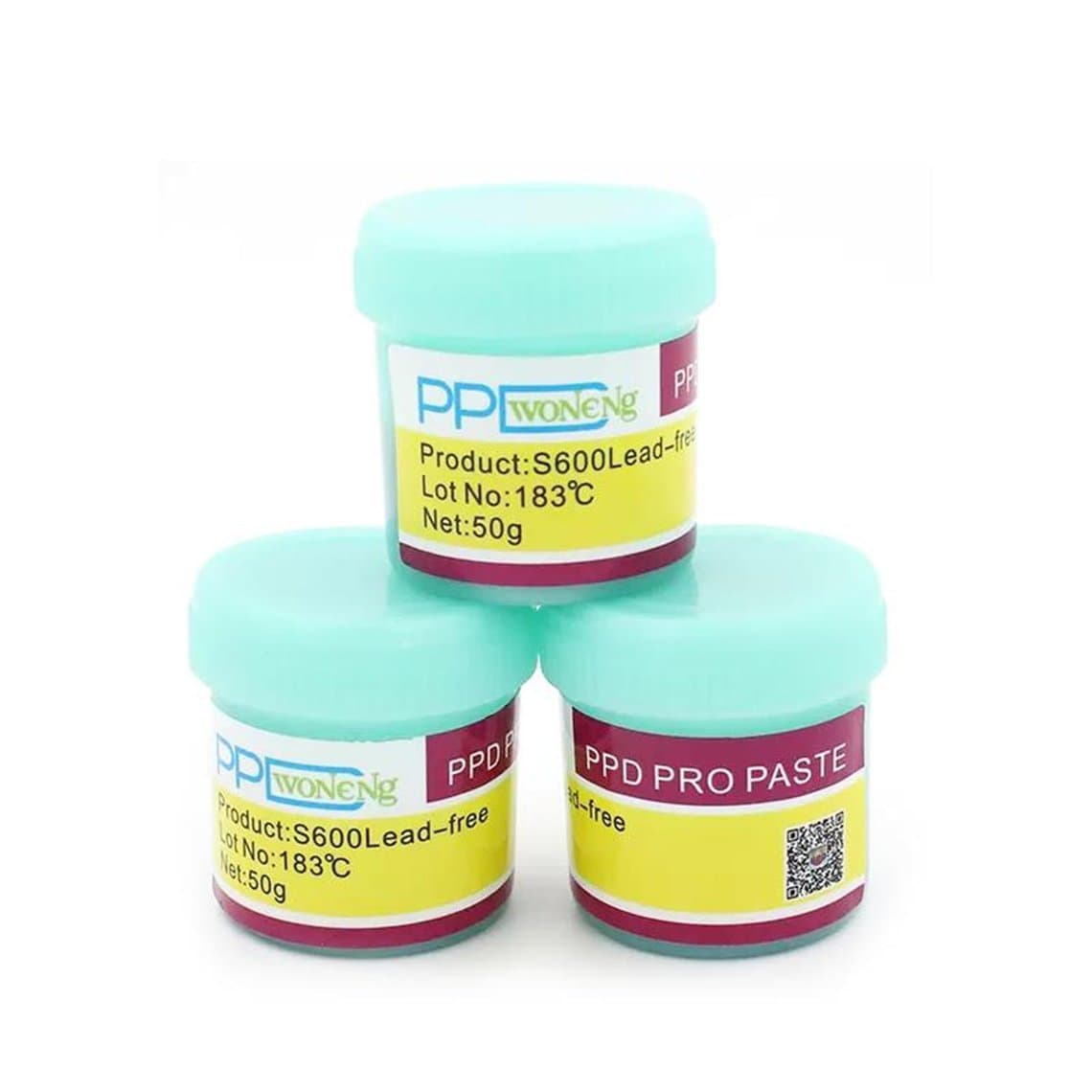
Large processors and memory packages sit on many balls, and those joints carry mechanical stress when a phone flexes or is dropped. Many technicians prefer a medium or higher-temperature paste here so the finished joints are tougher, as long as the board and nearby parts can tolerate the heat. Older processors that were built with higher-temperature solder are often reballed with paste matched to them; the PPD lead-free solder paste sold for A8 to A11 chips is marketed for exactly that generation. For the full process, see our guide on how to reball a BGA chip.
Small ICs near sensitive parts
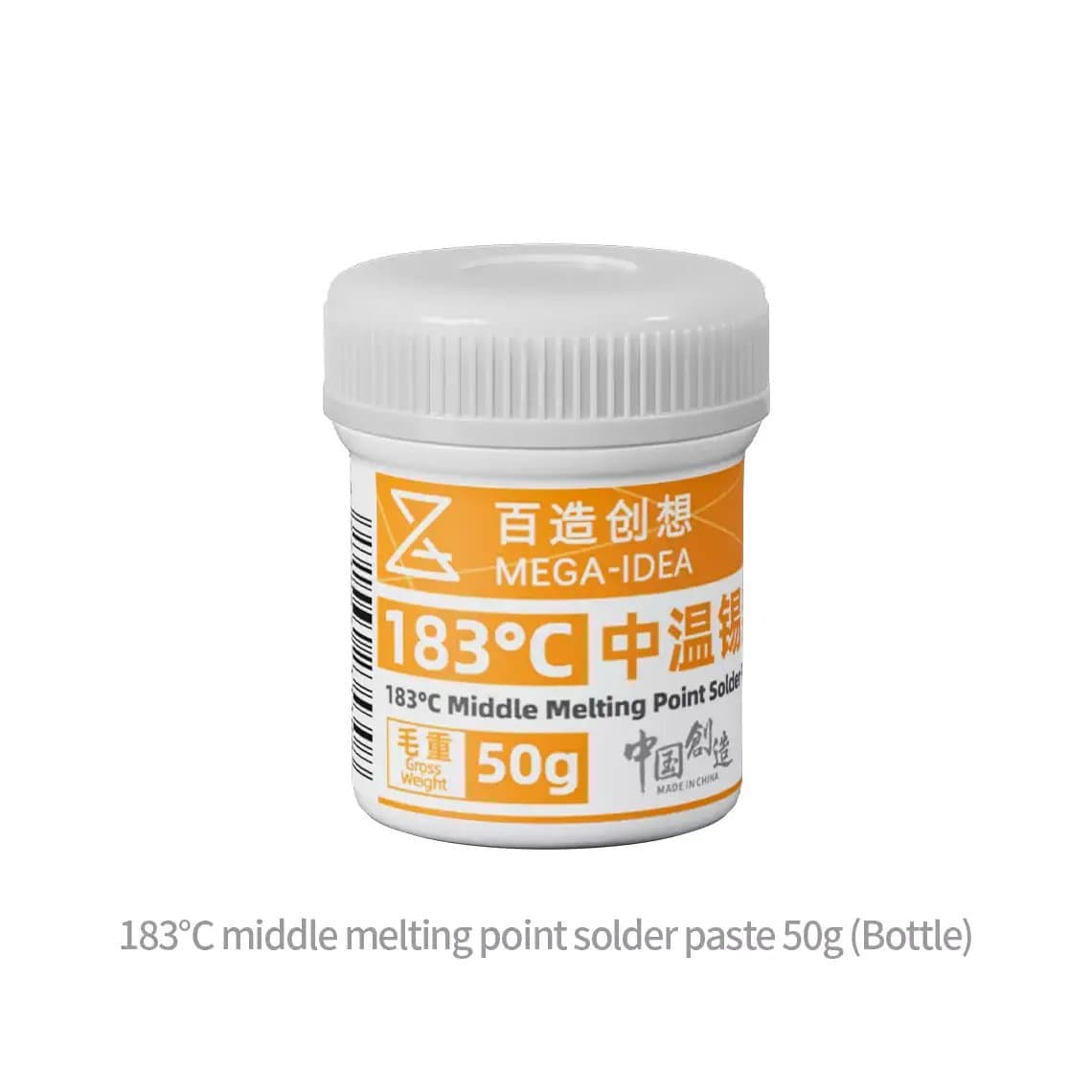
Charging ICs, audio codecs and power management chips often sit close to plastic connectors, underfilled chips and shields. A lower melting point means less heat spreading into those neighbours. The Mega-Idea middle melting point paste (150°C) sits in this range. Shield neighbours with heat-resistant tape and keep the nozzle moving.
Connectors and FPC sockets
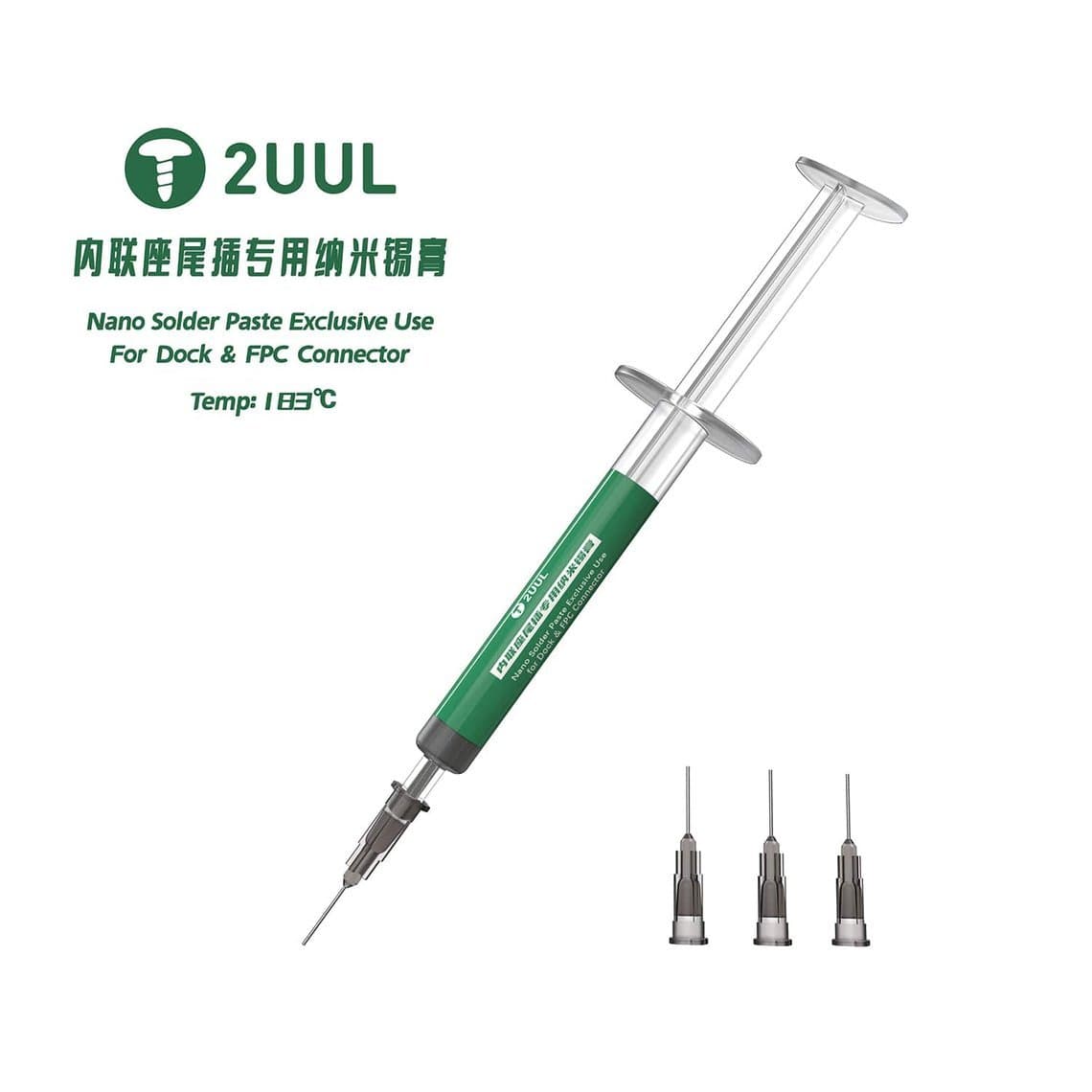
Board-to-board and dock connectors have fine pitch and plastic bodies that deform easily. Paste tuned for these jobs, such as the 2UUL nano solder paste for dock and FPC connectors, is meant to give small, even fillets without bridging. Use as little as possible; most bridges on connectors come from too much paste, not the wrong paste.
Jumper wires and trace repair
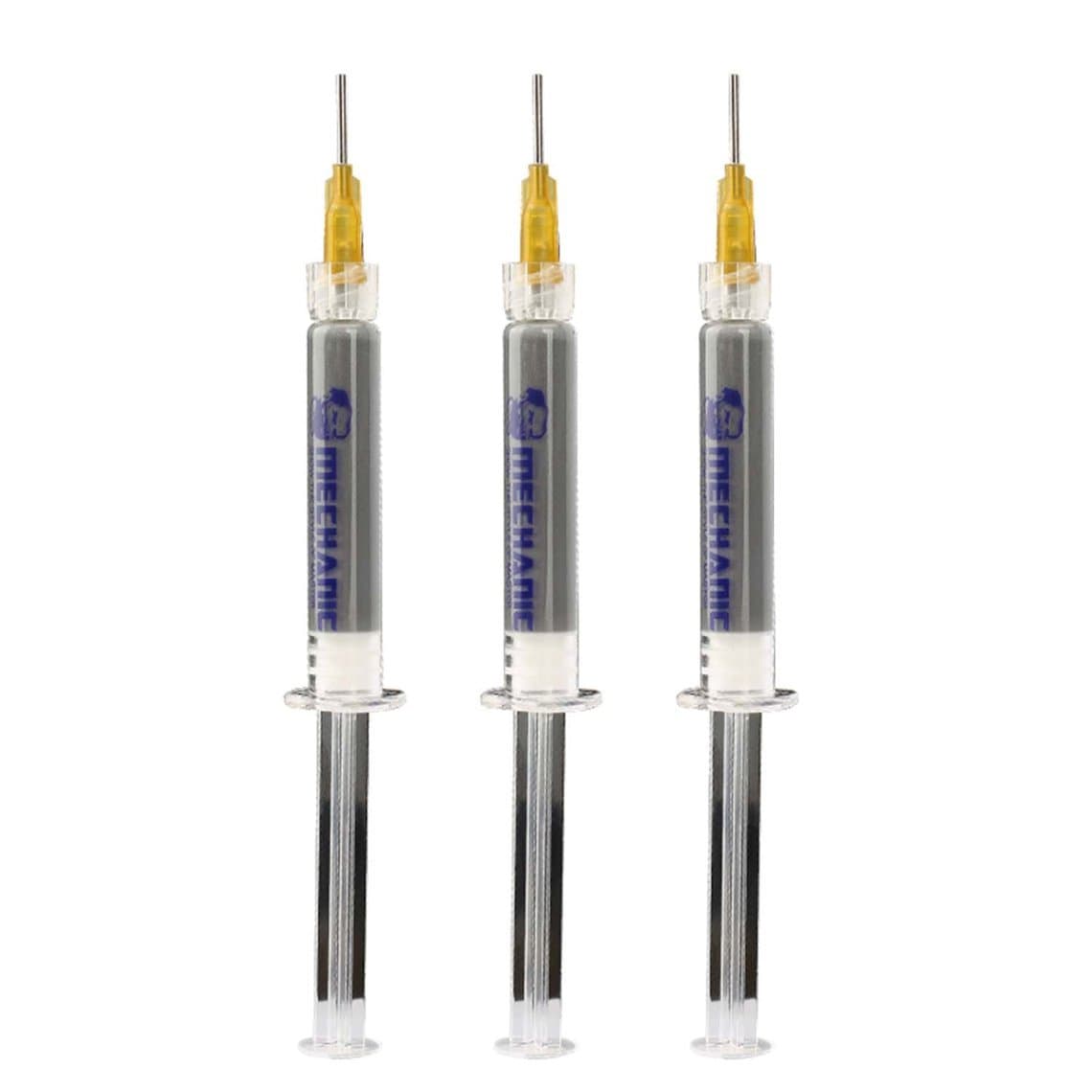
Jumper wire work needs a paste that wets tiny pads and thin enamelled wire without flooding. The Relife RL-405 paste for jumper wire repair and the Mechanic iSm3 / iSm5 jumper wire paste are sold for this. Apply a tiny amount on the tip of a needle, not from the syringe directly. If you are new to this level of work, micro soldering for beginners covers the skills first.
Mixing alloys and joint strength
Solder alloys mix as soon as they melt together, and the result is not simply "halfway between". A few cautions most experienced technicians follow:
- Bismuth joints tend to be more brittle. Tin-bismuth solder is generally considered less tolerant of bending and drop shock than SAC or tin-lead. That is acceptable for interposers and protected areas, but think twice before using it on parts that see flex or impact, and follow the maker's guidance.
- Bismuth and lead do not mix well. Combining bismuth paste with leaded solder can form a phase that melts at a much lower temperature than either one, which can weaken joints. Remove old solder fully before switching families.
- Adding low-temperature paste to a SAC joint lowers its melting point, which can be handy when removing a stubborn chip. But the blend left behind is not the same as either original alloy, so clean the pads with wick and start fresh before fitting a new part.
- Do not mix jars. Combining two pastes in one container changes the alloy and flux ratio unpredictably.
Storage: keep it cold, open it warm
Solder paste is a perishable product. The flux slowly reacts with the powder and solvents evaporate, so old paste prints poorly, balls unevenly and spits.
- Store sealed paste in a fridge, not a freezer, unless the maker says otherwise. Keep it away from food.
- Before opening, let the jar or syringe reach room temperature with the lid on, typically for a few hours. Opening cold paste pulls moisture from the air onto it, which causes spattering and solder balls.
- Stir jar paste gently with a clean spatula before use to bring the flux back into the powder.
- Close the lid straight after use. Do not return used paste from a stencil into the jar.
- Write the opening date on the container. Shelf life varies by maker, so follow the date on the label rather than a general rule.
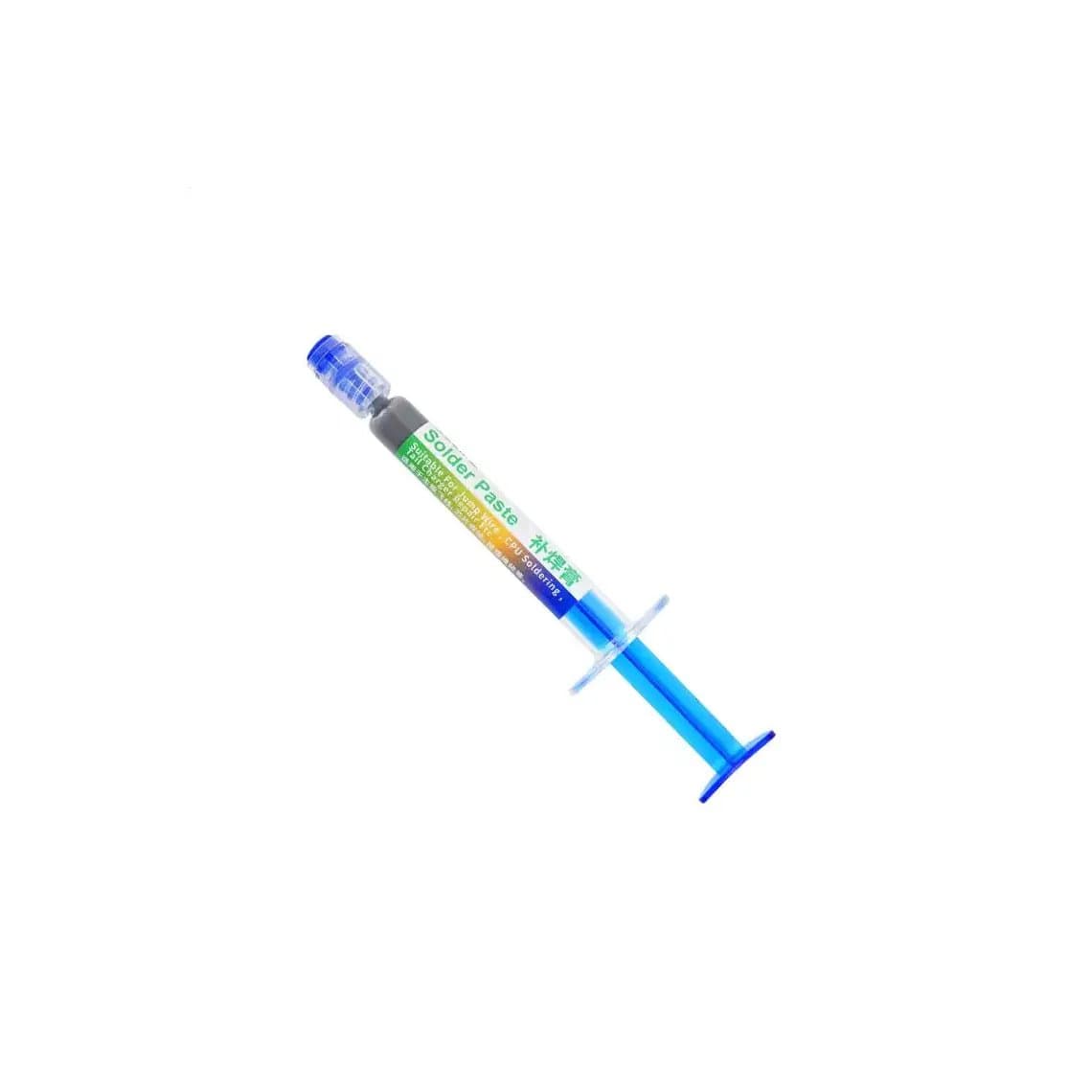
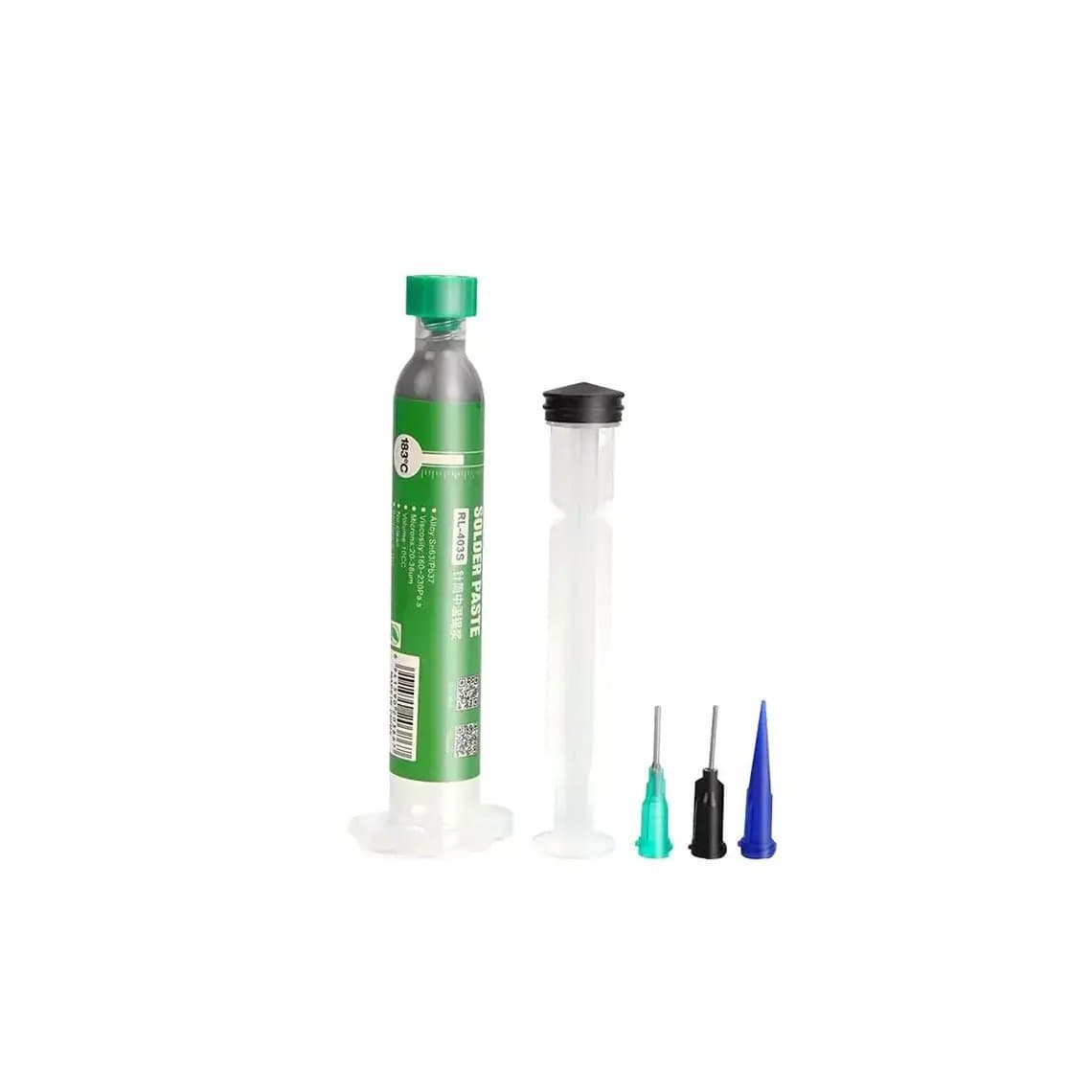
Syringe paste such as the Relife RL-403S syringe type paste is less exposed to air than an open jar and is convenient for dotting connectors and small pads.
Applying paste with a stencil
For BGA reballing, the stencil does most of the work. Choose the right BGA reballing stencil for the exact chip, since ball pitch and layout vary between generations.
- Clean old solder off the chip with wick and fresh flux, then wash residue away with isopropyl alcohol.
- Align the stencil carefully over the chip and hold it flat. Any gap lets paste spread under the stencil and bridge balls.
- Spread a thin layer of paste across the holes with a blade, pressing it in, then scrape the surface clean so paste remains only in the holes.
- Heat with even, gentle hot air until the balls form and turn shiny. A steady hot air station with good airflow control makes this far more repeatable.
- Let it cool before lifting the stencil, then inspect every ball under a microscope for missing, merged or undersized balls.
Common mistakes
- Setting the station to the label temperature. The label is the melting point of the alloy. Your air setting will be higher and depends on your equipment.
- Using low-temperature paste everywhere. It is easy to work with, but brittle joints on stressed parts can come back as intermittent faults.
- Too much paste. Excess paste is the main cause of bridges on connectors and fine-pitch ICs.
- Dried-out paste. If it no longer prints cleanly or forms grainy balls, replace it rather than thinning it with flux.
- Leaving active residue. Some pastes and deoxidising products are designed to clean pads aggressively. Follow the maker's instructions and clean residue where they say to.
- Skipping protection. Shield plastic parts and cameras, keep batteries disconnected and away from hot air, and use proper ESD handling.
Safety
Heated flux gives off fumes, so use extraction at the bench. Wash your hands after handling paste, especially leaded paste, and never eat or drink at the bench. Always disconnect the battery before board work; lithium cells must never be heated with hot air. A temperature-controlled iron from our soldering station guide plus a calibrated hot air station keeps heat where you want it.
Questions
Which solder paste is best for mobile repairing?
There is no single best paste. Low-temperature tin-bismuth paste around 138°C suits stacked boards and heat-sensitive areas, medium-temperature paste suits most IC work, and high-temperature SAC paste gives the toughest joints where the board can take the heat. Most shops keep at least two types.
Is 138°C solder paste strong enough?
For interposers and protected areas it is widely used. Tin-bismuth joints are generally more brittle than SAC or tin-lead, so many technicians avoid it on parts exposed to flex or drop shock. Follow the paste maker's guidance for your application.
Should solder paste be kept in the fridge?
Yes, most makers recommend refrigeration for sealed paste. Let it warm to room temperature with the lid closed before opening, otherwise condensation causes spattering and solder balls.
What is the difference between solder paste and flux?
Solder paste contains powdered metal plus flux and actually forms the joint. Flux contains no solder; it only cleans oxide and helps existing solder flow. You use flux for removing chips and cleaning pads, and paste when you need to add new solder, such as reballing.
Browse our full range of solder paste for phone repair, including low, medium and high melting point options. Shops buying regularly can unlock trade pricing through wholesale, and reorder known SKUs fast with Quick Order.