UV Glue for Phone Screens: LOCA Uses, Limits and Curing
17 November 2026 · LightspeedTools team
Short answer: UV glue for phone screens is usually LOCA (liquid optically clear adhesive): a clear liquid that stays wet until a UV lamp cures it. It can bond cover glass to a display and fill small gaps, but it overflows easily, is harder to rework than OCA film, and some products may yellow over time. For most production screen refurbishing, OCA film is the standard; LOCA is best kept for specific jobs and small fixes.
Ask ten repair technicians about UV glue and you will hear everything from "it's all I use" to "never touch it." Both camps have a point. LOCA can do things OCA film cannot, and it also creates problems OCA film never does. This guide explains what UV glue is, where it makes sense on phone screens, how it cures, how to apply it with less mess, and how to choose and safely use a UV lamp.
What LOCA and UV glue actually are
LOCA stands for liquid optically clear adhesive. It is a clear resin that remains liquid until exposed to ultraviolet light of the right wavelength. Once cured, it forms a transparent layer that bonds glass to a panel while letting light pass through.
"UV glue" is a broader term. In phone repair shops it usually means LOCA, but it can also mean other UV-curing products, such as UV solder mask used on boards. Those are not interchangeable, so always read what a product is made for. A bottle such as UV Glue LOCA Liquid Optical Clear Adhesive is designed for optical bonding; a solder mask is not.
It also differs from the black or clear solvent glues used to fix frames and back glass. Those cure by evaporation over time and are not optically clear. If you need a frame adhesive, see our B7000 vs T7000 vs E8000 glue comparison instead.
What UV glue is used for on phone screens
- Laminating cover glass to a display. The classic use: LOCA spreads between new glass and the panel, then the lamp cures it. This was common before OCA film and vacuum laminators became widespread, and some technicians still use it for one-off jobs.
- Bonding in some refurbishing work. On certain screens or older models where a suitable OCA film is not available, LOCA can be an alternative.
- Small fixes. Securing a small lifted area, filling a tiny edge gap, or fixing a component where a clear, fast-curing adhesive helps.
- Uneven surfaces. Because it is liquid, LOCA can fill small irregularities that a sheet of film cannot.
How UV glue cures
LOCA contains photoinitiators that react to UV light and start the hardening process. Until light reaches it, the glue stays liquid, which gives you working time to align the glass.
Curing time depends on the lamp's power and wavelength, the distance to the glass, the glue's formula and the thickness of the layer. There is no single correct number. Follow the glue maker's guidance and check the lamp specification. Two points matter in practice:
- Light must reach the glue. Glue hidden under a black border, metal frame or opaque ink may not fully cure. Uncured glue stays sticky and can migrate.
- Cure in stages. Many technicians "tack" the edges with a short exposure to fix alignment, then do a full cure. This also reduces the chance of the glass sliding.
Pros and limits compared with OCA film
| Factor | LOCA / UV glue | OCA film |
|---|---|---|
| Gap filling | Fills small gaps and uneven surfaces | Needs flat, matching surfaces |
| Equipment | Glue and a UV lamp; low entry cost | Laminator and bubble remover for consistent results |
| Mess | Overflow is common and must be cleaned | Clean; film is pre-cut |
| Risk to display | Can creep into the panel edge or flex area | Low if handled correctly |
| Rework | Harder to remove once cured | Removable with standard glue removal |
| Consistency at volume | Depends heavily on technician skill | Repeatable with machines |
| Long-term clarity | Some products may yellow over time | Generally stable with quality film |
The main limits deserve a clear look:
- Overflow. Excess glue squeezes out at the edges. If it runs into the display edge, backlight layers or flex cable area, it can cause marks, light bleed or a faulty assembly.
- Harder to rework. Cured LOCA does not peel off like OCA film. Removing it takes time and risks the panel.
- Yellowing. Some UV glues may yellow with age or sunlight exposure. Quality varies between products, so do not assume all LOCA is equal.
- Not a production standard. In most production refurbishing, OCA film with a vacuum laminator gives more repeatable results. Our OCA laminating machine guide explains that process.
Step outline: applying LOCA to a phone screen
The steps below describe the general workflow. Exact amounts and cure times depend on the glue and lamp, so check their instructions.
- Prepare a clean bench. Dust is the main cause of defects. Work in a clean area on an ESD-safe mat, wearing gloves.
- Remove any battery risk. Work only on a separated screen assembly. Never cure glue on a phone with the battery connected and nearby lamp heat.
- Clean both surfaces. Remove old adhesive completely and clean the panel and new glass with a suitable cleaner. Let them dry.
- Protect the edges. Mask the flex cable and panel edges with tape so overflow cannot reach them.
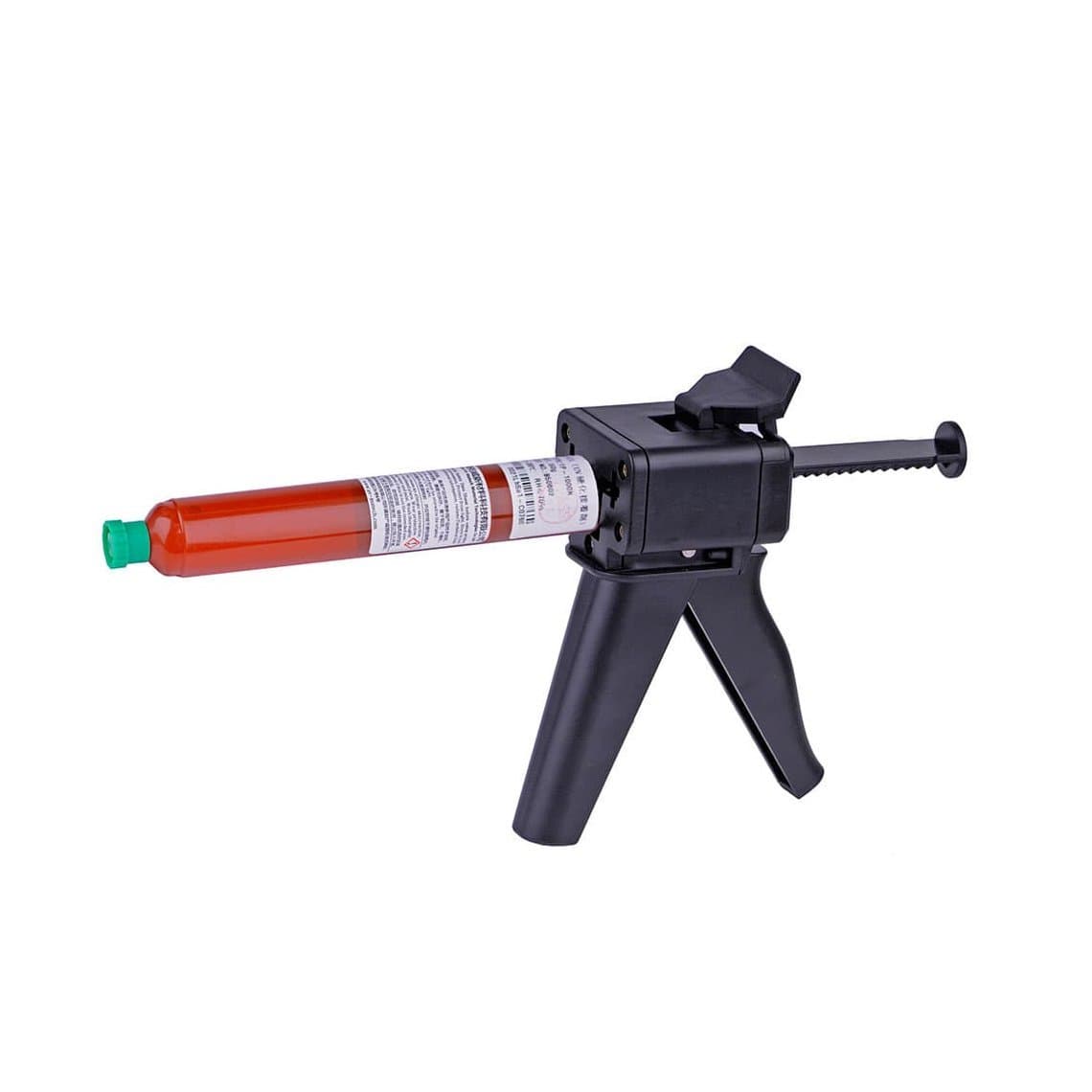
- Dispense the glue. Apply a controlled amount, often in a line or a pattern the glue maker recommends. A dispensing tool such as the UV Glue Gun LOCA Liquid Optical Clear Adhesive Gun gives more even flow than squeezing a bottle by hand.
- Lower the glass. Place the glass slowly and evenly so the glue spreads outward and pushes air out. Let gravity do most of the spreading.
- Check alignment and bubbles. Look for bubbles and gaps before curing. Adjust gently if needed.
- Tack cure. Give the edges a short UV exposure to hold the glass in place.
- Clean the overflow. Remove excess glue at the edges (see below).
- Full cure. Run the full exposure for the time the glue and lamp require, covering the entire surface evenly.
- Test. Check touch, display quality and edges before fitting.
Cleaning LOCA overflow
Overflow is the part most beginners underestimate. Clean it early while it is still liquid or only lightly cured, because fully cured glue is much harder to remove.
- Wipe liquid overflow with a lint-free swab and a cleaner that is safe for the panel.
- Peel off the masking tape at an angle to take overflow with it.
- For cured residue on glass edges, use plastic scrapers and suitable tools from adhesive removal tools. Avoid sharp metal near the panel edge.
- Check the flex area under magnification. A small bead of glue there can cause trouble later.
Choosing a UV lamp
The lamp matters as much as the glue. Look for:
- Wavelength that matches your glue. The glue's data should state the curing range; the lamp should cover it.
- Even light. A lamp with several LEDs spread over its face cures more evenly. Uneven light can leave soft patches.
- Size and power. Small lamps suit spot work and board repair; larger ones cover a full phone screen in one exposure.
- Timer and heat control. A built-in timer gives repeatable cures. Some high-power lamps include a fan to manage heat.
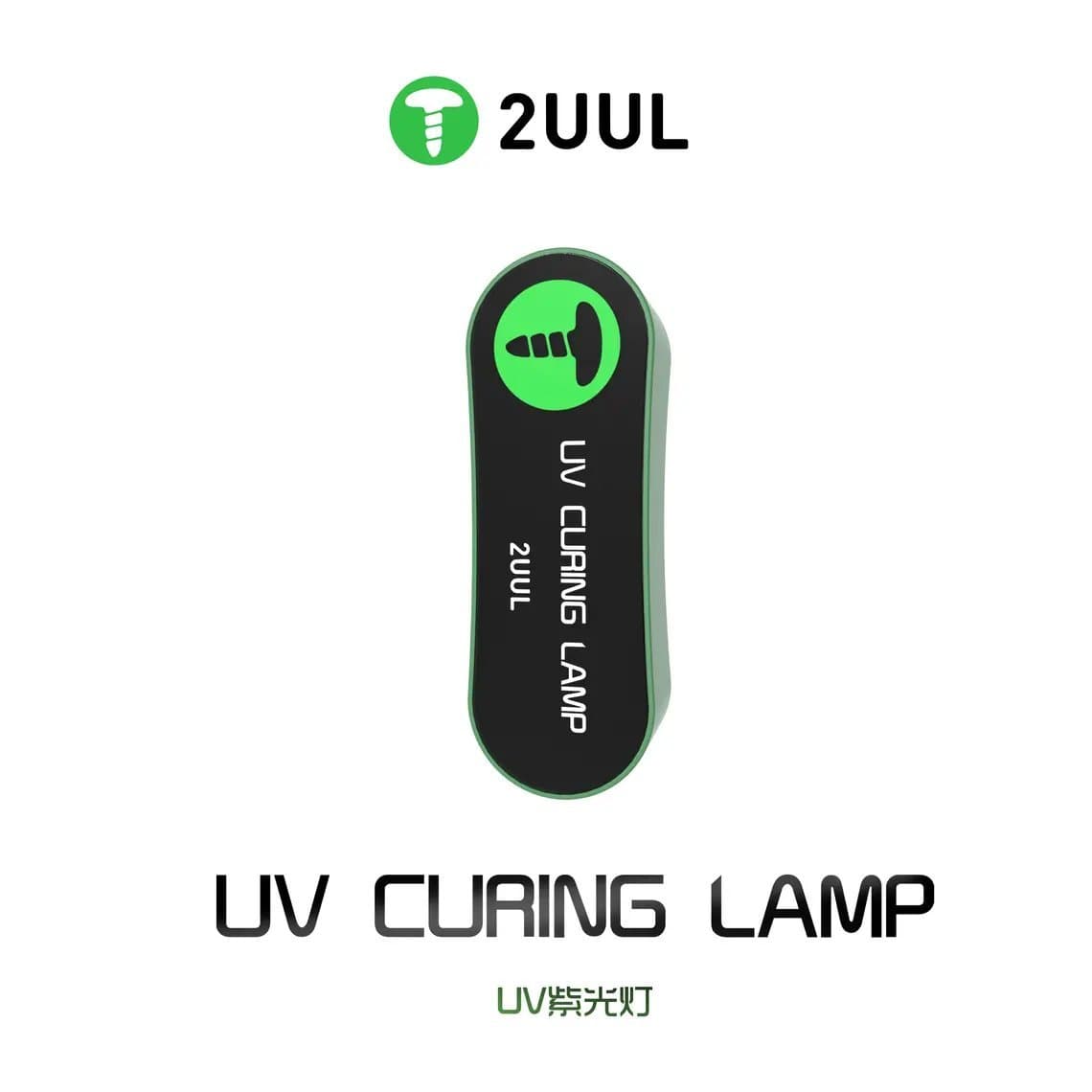
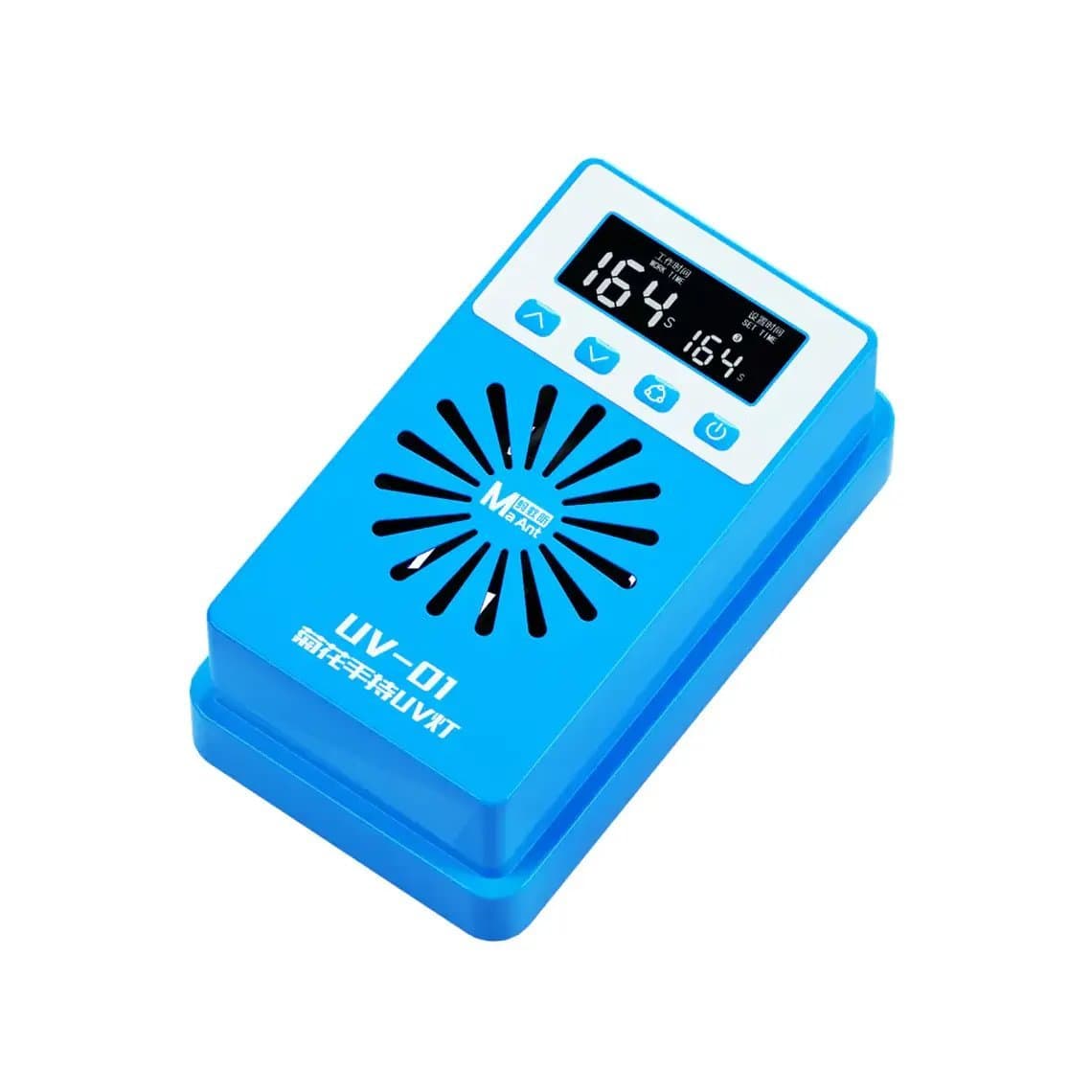
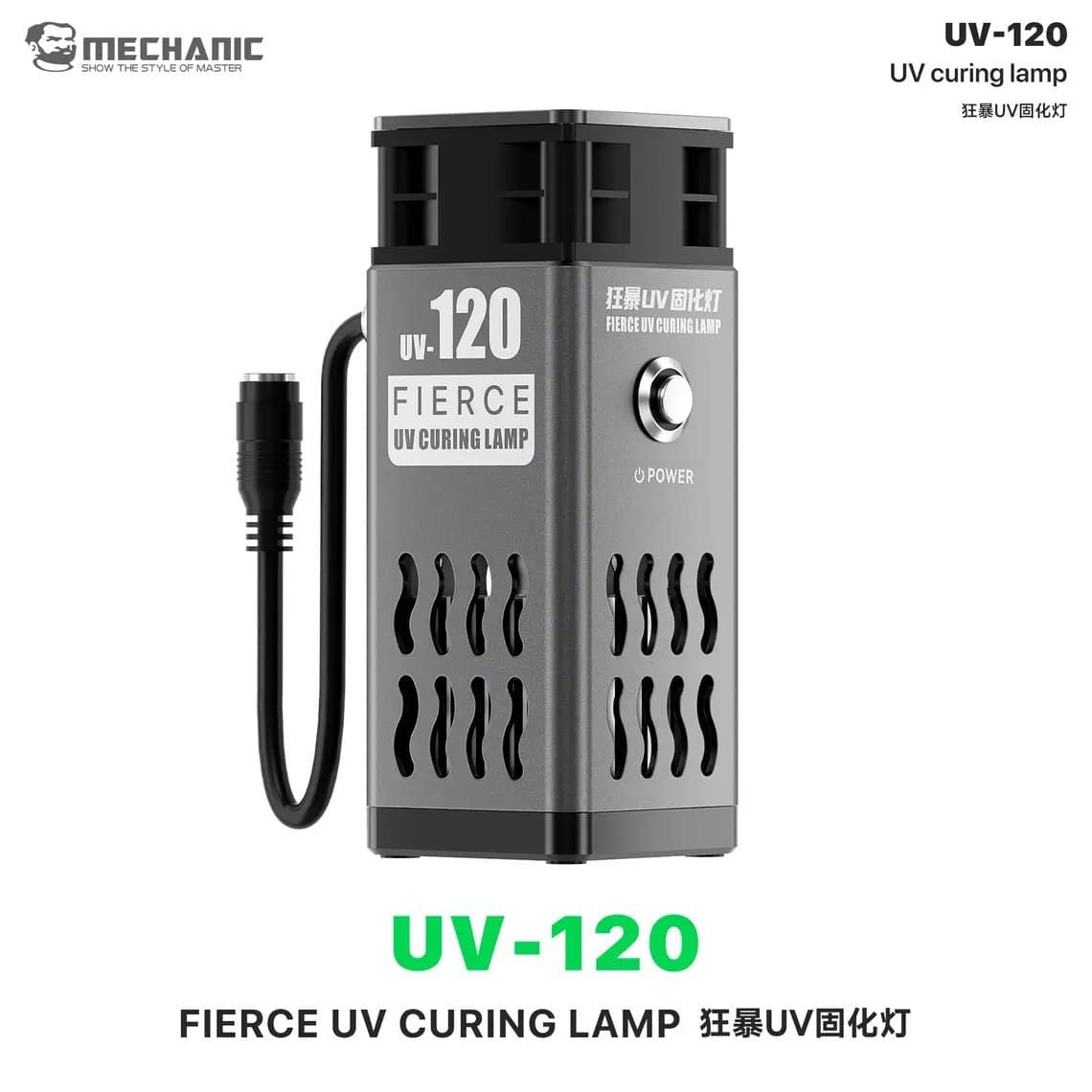
Examples across sizes: the 2UUL SC08 UV Curing Lamp Lite and MaAnt UV-1 Portable UV Curing Lamp are compact options; the Mechanic UV-120 46W High-Power UV Curing Lamp and AiXun Hurricane UV Curing Lamp with Fan are higher-power units. The TP-2500 LOCA UV Glue Light Lamp Kit is aimed directly at phone screen work. Note that some lamps are marketed mainly for solder mask; check the product description if screen curing is your main use. See the full range in UV curing lamps.
Eye and skin safety
- Never look into the lamp. UV light can harm the eyes. Wear UV-protective glasses and point the lamp away from you and others.
- Wear gloves. Uncured LOCA can irritate skin and may cause sensitisation with repeated contact. Wash skin promptly if glue gets on it.
- Ventilate. Work in a ventilated area and follow the glue's safety data sheet.
- Watch the heat. High-power lamps warm the glass. Keep exposures within the recommended time, and never cure near an attached lithium battery.
- Store glue properly. Keep bottles closed, out of light and away from heat so they do not partly cure in storage.
Common mistakes
- Using too much glue and flooding the panel edge.
- Curing before checking for bubbles and alignment.
- Skipping edge masking around the flex cable.
- Assuming a lamp cures every UV glue; wavelength must match.
- Leaving glue under black borders uncured, so it stays sticky.
- Choosing LOCA for volume refurbishing where OCA film and machines are more consistent. The phone screen refurbishing walkthrough shows the OCA route.
For other bonding needs, browse adhesives and glue.
Questions
Is UV glue better than OCA for phone screens?
Not for most production work. OCA film with a vacuum laminator and bubble remover gives cleaner, more repeatable results and is easier to rework. UV glue is useful for gap filling, single jobs and small fixes.
How long does UV glue take to cure?
It depends on the lamp power and wavelength, the distance, the glue formula and the layer thickness. Follow the glue maker's instructions and check the lamp specification. A short tack cure followed by a full cure is common practice.
Can I cure UV glue with sunlight or a normal LED?
Sunlight contains UV but is uncontrolled and slow, and ordinary LED lights usually do not emit the right wavelength. A proper UV curing lamp matched to the glue gives a reliable, even cure.
How do I remove cured UV glue from a screen?
Cured LOCA is harder to remove than OCA film. Separate the glass carefully, then scrape and clean the residue with plastic tools and a suitable cleaner, taking care around the panel edges and flex. Expect more time and more risk than with OCA.
Find LOCA and dispensers in adhesives and glue and matching lamps in UV curing lamps. Repair businesses can unlock trade pricing through wholesale and reorder by SKU or CSV with Quick Order.